top of page
ALL


Platform Dependency Risk for Digital-First Brands
Industry and Competitive Context The global digital marketing ecosystem has undergone a fundamental restructuring since the mid-2010s. Meta's family of platforms, Google's advertising stack (which includes YouTube), and increasingly TikTok collectively command the overwhelming majority of digital advertising expenditure worldwide. According to industry analyses cited by PwC and HubSpot, over 70% of businesses rely heavily on Google and Meta for customer acquisition — a figure
2 days ago11 min read


How Licious Turned Bad Chicken at Lunch Into India's First D2C Unicorn—From ₹3 Crore to ₹1,000 Crore in 5 Years Despite Family Threats to Disown Them
In July 2015, two friends—Abhay Hanjura and Vivek Gupta—sat having lunch in Bengaluru, discussing a business idea that seemed unconventional, even risky by Indian middle-class standards. The chicken they were eating was terrible quality. Dry, tasteless, possibly unsafe. Vivek remarked: "If we're going to build Licious, we'll have to put life in this dead chicken!" The comment captured everything wrong with India's ₹60,000 crore meat industry: despite 73% of Indians consuming
2 days ago6 min read
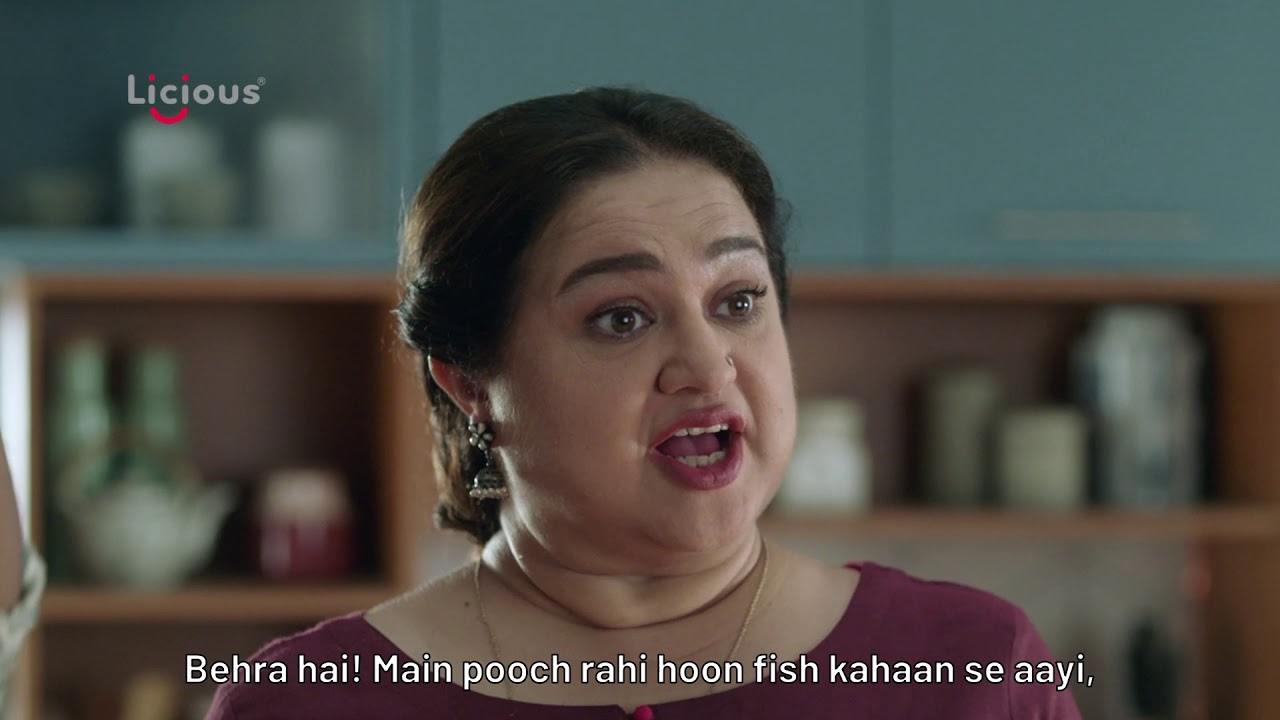
Licious's #BaatBadalDe: The Campaign That Used Chicken to Change Conversations
There is a particular kind of problem that young, disruptive brands face when they decide to grow up. In the beginning, the product is the story. The quality, the freshness, the delivery time, the packaging — these are the things that earn the first million customers. But at some point, every brand that wants to last longer than a trend must answer a harder question: what do we mean to people? Not what do we sell, but what do we stand for when someone sees our name and feels
2 days ago7 min read

Tanishq's "Celebrating the Auspiciousness of Hands" — When a Bangle Became a Philosophy
Every festival in India carries its own particular magic. But Akshaya Tritiya holds a very special place — not just in temple calendars, but in the Indian imagination. "Akshaya" means that which never diminishes. It is a day when anything begun is believed to grow endlessly. Anything invested is believed to multiply. And anything bought in gold is believed to carry blessings forward through time. For India's jewellery industry, it is the single most significant day of the com
3 days ago6 min read


Airbnb's Host Rating System for Trust Building: Engineering Confidence in the Peer-to-Peer Economy
Industry & Competitive Context The short-term rental market Airbnb helped pioneer operates on a structural paradox: it asks strangers to sleep in each other's homes. Unlike a hotel transaction — where brand reputation, standardized service, and regulatory oversight provide institutional confidence — the peer-to-peer accommodation model has no such default guarantees. The information asymmetry between a potential guest and a private host is profound. This is the market conditi
3 days ago11 min read


Oppo India's Camera-Centric Campaign Messaging: From "Selfie Expert" to Imaging Authority
Industry & Competitive Context India is among the world's largest and most fiercely contested smartphone markets. According to the International Data Corporation (IDC), India's smartphone market grew 4% in 2024 to reach 151 million units. IDC The market is characterized by aggressive competition across price bands, with five brands consistently commanding over 70% of total shipments. Based on Counterpoint Research data, the top brands by shipment share in India through 2024–2
3 days ago11 min read


Reliance Digital's Brand Strategy in Consumer Electronics Retail
Industry & Competitive Context India's consumer electronics and durables market is one of the world's fastest-growing, driven by rising household incomes, 5G device adoption, and deepening internet penetration across Tier 2 and Tier 3 cities. Organised retail in this segment has historically competed against a fragmented landscape of regional multi-brand outlets, single-brand stores operated by OEMs such as Samsung and Apple, and — increasingly — e-commerce platforms includin
3 days ago9 min read


Sulekha's Service Marketplace Model: Building India's Local Services Economy
Industry and Competitive Context The local services market in India — encompassing categories such as home repair, packers and movers, tutors, event management, beauty services, and healthcare — is one of the largest and most structurally informal segments of the Indian economy. The overwhelming majority of service transactions in this space have historically been conducted through word-of-mouth referrals, neighbourhood networks, and unorganised aggregators operating without
3 days ago12 min read


Xiaomi India's Insight into Value-for-Money Consumers: A Strategic Marketing
Industry and Competitive Context When Xiaomi entered India in 2014, the Indian smartphone market was at an inflection point. Feature phone users were transitioning to smartphones in large numbers, driven by falling data costs and expanding 4G network infrastructure. The market was broadly segmented into a premium tier dominated by Samsung and Apple, a mid-range tier occupied by Samsung, Sony, and HTC, and a budget tier that was fragmented among domestic brands such as Microma
3 days ago11 min read


The Role of Brand Purpose in Modern Marketing Narratives: A Multi-Brand Case Analysis
Industry and Competitive Context The early 2000s marked a structural shift in consumer expectations. The rise of social media eliminated the information asymmetry that brands had historically relied upon. Consumers could now publicly hold brands accountable for gaps between stated values and observed conduct — a dynamic that fundamentally altered the cost-benefit calculus of brand positioning. By the mid-2010s, global consulting and research institutions began documenting a c
3 days ago11 min read


How Britannia Turned ₹295 and a Small Kolkata House Into India's 33% Market Share Biscuit Empire—Surviving World Wars, Corporate Battles, and 133 Years
In 1892, when a group of British businessmen pooled together ₹295 to start a small biscuit-making operation in central Kolkata (then Calcutta), they had modest ambitions: supply quality biscuits to British officers and tea planters in colonial India. The operation was tiny—manufacturing biscuits in a small house with basic equipment. The market was limited—catering primarily to expatriates who preferred familiar European-style baked goods over local sweets. Nobody predicted t
3 days ago6 min read


Justdial’s Local Search Monetization Model
Industry & Competitive Context The evolution of local search in India has been shaped by rapid digitization, increasing smartphone penetration, and the formalization of small and medium enterprises (SMEs). Early players such as Justdial emerged in an era dominated by voice-based directory services, later transitioning into internet and mobile-first discovery platforms. India’s local search market expanded alongside broader internet adoption, with platforms like Google (via Go
4 days ago5 min read


REALME'S INSIGHT INTO PRICE-SENSITIVE SMARTPHONE BUYERS: HOW A CHALLENGER BRAND DECODED INDIA'S VALUE CONSUMER
INDUSTRY & COMPETITIVE CONTEXT India's smartphone market is structurally unlike any other in the world. It is simultaneously the second-largest smartphone market globally by volume, one of the most price-sensitive, and among the fastest-growing in terms of first-time smartphone buyers. The mass budget segment — devices priced between USD 100 and USD 200 — has consistently accounted for the largest share of shipments in the country, representing approximately 44% of total quar
4 days ago10 min read


THE ECONOMICS OF FREE: FREEMIUM MODELS AS A MARKETING STRATEGY
INDUSTRY & COMPETITIVE CONTEXT The freemium model — a portmanteau of "free" and "premium" — has emerged as one of the most strategically consequential pricing and marketing architectures of the digital economy. Unlike traditional trial-based sampling, freemium offers a permanently free tier of a product alongside paid upgrades, effectively converting the product itself into the primary acquisition channel. This model has proliferated across SaaS platforms, media streaming, pr
4 days ago10 min read


TikTok's Algorithm-Driven Content Feed Model
Industry & Competitive Context The global social media industry, by the late 2010s, was dominated by a set of architecturally similar platforms — Facebook, Instagram, YouTube, and Twitter — all of which shared a foundational design logic: the social graph. Content discovery on these platforms was primarily a function of existing social relationships. Users saw content posted by people and pages they already followed, and the algorithm amplified posts within those established
4 days ago11 min read


Vivo India's Cricket Sponsorship Communication Strategy
Industry & Competitive Context India's smartphone market is one of the most intensely competitive technology consumer markets in the world, characterised by rapid volume growth, pronounced price sensitivity, and a distribution landscape split between a large offline retail network and a fast-growing digital commerce channel. When Vivo entered India in late 2014, the market was dominated by Samsung, with established global players like Motorola and Sony and domestic challenger
4 days ago12 min read


AJIO's Brand Strategy Within the Reliance Retail Ecosystem
Industry & Competitive Context India's fashion retail market stood at approximately USD 60 billion in 2024, with online fashion emerging as its fastest-growing channel. Fashion and apparel led India's e-commerce market share at 31.67% in 2025, as platforms like Myntra and Ajio deepened premium brand curation. Mordor Intelligence The structural tailwinds are well-documented: India's urban population reached approximately 523 million in 2023, with 85.5% of Indian households own
4 days ago10 min read

Fortune Oil's "Ghar Ka Khana": The Ad That Dared to Make India Cry
There is a brief that every advertising professional dreams of receiving. Not one that lists product features or target demographics in neat bullet points, but one that is raw, honest, and almost impossibly human. In 2014, Pranav Adani, Managing Director of Adani Wilmar — the company behind Fortune Oil — walked into the offices of Ogilvy & Mather and delivered exactly that kind of brief to Piyush Pandey, one of India's most celebrated advertising minds. The brief, in Hindi, w
4 days ago7 min read


How Fortune Oil Solved India's Kitchen Dilemma—Quality or Affordability—And Built an 18% Market Share Empire From a Mundra Refinery in 2000
In the early 2000s, Indian households faced an impossible choice every time they bought cooking oil. Premium brands like Sundrop and Saffola offered excellent quality—but at prices that made everyday cooking expensive. Budget brands like Sweekar, Dhara, and Gemini kept costs low—but compromised on quality and health standards. Every mother choosing oil for her family's meals confronted this dilemma: protect their health or protect their wallet? Most chose health. They paid pr
4 days ago5 min read


TradeIndia's SME-Focused Marketplace Strategy: From Digital Directory to Full-Stack B2B Ecosystem
Industry & Competitive Context India's B2B digital marketplace sector sits at a compelling strategic intersection — a largely offline, fragmented, and trust-deficit trade economy gradually migrating to digital discovery and commerce. The sector's foundational challenge is structural: India has over 63 million MSMEs, contributing approximately 30% to GDP and nearly 45% of total exports, yet the vast majority have historically relied on personal networks, trade fairs, and physi
5 days ago10 min read
bottom of page