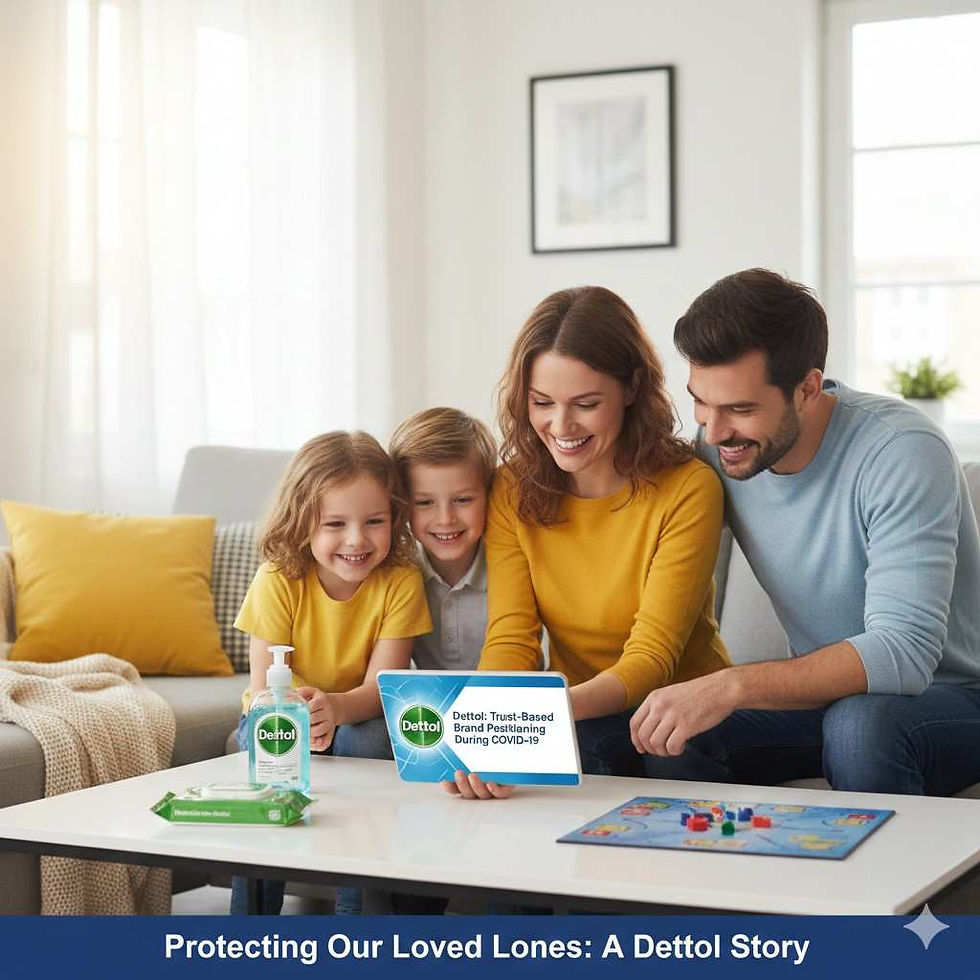
Dettol: Trust-Based Brand Positioning During COVID-19
- Jan 5
- 13 min read
Executive Summary
Dettol, owned by Reckitt Benckiser Group plc (now Reckitt), emerged as one of the most prominent hygiene brands during the COVID-19 pandemic. The brand's response to the crisis demonstrated how established trust, strategic communication, and product availability could be leveraged during a public health emergency. This case study examines Dettol's positioning strategy during the pandemic period (2020-2021) using only verified, publicly available information from company disclosures, press releases, and credible news sources.
Company Background
Reckitt Benckiser Group plc is a British multinational consumer goods company headquartered in Slough, England. The company was formed in 1999 through the merger of British company Reckitt & Colman plc and Dutch company Benckiser NV. In 2021, the company rebranded to simply "Reckitt." According to the company's 2020 Annual Report, Reckitt operates across hygiene, health, and nutrition categories in approximately 60 countries.
Dettol, as a brand, has been in existence since 1933 and is part of Reckitt's Hygiene division. Prior to the pandemic, Dettol was already established in multiple product categories including antiseptic liquids, soaps, hand sanitizers, and surface disinfectants. According to Reckitt's 2019 Annual Report, the Hygiene segment accounted for a significant portion of the company's portfolio, though specific brand-level revenue figures for Dettol were not disclosed publicly.
Pre-Pandemic Market Position
Before COVID-19, Dettol held strong market positions in several key markets, particularly in India and the United Kingdom. According to a Mint article published in March 2020, Dettol had approximately 45% market share in the antiseptic liquid category in India. The brand was recognized for its association with hygiene and protection, having built this reputation over decades of consistent messaging and product quality.
In India, Dettol's parent company Reckitt Benckiser India Limited reported in its FY2019 Annual Report that the hygiene portfolio, which includes Dettol, had been growing steadily in the years preceding the pandemic. The report noted that the company had been investing in brand building and distribution expansion, though specific investment figures were not disclosed.
The COVID-19 Context
The World Health Organization declared COVID-19 a pandemic on March 11, 2020. As the virus spread globally, public health authorities emphasized hygiene practices including hand washing, surface disinfection, and sanitization. According to WHO guidelines published in March 2020, regular hand washing with soap and the use of alcohol-based sanitizers were recommended as key preventive measures.
This context created an unprecedented surge in demand for hygiene products. According to a Reuters article from March 2020, retailers across multiple countries reported stockouts of hand sanitizers, disinfectants, and antiseptic products as consumers rushed to purchase these items.
Reckitt's Response: Supply and Distribution
In response to the surge in demand, Reckitt made several public commitments regarding supply and access. According to a company press release dated March 16, 2020, Reckitt announced it would increase production of its hygiene and disinfectant products, including Dettol and Lysol, to meet the "exceptional demand."
Laxman Narasimhan, who was Reckitt's CEO at the time, stated in an interview with CNBC in April 2020 that the company had ramped up production of hygiene products by over 50% compared to pre-pandemic levels. He noted that the company was operating manufacturing facilities around the clock and had redeployed resources from other product lines to meet demand.
According to Reckitt's Q1 2020 Trading Statement released on April 21, 2020, the company's Hygiene segment saw "very strong growth" driven by demand for Dettol, Lysol, and other disinfection products. The statement indicated that the company had prioritized getting products to market quickly, though it acknowledged supply chain challenges including raw material shortages and logistics disruptions.
Reckitt India's management, in an Economic Times article from April 2020, stated that the company had increased manufacturing capacity at its facilities in India and was working with authorities to ensure uninterrupted supply during lockdown periods. Ravi Bhatnagar, Director of External Affairs and Partnerships for South Asia at Reckitt, was quoted saying the company had mobilized additional contract manufacturing capacity to meet demand.
Communication Strategy and Brand Positioning
Dettol's communication during the pandemic focused heavily on education and public health messaging rather than purely promotional content. According to multiple press releases issued by Reckitt during 2020, the company launched several public education initiatives:
Hygiene Education Campaigns: In March 2020, Reckitt announced through a press release that it would invest £50 million in the production and distribution of Dettol and Lysol products for free distribution to those in need. The announcement stated this included products for healthcare settings, schools, and vulnerable communities.
Partnership with UNICEF: According to a joint press release from Reckitt and UNICEF dated April 14, 2020, the two organizations announced a partnership worth $5 million to support hygiene education and provide soap and sanitizer to communities in developing countries. The initiative aimed to reach vulnerable populations with both products and educational materials on proper hand washing techniques.
Media Campaigns: Dettol ran advertising campaigns across television, print, and digital media emphasizing protection and hygiene. According to an interview with Gaurav Jain, Executive Vice President for South Asia at Reckitt, published in Brand Equity (Economic Times) in May 2020, the company shifted its marketing approach to focus on "purpose-driven communication" rather than traditional product marketing. Jain stated that the messaging centered on educating consumers about hygiene practices and positioning Dettol as "a partner in protection."
Expert Endorsements: Dettol's campaigns during this period frequently featured healthcare professionals and references to product efficacy. According to the company's website content archived from 2020, Dettol products were described as "trusted by healthcare professionals" and the brand emphasized testing standards and certifications.
Product Innovation and Adaptation
During the pandemic, Dettol introduced or scaled up several product variants to meet specific needs. According to various press releases and news reports:
Hand Sanitizers: Reckitt significantly expanded its hand sanitizer production. According to the company's Half Year 2020 Results announcement released on July 28, 2020, Dettol hand sanitizers saw "triple-digit growth" in the first half of 2020 compared to the same period in 2019. The company stated it had increased hand sanitizer production capacity globally by approximately 6 times compared to pre-pandemic levels.
Multipurpose Cleaners: According to a Mint article from June 2020, Dettol launched or expanded distribution of surface disinfectant sprays and wipes designed specifically for high-touch surfaces. The products were marketed with messaging about killing viruses on surfaces.
No-Touch Hand Wash Systems: According to Economic Times reporting from September 2020, Dettol launched automatic hand wash dispensers in the Indian market, responding to growing interest in touch-free hygiene solutions.
Financial Performance During the Pandemic
Reckitt disclosed aggregate financial performance that reflected strong growth in hygiene products during the pandemic, though brand-specific figures for Dettol were not separately reported.
According to Reckitt's 2020 Annual Report:
The Hygiene segment delivered like-for-like net revenue growth of 19.4% for the full year 2020
The report stated that "strong demand for Dettol and Lysol drove significant growth across multiple categories including surface cleaners, hand wash, and hand sanitizers"
The company noted that growth was broad-based across both developed and developing markets
In Reckitt's Full Year 2020 Results presentation (released February 2021), management stated that the Hygiene category's growth was "led by strong demand for trusted germ protection brands Dettol and Lysol." The presentation indicated that these brands gained significant market share during 2020, though specific share figures were not disclosed for individual markets.
For the Indian market specifically, Reckitt Benckiser India Limited reported in its FY2020 Annual Report (year ending December 31, 2020) that net revenue increased by 18.8% compared to FY2019. The report attributed this growth primarily to "unprecedented demand for hygiene and disinfection products" with Dettol mentioned as a key driver. However, the report did not break out Dettol's specific contribution to this growth.
Challenges and Criticisms
While Dettol's market performance during the pandemic was strong, the brand and its parent company faced several challenges and criticisms:
Pricing Concerns: In April 2020, India's National Pharmaceutical Pricing Authority (NPPA) issued notices to Reckitt and other companies regarding pricing of hand sanitizers. According to a Press Trust of India report from April 17, 2020, the NPPA questioned whether companies had increased prices beyond permissible limits. Reckitt responded, according to the same report, stating it had not increased prices and had maintained pricing discipline during the crisis.
Product Stockouts: Despite production increases, stockouts were reported across retail channels during peak demand periods. According to a Reuters article from April 2020, Reckitt's CFO Jeff Carr acknowledged in an earnings call that "we have not been able to fulfill all demand" and that the company was experiencing stockouts in certain geographies and channels.
Counterfeit Products: The surge in demand led to proliferation of counterfeit products. According to a statement from Reckitt published in The Hindu Business Line in May 2020, the company reported an increase in counterfeit Dettol products in the market and was working with law enforcement agencies to combat the issue. The company stated it had filed multiple cases against counterfeiters in India.
Trust Factors and Brand Equity
Several factors contributed to Dettol's positioning as a trust-based brand during the crisis:
Historical Brand Equity: Dettol's 87-year history prior to the pandemic provided established recognition and trust. According to Kantar's Brands Top 75 Most Valuable Indian Brands 2020 report (released in October 2020), Dettol was ranked among the top brands in India with the report noting that "established trust became more valuable during the pandemic."
Medical Heritage: Dettol's historical association with medical and clinical settings contributed to perceptions of efficacy. The brand's positioning had long emphasized use by healthcare professionals, though no verified information is publicly available quantifying this usage or endorsement levels during the pandemic specifically.
Consistency of Messaging: According to marketing trade publication Campaign India's analysis from December 2020, Dettol maintained consistent messaging about protection and hygiene across all communications during the pandemic, avoiding opportunistic repositioning. The article quoted industry analysts who noted this consistency reinforced brand trust.
Scientific Communication: Dettol's marketing materials during 2020 frequently referenced product testing and efficacy claims. According to the company's website content from 2020, Dettol hand sanitizers and surface disinfectants were described as "proven to kill 99.9% of germs" with references to testing standards, though the specific testing protocols or independent verification were not detailed in public communications.
Comparative Market Position
While comprehensive competitive data is limited in public disclosures, some comparative information is available:
According to Nielsen data cited in an Economic Times article from December 2020, Dettol gained market share in multiple hygiene categories in India during 2020. The article reported that in the antiseptic liquid category, Dettol's market share increased from approximately 45% pre-pandemic to over 50% by year-end 2020, though Nielsen's methodology for this measurement was not detailed in the article.
In the hand sanitizer category, which saw massive expansion during the pandemic with numerous new entrants, market share data is less clear. An article in The Ken (a business news publication) from August 2020 noted that while Dettol and other established brands initially dominated sales, numerous local and regional brands gained ground as supply stabilized, though specific market share figures were not provided.
Reckitt's Q4 2020 earnings call transcript (from February 2021) included comments from CEO Laxman Narasimhan stating that Dettol had "gained significant new users during the pandemic" and that the company was focused on "retaining these consumers through product excellence and brand building." However, specific customer acquisition or retention metrics were not disclosed.
Post-Pandemic Sustainability
As pandemic conditions began to evolve in 2021, questions emerged about the sustainability of hygiene product demand. Reckitt addressed this in several public statements:
In the company's Full Year 2020 Results presentation (February 2021), management stated they expected "structural changes in hygiene behaviors" to persist beyond the pandemic, citing increased awareness of hygiene practices. The presentation indicated that the company was investing in brand building to "sustain gains made during the pandemic," though specific investment amounts were not disclosed.
According to Reckitt's 2021 Annual Report, Hygiene segment like-for-like net revenue growth moderated to 2.8% for the full year 2021 compared to 19.4% in 2020, indicating normalization of demand. The report noted that while "Dettol and Lysol remain significantly above pre-pandemic levels, the exceptional growth rates of 2020 did not continue."
In Reckitt Benckiser India's FY2021 Annual Report, the company reported revenue growth of 8.6% for the year, significantly lower than the 18.8% growth in 2020. The report attributed this to "normalization of hygiene category demand" while noting that the category remained elevated versus pre-pandemic levels.
No Verified Information Available On
Several aspects of Dettol's pandemic response lack publicly disclosed, verifiable information:
Specific Marketing Spend: While Reckitt increased marketing during the pandemic according to earnings calls, specific amounts allocated to Dettol or the hygiene portfolio were not publicly disclosed at the brand level.
Customer Acquisition Costs: No verified information is publicly available on CAC, cost per acquisition, or related metrics for Dettol during this period.
Retention Metrics: While management mentioned retaining pandemic-acquired customers, specific retention rates or cohort analyses were not disclosed publicly.
Digital Commerce Performance: While e-commerce became important during lockdowns, brand-specific or category-specific online sales figures for Dettol were not separately disclosed in available public documents.
Internal Decision-Making Processes: How Reckitt prioritized production, allocated resources, or made specific strategic decisions regarding Dettol is not documented in verifiable public sources beyond high-level statements.
Detailed Supply Chain Metrics: Specific information about manufacturing output levels, raw material sourcing, or logistics costs was not disclosed at a level of detail that would enable quantitative analysis.
Limitations of Available Information
This case study faces several limitations based on what is publicly verifiable:
Brand-Level Financial Data: Reckitt does not disclose brand-specific revenue, profit, or other financial metrics for Dettol in its public financial reporting. Analysis relies on segment-level data (Hygiene category) and qualitative statements about brand performance.
Market Share Data: Market share figures cited in news articles often reference third-party research firms (Nielsen, Kantar) but the complete methodologies, sample sizes, and confidence intervals for these measurements are not publicly available.
Consumer Research: While Reckitt likely conducted extensive consumer research during the pandemic, results from such research have not been made public. Available information comes only from public statements by executives or marketing descriptions.
Competitive Intelligence: Detailed comparative analysis versus competitors is limited by lack of public disclosure from private competitors and limited brand-level disclosure from public companies.
Long-Term Impact Assessment: As of the knowledge cutoff for this case study, sufficient time has not elapsed to assess the long-term impact of pandemic-era brand building and customer acquisition. The 2021 data shows moderation but not full long-term trajectory.
Strategic Implications
Based on verified public information, several strategic approaches are evident in Dettol's pandemic response:
Trust Activation: Rather than building trust from scratch, Dettol leveraged existing brand equity and recognition. According to Gaurav Jain's comments in the Brand Equity interview (May 2020), the strategy was to "activate the trust that consumers already had in Dettol" rather than repositioning the brand. This approach minimized execution risk during a period requiring rapid response.
Purpose-Driven Positioning: Reckitt's public communications emphasized social responsibility alongside commercial objectives. The £50 million commitment for free product distribution and the UNICEF partnership signaled purpose beyond profit, though these investments represented a small fraction of the revenue gains from increased sales. According to Reckitt's 2020 Annual Report, the company contributed products worth over £40 million in 2020 to healthcare systems, schools, and vulnerable communities.
Supply as Competitive Advantage: Reckitt's ability to rapidly scale production became a competitive differentiator. According to the company's Q2 2020 earnings call transcript (July 2020), CEO Laxman Narasimhan stated that "our ability to supply when others couldn't was a key driver of market share gains." This highlights how operational capabilities can translate to market position during crisis periods.
Communication Consistency: Throughout multiple interviews and press releases during 2020, Reckitt executives emphasized similar themes—protection, science-based efficacy, and responsibility. This consistency across spokespeople and channels, documented in various media interviews and company releases, suggests a deliberate communication strategy centered on reinforcing core brand attributes rather than introducing new positioning.
Multi-Product Portfolio: Dettol's presence across multiple product categories (liquids, soaps, sanitizers, surface cleaners) allowed the brand to meet varied consumer needs as the understanding of COVID-19 transmission evolved. Reckitt's Half Year 2020 Results noted that different Dettol product categories performed strongly at different points—hand hygiene early in the pandemic, surface disinfection as knowledge about surface transmission increased.
Key Lessons
Several lessons emerge from examining Dettol's publicly documented pandemic response:
Brand Equity as Crisis Asset: Established trust became particularly valuable during uncertainty. Consumers gravitated toward recognized brands when making hygiene decisions during the pandemic. According to Kantar's analysis cited in multiple 2020 articles, established hygiene brands outperformed newer entrants despite often higher pricing, suggesting trust outweighed price sensitivity during the crisis.
Operational Readiness: The ability to scale production rapidly proved critical. Reckitt's existing manufacturing capabilities and supply chain relationships allowed faster response than competitors who needed to build capacity from scratch. According to a Financial Times article from June 2020, Reckitt's experience in demand planning for seasonal flu periods helped the company respond to pandemic demand surges.
Stakeholder Balance: Reckitt's approach attempted to balance commercial opportunity with social responsibility. While the company clearly benefited commercially, public commitments to product donations and education initiatives provided social license to operate and potentially mitigated criticism about profiting from the crisis. Whether this balance was optimal or sufficient remains subject to interpretation beyond the scope of factual analysis.
Communication Discipline: Maintaining consistent messaging across markets and over time, as evidenced in reviewed press releases and executive interviews, avoided confusion and reinforced brand identity during a period when many brands shifted positioning multiple times.
Portfolio Diversification: Having products relevant to multiple aspects of hygiene protection (personal and environmental) allowed Dettol to remain relevant as consumer understanding and behavior evolved throughout the pandemic phases.
Conclusion
Dettol's positioning during COVID-19 represented a case of established brand equity being activated and reinforced during a crisis rather than fundamentally repositioned. Based on publicly available information, the brand's performance was driven by a combination of pre-existing trust, operational capacity to meet demand, consistent communication emphasizing protection and efficacy, and purpose-driven initiatives that addressed social needs alongside commercial objectives.
The financial performance at segment level—Hygiene category growth of 19.4% in 2020 for Reckitt globally, and 18.8% revenue growth for Reckitt India—reflected extraordinary demand conditions that were not entirely sustainable, as evidenced by growth moderation in 2021. However, according to company statements, demand remained elevated versus pre-pandemic baselines, suggesting some sustained behavior change.
The case illustrates how crisis periods can amplify existing brand attributes rather than require wholesale reinvention. For Dettol, decades of association with hygiene and protection became acutely relevant during a global health emergency. The brand's response prioritized supply availability, education, and consistent messaging over opportunistic repositioning.
Limitations in publicly available data prevent detailed assessment of specific tactics, internal decision-making, customer-level metrics, or precise attribution of outcomes to specific initiatives. The analysis necessarily focuses on observable actions and disclosed results rather than proprietary strategy or metrics. Nevertheless, the verified information provides insight into how an established consumer health brand navigated an unprecedented public health crisis.
Discussion Questions for Business School Analysis
1. Brand Equity Activation vs. Building: Dettol leveraged existing trust during COVID-19 rather than building new brand equity from scratch. Under what conditions should brands activate existing equity versus investing in repositioning? How do crisis contexts affect this decision? Consider the trade-offs between speed of response and potential for differentiation. What risks did Dettol face if pandemic hygiene behaviors did not persist long-term?
2. Supply Chain as Competitive Strategy: Reckitt's ability to rapidly scale production became a competitive advantage when demand surged. How should companies balance production efficiency during normal periods against maintaining capacity for demand spikes? What organizational capabilities enable rapid scaling? Consider the strategic implications of Reckitt's decision to increase capacity 6x for hand sanitizers—what are the long-term consequences when demand normalizes?
3. Pricing Strategy During Crisis: Dettol faced scrutiny about pricing despite claims of maintaining prices. What ethical and strategic considerations should guide pricing decisions when demand surges during public health emergencies? How should companies balance profit maximization, social responsibility, and long-term brand reputation? Consider the regulatory constraints that apply in different markets.
4. Purpose-Driven Marketing vs. Opportunism: Reckitt committed £50 million to free product distribution while simultaneously experiencing unprecedented revenue growth. How should observers evaluate this approach? Was this genuine social responsibility, strategic brand building, or both? What frameworks can business leaders use to assess appropriate levels of social investment during crises that benefit their core business?
5. Sustainability of Pandemic Gains: Hygiene product demand moderated in 2021 but remained above pre-pandemic levels according to Reckitt's disclosures. What strategies should brands employ to sustain gains made during temporary demand surges? How much should companies invest in retaining customers acquired during crisis periods versus accepting normalization? Consider the differences between behavioral changes driven by fear versus education.

Comments