IKEA's Study of Indian Homes and Space Constraints: A Strategic Market Entry Case Study
- Feb 14
- 9 min read
Executive Summary
IKEA, the Swedish furniture retail giant, conducted extensive ethnographic research into Indian homes and their unique space constraints as part of its market entry strategy into India. This case study examines IKEA's research-driven approach to understanding Indian consumer needs, living conditions, and spatial challenges before launching its first store in Hyderabad in August 2018. The company's "Life at Home" research initiative and localized product development strategy offer insights into how multinational retailers adapt to emerging markets with distinct cultural and infrastructural characteristics.

Company Background
IKEA, founded in 1943 in Sweden by Ingvar Kamprad, operates as one of the world's largest furniture retailers with a presence in over 50 markets. The company is known for its flat-pack furniture design, self-service warehouse model, and democratic design philosophy that emphasizes affordability and functionality. IKEA's entry into India was announced in 2013 when the Indian government permitted 100% foreign direct investment (FDI) in single-brand retail. According to press releases from IKEA India, the company committed to investing €1.5 billion (approximately ₹10,500 crore) in India over several years, with plans to open multiple stores across major cities.
Market Context: The Indian Housing Landscape
India's urban housing market presents unique challenges characterized by space constraints, multi-generational living, and rapid urbanization. According to the Economic Survey of India 2017-18, India's urbanization rate was approximately 34% in 2017, with projections suggesting it would reach 40% by 2030. This rapid urbanization has resulted in smaller living spaces, particularly in metropolitan areas. A report by the National Buildings Organisation indicated that the average size of apartments in Indian cities has been decreasing, with many urban dwellings ranging between 400-800 square feet. This contrasts sharply with IKEA's traditional markets in Europe and North America, where average home sizes are significantly larger.
IKEA's Research Methodology: Life at Home Study
IKEA's approach to understanding Indian consumers was anchored in its global "Life at Home" research initiative, which the company adapted specifically for the Indian market. According to statements by IKEA India executives reported in The Hindu BusinessLine (August 2018), IKEA conducted home visits to over 1,000 Indian households across multiple cities including Mumbai, Bangalore, and Hyderabad over a period of approximately two years before its first store opening. Jesper Brodin, CEO of Ingka Group (IKEA's parent company), stated in an interview with Reuters (August 2018) that understanding the Indian home was "critical" to IKEA's success in the market. He emphasized that the company needed to learn about Indian lifestyles, space constraints, and daily routines before introducing products. According to The Economic Times (August 2018), IKEA's research team conducted ethnographic studies that involved spending time with families in their homes, observing how they used their spaces, stored belongings, cooked, ate, and entertained guests. The research aimed to understand pain points related to space management, storage needs, and furniture preferences.
Key Findings from Indian Home Studies
Space Constraints and Multi-Functionality
IKEA's research revealed that Indian homes, particularly in urban areas, face significant space constraints. According to statements by Patrik Antoni, Deputy Country Manager at IKEA India, reported in Mint (August 2018), the company discovered that Indian consumers needed furniture that could serve multiple purposes due to limited square footage. The research highlighted that many Indian families lived in apartments where a single room might function as a living room during the day and a bedroom at night. According to The Hindu (August 2018), IKEA found that storage was a critical challenge, with families struggling to organize belongings in limited spaces.
Cultural Practices and Living Patterns
IKEA's home visits uncovered cultural practices that influenced furniture and home product requirements. According to Business Standard (July 2018), the company's research identified several India-specific behaviors: Indian families often sit on the floor for meals, prayer, or relaxation, requiring different furniture configurations than Western markets. Many households accommodate extended family members or frequent guests, necessitating flexible furniture solutions. Kitchen storage needs differed significantly due to the variety of utensils, spices, and cooking implements used in Indian cooking. According to The Times of India (August 2018), IKEA discovered that Indian consumers valued durability and longevity in furniture, often viewing furniture purchases as long-term investments rather than temporary solutions.
Price Sensitivity
The research also confirmed significant price sensitivity among Indian consumers. According to statements by IKEA India's country manager reported in CNBC (August 2018), the company learned that affordability was paramount, with many consumers comparing prices across multiple retailers before making purchase decisions.
Product Localization Strategy
Based on its research findings, IKEA implemented a comprehensive localization strategy for the Indian market. According to The Economic Times (August 2018), approximately 1,000 products in IKEA's India range were either new designs created specifically for India or adaptations of existing products.
India-Specific Product Development
According to press releases from IKEA India and reports in LiveMint (August 2018), the company developed several product categories specifically addressing Indian space constraints:
Compact Storage Solutions: IKEA introduced smaller wardrobe systems, modular storage units, and under-bed storage options designed for apartments with limited square footage. According to Business Today (August 2018), these products were priced lower than comparable items in IKEA's European stores.
Multi-Functional Furniture: The company developed sofa-cum-beds, folding dining tables, and nesting tables that could be expanded or contracted based on need. According to statements by IKEA executives reported in The Hindu (August 2018), these products directly responded to the research finding that Indian homes required furniture that could serve multiple purposes.
Kitchen Organization: IKEA created kitchen storage solutions tailored to Indian cooking needs, including spice organizers, pressure cooker holders, and storage for various types of Indian cookware. According to The Indian Express (August 2018), these products were designed after observing how Indian families organized their kitchens.
Price Positioning
IKEA adjusted its pricing strategy for India based on research insights about consumer affordability. According to Reuters (August 2018), the company's country manager stated that IKEA India's prices were approximately 20-30% lower than comparable IKEA products in other markets. The starting price for items was set at ₹10 (approximately $0.15 at 2018 exchange rates), with products like bed linens, curtains, and small accessories positioned at highly accessible price points.
Store Design and Customer Experience Adaptations
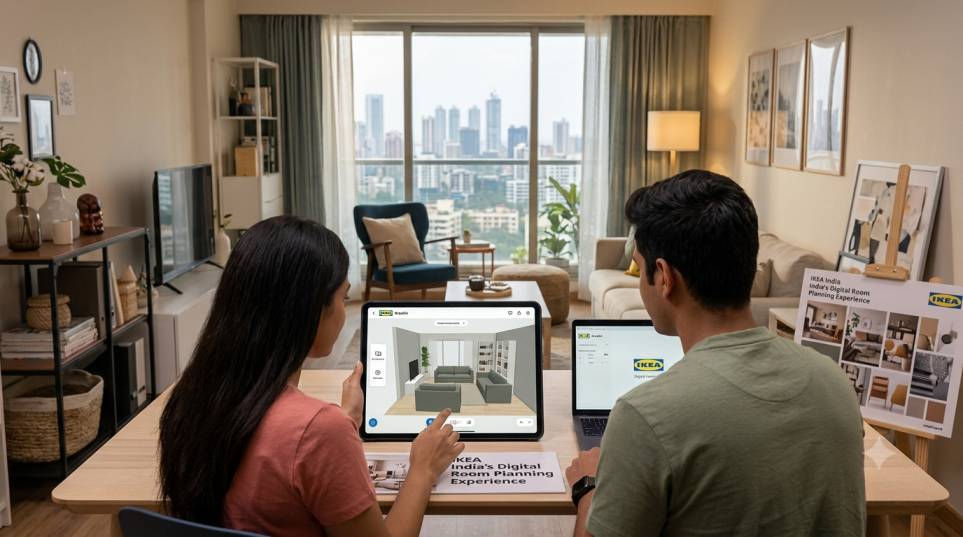
IKEA's research into Indian homes also influenced its store design and customer experience strategy. According to The Hindu BusinessLine (August 2018), the Hyderabad store, which opened on August 9, 2018, incorporated several India-specific features: The store's display rooms were designed to reflect actual Indian apartment sizes, showcasing how IKEA products could be arranged in spaces ranging from 400 to 1,000 square feet. According to Mint (August 2018), this represented a departure from IKEA's traditional showroom approach in Western markets, where larger spaces were typically displayed. The restaurant in the Hyderabad store offered 50% vegetarian options, with several items featuring Indian flavors and ingredients. According to press releases from IKEA India reported in The Economic Times (August 2018), this menu composition was based on research into Indian dietary preferences and cultural practices.
Implementation Challenges
Despite extensive research, IKEA faced several challenges in implementing its India strategy. According to Business Standard (November 2018), the Hyderabad store experienced higher-than-expected footfall in its initial months, with weekend crowds creating congestion issues. The company had to implement crowd management measures and adjust store operations. According to The Economic Times (December 2018), IKEA also encountered logistics challenges related to product delivery and assembly services in Indian cities, where infrastructure and traffic conditions differed significantly from the company's established markets. No verified public information is available on specific delivery completion rates, customer satisfaction scores, or operational efficiency metrics for IKEA India's initial period.
Market Reception and Early Results
IKEA reported significant consumer interest following its Hyderabad store opening. According to company statements reported in Reuters (November 2018), the store welcomed over 200,000 visitors in its first week of operation. The company's Managing Director for IKEA India stated in interviews with The Hindu (December 2018) that customer response exceeded expectations, with particular interest in compact storage solutions and affordable home accessories. According to The Economic Times (February 2019), IKEA announced plans to open its second store in Navi Mumbai in 2020, citing positive early results from Hyderabad. The company also launched an online store for Mumbai, Pune, and Hyderabad customers in 2019, according to press releases reported in Business Today (March 2019). No verified public information is available on store-specific revenue, transaction volumes, conversion rates, or customer acquisition metrics for IKEA India's individual locations.
Strategic Implications
IKEA's ethnographic research approach to understanding Indian homes and space constraints represents a significant departure from rapid market entry strategies employed by some retailers. The company invested approximately five years between announcing its India entry (2013) and opening its first store (2018), with substantial resources dedicated to consumer research. According to analysis published in the Harvard Business Review (September 2018) examining IKEA's India entry, the company's research-driven approach allowed it to identify specific product gaps and consumer needs that would have been difficult to discern through traditional market research methods alone. The localization strategy, informed by home visits and ethnographic observation, enabled IKEA to develop products specifically addressing Indian space constraints rather than simply importing its global product range with minor modifications.
Broader Industry Context
IKEA's approach to studying Indian homes occurred within a broader context of international retailers entering India following FDI liberalization. Other furniture and home goods retailers, including local players like Pepperfry and Urban Ladder, were also competing for market share in India's fragmented furniture retail market. According to a report by RedSeer Consulting cited in The Economic Times (2018), India's furniture and home products market was estimated at approximately $15 billion, with organized retail accounting for less than 20% of the market. This suggested significant growth potential for organized retailers like IKEA. However, competing effectively required understanding the unique characteristics of Indian consumers and homes—factors that IKEA's research initiative aimed to address systematically.
Lessons from the IKEA India Case
IKEA's study of Indian homes and space constraints offers several insights relevant to international retail strategy:
Ethnographic Research Value: The company's investment in home visits and observational research provided insights that quantitative market research might have missed. Understanding how Indians actually used their living spaces, rather than relying on demographic data alone, informed product development decisions.
Localization Beyond Translation: IKEA's approach went beyond simply adjusting pricing or marketing messages. The company developed new products and adapted existing ones based on specific spatial and functional needs identified through research.
Patient Market Entry: The five-year gap between market entry announcement and first store opening allowed IKEA to conduct thorough research and develop India-specific products. This contrasts with faster entry approaches that prioritize speed over market understanding.
Cultural Sensitivity: The research revealed cultural practices—such as floor-sitting and multi-generational living—that fundamentally influenced product requirements. Recognizing these cultural factors was essential to developing relevant offerings.
Constraint-Based Innovation: Space constraints, initially appearing as market challenges, became opportunities for product innovation. IKEA's compact and multi-functional furniture designs addressed real consumer pain points identified through research.
Limitations and Information Gaps
It is important to note significant limitations in publicly available information about IKEA's India operations:
No verified public information is available on specific research methodologies, sample selection criteria, or detailed research protocols used during home visits.
No verified public information is available on comparative performance metrics between IKEA India and the company's operations in other markets.
No verified public information is available on product development costs, research expenses, or return on investment for India-specific product lines.
No verified public information is available on detailed consumer segmentation, purchase patterns, or demographic profiles of IKEA India customers.
No verified public information is available on specific challenges encountered during research, rejected product concepts, or failed experiments in adapting to Indian market needs.
These information gaps limit the depth of analysis possible and prevent assessment of certain strategic outcomes.
Conclusion
IKEA's study of Indian homes and space constraints represents a deliberate, research-intensive approach to international market entry. By conducting ethnographic research in over 1,000 Indian households, the company gained insights into spatial challenges, cultural practices, and consumer needs that informed its product localization strategy. The research revealed that Indian consumers faced significant space constraints, required multi-functional furniture, valued affordability, and had culture-specific living practices. These findings led IKEA to develop approximately 1,000 India-specific or adapted products, adjust pricing to be 20-30% lower than other markets, and design store displays reflecting actual Indian apartment sizes. While early indicators suggested positive consumer reception—with over 200,000 visitors in the first week and subsequent expansion plans—the long-term success of IKEA's research-driven India strategy remains an ongoing story. The case demonstrates the potential value of investing substantial time and resources in understanding local market contexts before launching products and operations in emerging markets with distinct characteristics from a company's traditional markets.
MBA-Level Discussion Questions
Question 1: Evaluate the trade-offs between IKEA's patient, research-intensive market entry approach (five years from announcement to store opening) and a faster market entry strategy. Under what market conditions does extensive pre-entry research justify delayed revenue generation, and when might speed-to-market take priority?
Question 2: IKEA adapted its products specifically for Indian space constraints rather than educating Indian consumers to use existing IKEA products designed for larger spaces. Analyze this localization decision: What are the implications for supply chain complexity, economies of scale, and brand consistency? Could an alternative strategy of minimal adaptation have been equally viable?

Comments