Oreo India: Consumption Insight Driving "Twist, Lick, Dunk"
Executive Summary
Oreo, the world's best-selling cookie brand owned by Mondelez International, entered the Indian market in 2011 with a clear challenge: introducing a cream-filled biscuit to a country where glucose biscuits like Parle-G dominated with over 50% market share. Unlike Western markets where Oreo was already an established household name, India presented a unique consumption landscape shaped by tea-drinking rituals, price sensitivity, and deeply entrenched local preferences. Mondelez International's India strategy centered on a consumption insight that would later become iconic: the ritual of twisting, licking, and dunking the cookie. This case examines how Oreo India transformed a product attribute into a consumption ritual, navigating market entry, localization, and cultural adaptation in one of the world's most competitive biscuit markets.
Market Context and Entry Challenge
When Mondelez International (then Kraft Foods) launched Oreo in India in March 2011, the Indian biscuit market was valued at approximately ₹7,500 crores ($1.5 billion), with glucose biscuits dominating over 50% of sales, led by Parle-G. Oreo entered the smaller cream biscuit segment, targeting children and premium urban consumers. India's per capita biscuit consumption was about 2.2 kg annually in 2011, much lower than the U.S. (11 kg) and the U.K. (9 kg), indicating growth potential but also a preference for affordable products. Indian consumers primarily consumed biscuits with tea, unlike Western markets. As Rajesh Ramakrishnan, then Managing Director of Mondelez India, noted: "In India, biscuits are primarily consumed with tea," a habit not typically associated with cream-filled biscuits, which were seen as standalone snacks for children.
The Consumption Insight
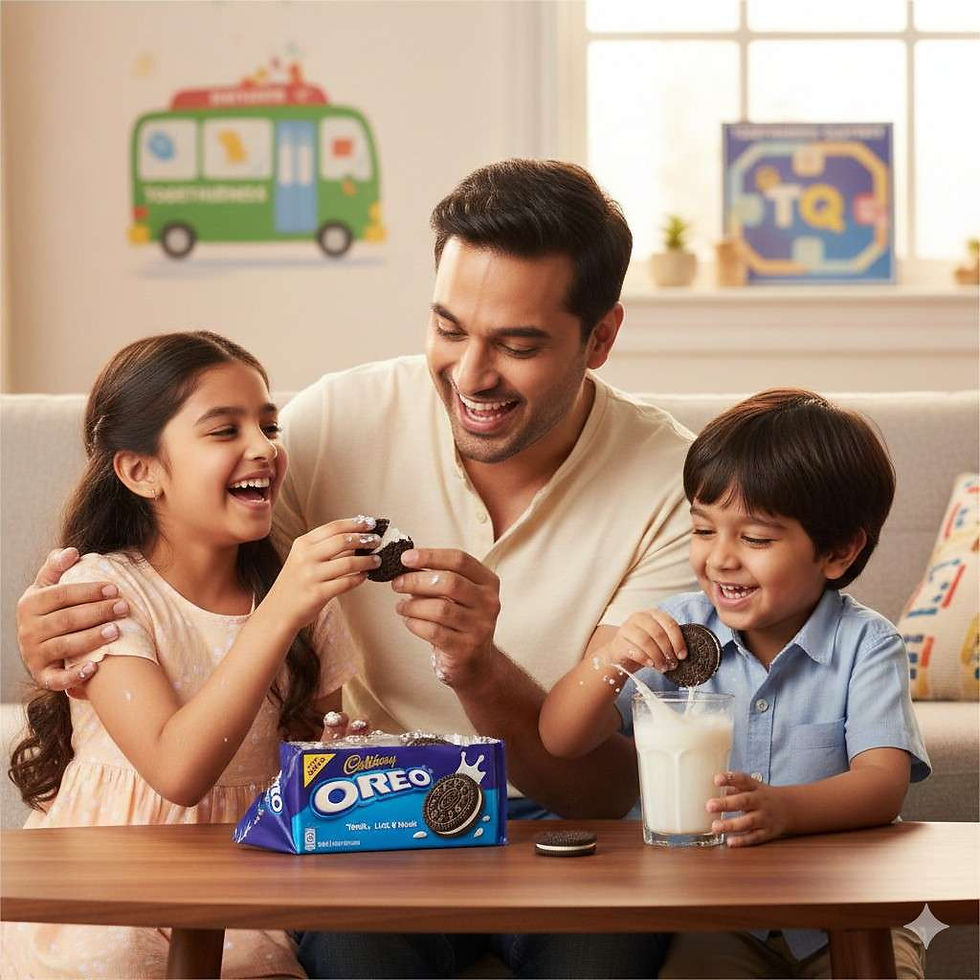
Oreo's global brand identity centered around the ritual of twisting, licking, and dunking the cookie in milk, popularized in the U.S. in the 1980s. In India, Mondelez questioned whether this ritual would resonate, given different milk consumption patterns and the prevalence of tea with biscuits. A 2014 IIMB case study revealed that Indian consumers, especially children, were intrigued by Oreo's structure but unsure how to consume it, as cream-filled biscuits were not typical with tea. Research, highlighted in The Economic Times in 2013, showed that children enjoyed the playful "twist, lick, dunk" ritual, setting Oreo apart from other biscuits. However, since dunking in milk was uncommon in India, Mondelez needed to adapt the ritual to local habits. Anil Viswanathan, then VP of Marketing at Mondelez India, noted that the challenge was making the ritual relevant to Indian consumers.
Strategic Positioning and Communication
Oreo India's launch in March 2011 featured the tagline "Twist, Lick, Dunk," later evolving to "Oreoeating." Initial TV commercials by Ogilvy & Mather India showcased children engaging with the playful consumption ritual. Advertising Age reported in April 2011 that Mondelez heavily invested in TV advertising, positioning Oreo as a fun experience rather than competing on nutrition or value with glucose biscuits. However, a September 2011 Business Today review highlighted challenges, noting lower-than-expected sales in tier-2 and tier-3 cities due to price sensitivity and limited familiarity with cream biscuits. Urban metros showed better adoption among children aged 5-14, but broader market penetration was limited. In 2012, Mondelez adapted its strategy by promoting Oreo with milk or tea, aligning with Indian consumption habits, as reported by The Hindu BusinessLine. TV ads began featuring families enjoying Oreos during chai time. In 2013, Mondelez introduced smaller pack sizes and vanilla-cream Oreos to cater to Indian tastes, as noted in a June 2013 company press release.
Building the Ritual Through Experiential Marketing
Beyond mass media advertising, Oreo India invested heavily in experiential marketing to teach and reinforce the consumption ritual. This approach was detailed in multiple marketing case studies, including one published by the Marketing Society of India in 2014. According to The Economic Times report from October 2012, Mondelez organized "Oreo Twist Stations" in shopping malls across major cities, where brand ambassadors demonstrated the twist-lick-dunk ritual and encouraged consumers to try it. These activations were particularly focused on weekends and school holidays to capture family footfall. The brand also partnered with schools for "Oreo Eateries"—structured sessions where children participated in group activities centered on the consumption ritual. As reported by Campaign India in January 2013, these initiatives reached over 500,000 children across eight cities in the first two years post-launch. Digital engagement played an increasingly important role. In 2013, Oreo India launched its first major digital campaign, the "Oreo Dunk Challenge," which encouraged consumers to share videos of creative dunking methods on Facebook and YouTube. According to data shared by Mondelez with Afaqs in March 2014, the campaign generated over 2 million video views and significantly boosted brand engagement among millennials and young parents.
Market Performance and Evolution
While Mondelez International does not publicly disclose brand-level financial data for Oreo India, several market performance indicators have been reported by credible third-party sources and company statements. In October 2013, Anand Kripalu, then Managing Director of Mondelez India, told The Economic Times: "Oreo has become the fastest-growing biscuit brand in our portfolio. We've seen strong double-digit growth, and the brand is now available in over 2.5 lakh retail outlets across India." This represented significant distribution expansion from the initial launch targeting approximately 50,000 premium outlets. According to Nielsen data cited by The Hindu BusinessLine in March 2015, Oreo had achieved the number two position in India's cream biscuit segment by value within four years of launch, trailing only Britannia's Bourbon. The same report noted that Oreo's household penetration had grown to approximately 8% in urban India, up from less than 2% in the first year post-launch. The brand's evolution continued with product innovation. In 2015, Mondelez introduced Oreo Chocolate Creme, and in 2017, the limited-edition Oreo Thins targeted at adult consumers, as documented in company press releases. Each variant maintained the core twist-lick-dunk ritual positioning while expanding consumption occasions. In a 2017 interview with Mint, Anil Viswanathan (by then Senior Director for Mondelez India) reflected on the journey: "The ritual became our differentiator. In a cluttered biscuit market where everyone competes on taste and price, we competed on experience. That insight—that consumption could be playful—changed how Indians thought about cream biscuits."
Cultural Adaptation and Localization
Oreo India's success was significantly shaped by its willingness to adapt to local culture while maintaining global brand equity. This balance was documented in a Harvard Business Review India case study published in 2016, which examined Mondelez's glocalization strategy. One notable adaptation was around tea versus milk. While the global Oreo positioning emphasized milk, Indian advertising increasingly featured chai (tea) as the dunking beverage. Television commercials from 2014 onwards showed multigenerational families sharing Oreos during evening tea time, tapping into India's deep-rooted chai culture. As noted in a Campaign Asia article from November 2014, this shift helped Oreo move beyond being perceived as just a children's snack to becoming a family-sharing product. The brand also localized its communication style. Unlike the minimalist, product-focused advertising common in Western markets, Oreo India's campaigns were narrative-driven, featuring family relationships and emotional connections. A 2015 campaign called "Stay Playful" showed parents and children bonding through the Oreo ritual, emphasizing emotional warmth over product features. Pricing strategy reflected local market realities. While Oreo entered as a premium product (priced approximately 40% higher than Bourbon), the introduction of smaller pack sizes and promotional offers gradually improved accessibility. According to data shared by Mondelez at the FICCI Food Processing Summit in 2016, the average price point per unit had decreased by approximately 25% from launch levels, driven by pack size innovation rather than SKU price reduction.
Competitive Response and Market Dynamics
Oreo's growth did not go unnoticed by competitors. Britannia, the market leader in biscuits with brands like Good Day and Bourbon, responded with increased marketing investment in its cream biscuit portfolio. According to The Economic Times report from August 2015, Britannia launched new Bourbon variants and intensified distribution efforts in response to Oreo's penetration. Parle Products introduced Parle Hide & Seek Milano in 2014, a premium cream-filled offering positioned to compete directly with Oreo, as documented in The Hindu BusinessLine. The product emphasized chocolate chips and cream, but notably did not attempt to build a consumption ritual around it. ITC's Sunfeast entered the premium cream biscuit space with Dark Fantasy in 2013, which grew rapidly to become a significant competitor. According to Nielsen data cited by Business Standard in March 2017, Dark Fantasy achieved faster early growth than Oreo by positioning around indulgence and premium chocolate rather than playfulness. Despite competitive pressure, Oreo maintained its unique positioning. In a 2016 interview with Afaqs, Mondelez India's marketing team stated: "Competitors can copy product attributes, but they cannot easily replicate a consumption ritual that has been built over years through consistent communication and experiential engagement."
Digital and Social Media Evolution
As digital penetration increased in India, Oreo adapted its marketing approach. The brand became increasingly active on social media platforms, particularly Facebook, Instagram, and YouTube. In 2016, Oreo India launched the "Oreo Dunk Challenge" 2.0, leveraging Instagram and encouraging user-generated content around creative dunking scenarios. According to Social Samosa's analysis from November 2016, the campaign generated over 50,000 user submissions and reached approximately 15 million users organically. The brand also experimented with real-time marketing. During major cultural events like Diwali, IPL cricket matches, and Bollywood film releases, Oreo India created topical content featuring the twist-lick-dunk ritual integrated with trending topics. This approach, documented in a Social Media Week Mumbai case study from 2017, helped maintain brand relevance among younger, digitally-native consumers. Mondelez India's digital transformation was acknowledged in industry forums. At the IAMAI India Digital Summit in 2018, company representatives shared that digital channels accounted for approximately 30% of Oreo's marketing investment, up from less than 5% at launch—though specific investment figures were not disclosed.
Lessons and Strategic Implications
Oreo India's journey offers several insights into consumption-led brand building in emerging markets, as analyzed in multiple academic and industry publications. First, the importance of consumption rituals in creating differentiation became evident. In a commoditized category where product parity is high, Oreo's twist-lick-dunk ritual created a unique brand signature that was difficult for competitors to replicate without appearing derivative. As documented in the IIMB case study from 2014, this ritual-based positioning allowed Oreo to command a price premium while building emotional connection. Second, cultural adaptation proved essential for market acceptance. Mondelez's willingness to modify the global "dunk in milk" positioning to accommodate India's tea-drinking culture demonstrated strategic flexibility. This localization did not dilute global brand equity but instead made the core ritual more relevant to local consumption contexts. Third, experiential marketing played a crucial role in behavioral change. Introducing an unfamiliar consumption pattern required more than advertising—it required hands-on demonstration and trial. The investment in mall activations, school programs, and digital engagement created multiple touchpoints for consumers to learn and adopt the ritual. Fourth, gradual price accessibility without cheapening the brand emerged as a viable strategy. Rather than launching at mass-market price points (which might have diluted premium positioning), Oreo entered premium and gradually expanded accessibility through pack size innovation, maintaining per-serving premiumness while improving affordability.
Current Market Position
As of available public information through 2018-2019, Oreo India had established itself as a significant player in the cream biscuit segment. According to The Economic Times report from March 2019, citing industry estimates, Oreo was among the top three cream biscuit brands in India by value. In Mondelez International's global earnings calls, India has been repeatedly mentioned as a high-growth market for the Oreo brand, though specific country-level financial data is not disclosed. In the Q2 2019 earnings call, CEO Dirk Van de Put stated: "Oreo continues to grow strongly in emerging markets, with India showing particularly robust growth driven by household penetration gains and innovative marketing." Distribution had expanded significantly. According to a company statement shared with The Hindu BusinessLine in August 2018, Oreo was available in over 5 lakh retail outlets across urban and rural India, doubling the distribution reach from 2013. The brand had also become a cultural reference point. Oreo's twist-lick-dunk ritual entered popular culture, being referenced in Indian films, television shows, and social media conversations—organic brand integration that advertising alone cannot purchase.
Challenges and Limitations
Despite its success, Oreo India faced ongoing challenges documented in industry analyses. Rural penetration remained limited. According to Nielsen data cited by Business Standard in 2018, Oreo's household penetration in rural India was less than 3%, significantly below urban levels (approximately 12%). This reflected both price barriers and lower familiarity with cream biscuits in rural markets where glucose biscuits dominated. The premium pricing strategy, while supporting brand positioning, limited mass-market penetration. As noted in a RedSeer Consulting report from 2017 on India's biscuit market, price sensitivity remained the primary purchase driver for over 70% of Indian consumers, constraining Oreo's addressable market. Nutritional concerns also emerged as a challenge. As health consciousness increased among Indian urban consumers, cream-filled biscuits faced scrutiny. While Mondelez launched reduced-sugar variants in some markets, no verified public information is available on similar initiatives specifically for India during the period examined.
Conclusion
Oreo India's case illustrates how a global brand can successfully enter a complex emerging market by focusing on consumption insight rather than just product features. The twist-lick-dunk ritual gave Oreo a unique identity in India's crowded biscuit market, allowing it to establish a distinctive position beyond price and product comparisons. This strategy's success relied on recognizing a consumption ritual as a competitive advantage, adapting it to local cultures without losing brand essence, and investing in experiential marketing to encourage behavioral adoption. Mondelez India's approach to localizing (tea versus milk) while maintaining global brand equity exemplifies effective glocalization. Oreo's journey from its 2011 launch to category leadership required sustained marketing investment, distribution expansion, and patient brand building, highlighting the gradual change of consumption habits and the need for long-term commitment. In emerging markets, Oreo India underscores that when product parity is high and price competition is intense, differentiation must come from consumer interaction with the brand, not just functional product delivery. In India's biscuit market, where taste and price dominated, Oreo introduced a third dimension: playfulness in consumption.
MBA-Level Discussion Questions
1. Ritual-Based Positioning Strategy: Oreo India built its market entry around a consumption ritual (twist-lick-dunk) rather than functional product benefits. Analyze the advantages and risks of ritual-based brand positioning in FMCG categories. Under what market conditions does this strategy work best, and when might it fail? How does Oreo's approach compare to competitors who emphasized taste or indulgence?
2. Glocalization and Cultural Adaptation: Mondelez adapted Oreo's global "dunk in milk" positioning to accommodate India's tea-drinking culture while maintaining the core ritual. Evaluate this glocalization strategy. What criteria should multinational brands use to decide which elements to standardize globally versus adapt locally? Could Oreo have succeeded in India with a purely standardized global approach? Why or why not?


Comments