Prega News – Sensitivity in Health-Related Communication
- Jan 24
- 13 min read
Executive Summary
Prega News, launched in 1993 by Mankind Pharma, became India's leading home pregnancy detection kit brand through a communication strategy that navigated the complex cultural, emotional, and social dimensions surrounding pregnancy testing in the Indian market. Operating in a category involving deeply personal health decisions, privacy concerns, and significant emotional stakes, Prega News developed advertising campaigns that balanced commercial objectives with sensitivity to the varied circumstances under which women use pregnancy tests. This case examines how Prega News communicated around a health product in a market characterized by diverse attitudes toward pregnancy, family planning, and women's reproductive health, analyzing the brand's evolution from clinical product positioning to emotionally resonant storytelling while maintaining the sensitivity required for responsible health communication.
Product Background and Market Context
Prega News was launched in 1993 by Mankind Pharma, a Delhi-based pharmaceutical company founded in 1991 by brothers Ramesh Juneja and Rajeev Juneja. According to The Economic Times reporting from May 2016, Prega News was introduced as India's first home pregnancy test kit widely marketed to consumers, entering a market where pregnancy detection had primarily been a clinical procedure conducted in laboratories or doctors' offices.
The Indian market for pregnancy detection presented unique characteristics. According to industry analysis cited in Business Standard from November 2012, home pregnancy testing faced initial adoption barriers rooted in privacy concerns, accuracy skepticism, and cultural norms around discussing pregnancy openly. Many Indian women, particularly in smaller towns and rural areas, felt uncomfortable purchasing or discussing pregnancy-related products, creating distribution and marketing challenges.
Mankind Pharma positioned Prega News as providing privacy, convenience, and early detection. According to statements by company executives quoted in The Economic Times from April 2014, the product allowed women to confirm pregnancy privately at home rather than visiting clinics, addressing a significant barrier particularly for women in conservative social environments or those facing uncertain pregnancy circumstances.
The competitive landscape evolved over time. According to Business Today reporting from March 2018, while Prega News enjoyed early market leadership, competitors including i-can (launched by Piramal Healthcare) entered the market with similar products. Despite competition, Prega News maintained dominant market share through aggressive distribution, pricing strategies, and sustained marketing investment.
Market size remained difficult to precisely quantify. According to estimates cited in The Economic Times from September 2019, India's home pregnancy test kit market was valued at several hundred crores, with Prega News commanding an estimated significant majority market share, though exact figures have not been officially disclosed by the company.
Early Communication Strategy: Building Category Awareness
In its initial years, Prega News faced the challenge of building category awareness and legitimacy for home pregnancy testing. According to exchange4media reporting from 2011, early Prega News advertising focused on educating consumers about the product's existence, accuracy, and proper usage. The communication emphasized medical credibility and reliability to overcome skepticism about home testing versus clinical procedures.
The brand's early tagline, as documented in advertising archives and marketing publications, emphasized simplicity and certainty with messaging focused on ease of use and result accuracy. This clinical positioning aimed to establish Prega News as a trustworthy medical device rather than a consumer product, recognizing that credibility was paramount for adoption in the sensitive pregnancy detection category.
Distribution strategy complemented communication approach. According to The Economic Times from June 2013, Mankind Pharma ensured Prega News availability in pharmacies across urban and semi-urban India, positioning it within the healthcare retail environment rather than general retail. This placement reinforced the product's medical legitimacy while providing the discretion many consumers sought.
Pricing represented another communication element. According to multiple media reports from the early 2010s, Prega News was priced significantly lower than imported alternatives, making home pregnancy testing accessible to middle-class consumers for whom clinic testing or premium imported products were cost-prohibitive. The pricing strategy itself communicated accessibility and democratization of reproductive health information.
The "Pregnancy Detection as Emotional Moment" Positioning
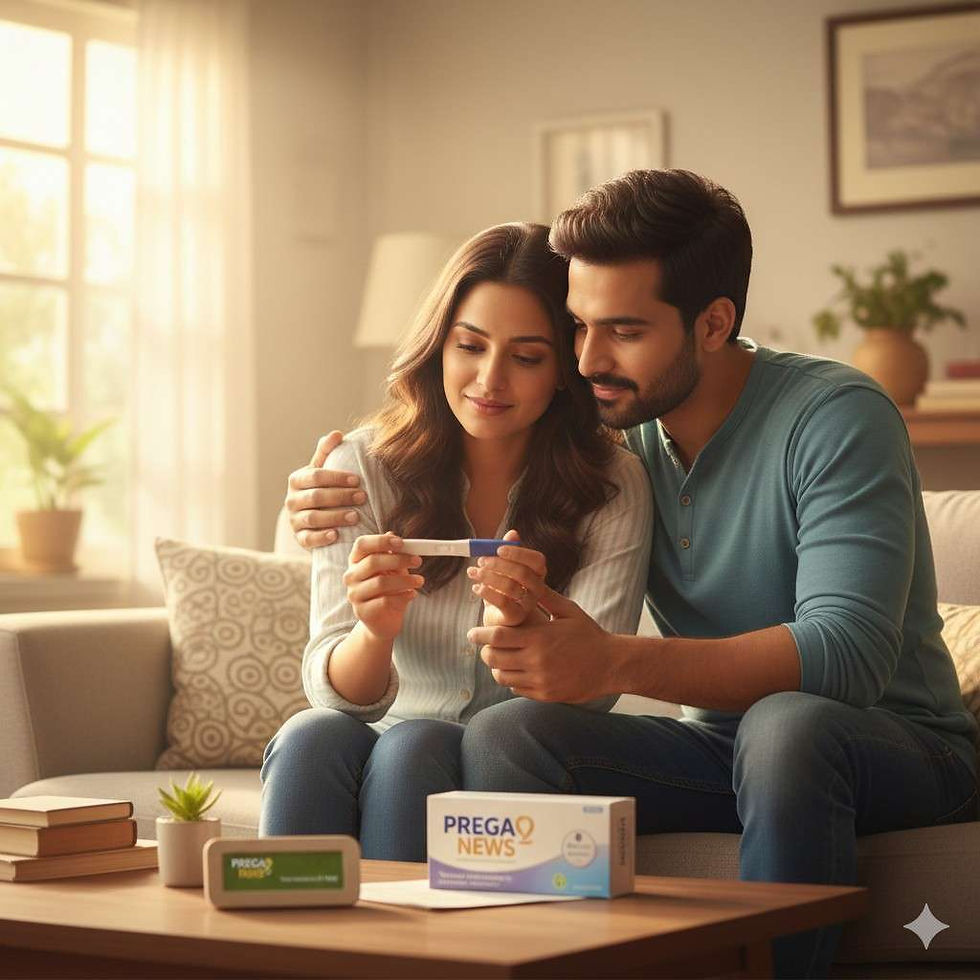
By the mid-2000s, Prega News evolved its communication from functional product attributes toward emotional resonance. According to Campaign India reporting from 2009, the brand's advertising began depicting pregnancy testing as an emotionally significant moment in a woman's or couple's life, showing anticipation, hope, and joy rather than clinical procedure.
This positioning shift reflected growing category maturity. As home pregnancy testing gained acceptance, the communication opportunity evolved from establishing category legitimacy to building brand preference through emotional connection. According to statements by advertising professionals involved with Prega News campaigns quoted in Afaqs from 2010, the strategic intent was positioning Prega News as a partner in an important life moment rather than merely a diagnostic tool.
The brand's advertising depicted diverse scenarios including couples hoping to conceive, families anticipating additions, and women experiencing the private, contemplative moment of testing. According to exchange4media analysis from 2011, these depictions reflected research suggesting that pregnancy tests are used in varied circumstances—from planned conception to unexpected situations—each carrying different emotional valences.
Importantly, the advertising maintained sensitivity by focusing primarily on positive pregnancy scenarios. According to advertising industry commentary documented in Campaign India from 2012, Prega News advertisements predominantly showed women and couples happy about positive test results, avoiding negative reactions or unwanted pregnancy scenarios that could create uncomfortable associations with the brand.
The "Good News" Campaign and Emotional Storytelling
One of Prega News's most significant communication initiatives was its association of positive pregnancy results with "good news." According to Afaqs reporting from August 2014, the brand's campaigns emphasized the joyful announcement of pregnancy to family members, particularly the soon-to-be grandparents, positioning pregnancy confirmation as a moment of family celebration.
The advertising depicted culturally resonant scenarios showing women sharing positive test results with husbands, mothers-in-law, and extended family members, receiving enthusiastic responses. According to exchange4media from September 2014, these narratives reflected Indian family structures where pregnancy, particularly first pregnancies, are typically celebrated family events involving multiple generations rather than purely individual or couple decisions.
The communication strategy aligned with dominant cultural narratives around pregnancy while potentially excluding alternative perspectives. According to advertising analysis in Campaign India from October 2014, by focusing exclusively on wanted pregnancies within established families, Prega News avoided controversial or sensitive situations including unplanned pregnancies, pregnancies outside marriage, or circumstances where pregnancy might create distress rather than joy.
This selective representation reflected deliberate strategic choices about managing sensitivity in health communication. According to statements by advertising professionals quoted in Business Standard from 2015, brands in sensitive health categories often face tensions between representing diverse consumer realities and maintaining positive brand associations, typically resolving this tension by depicting aspirational or culturally normative scenarios.
Celebrity Endorsements and Trust Building
Prega News periodically utilized celebrity endorsements to enhance brand credibility and reach. According to The Economic Times from December 2012, the brand engaged television actresses for advertising campaigns, leveraging their familiarity and trustworthiness with Indian audiences, particularly women viewers of television serials and entertainment programming.
The choice of celebrity endorsers reflected strategic considerations around relatability and appropriateness. According to exchange4media from January 2013, Prega News selected celebrities who embodied family-oriented, respectable public images rather than controversial or youth-centric personalities. This alignment reinforced the brand's association with traditional family values and responsible reproductive health decisions.
Celebrity endorsements served specific communication objectives in the pregnancy test category. According to Campaign India from March 2013, having recognizable personalities associated with the product helped normalize the topic of pregnancy testing in mainstream media and conversation, reducing the stigma or discomfort some consumers felt around purchasing and using such products.
However, celebrity endorsements also presented risks in health-related communication. According to advertising ethics discussions documented in Afaqs from 2014, celebrity endorsements of health products raise questions about appropriateness, as celebrities typically lack medical expertise and their endorsements might influence health decisions based on parasocial relationships rather than medical guidance. Prega News managed this by having celebrities appear in narrative advertising rather than making explicit medical claims or expert pronouncements.
Regional Language Communication and Cultural Adaptation
As Prega News expanded distribution beyond metros into smaller towns and rural areas, regional language communication became strategically important. According to The Economic Times from April 2016, Mankind Pharma invested in regional language advertising for Prega News across Hindi, Tamil, Telugu, Bengali, Marathi, and other languages, recognizing that English-language communication limited reach in India's linguistically diverse market.
Regional campaigns required cultural adaptation beyond simple translation. According to exchange4media from June 2016, advertising for different regions incorporated locally relevant family dynamics, festivals, and cultural references that resonated with regional audiences while maintaining core brand messaging about reliability, privacy, and the emotional significance of pregnancy detection.
The distribution and retail communication also adapted to regional contexts. According to Business Standard from August 2016, Prega News packaging and point-of-sale materials in smaller towns and rural areas emphasized discretion and ease of use, recognizing that consumers in these markets might have less familiarity with home diagnostic products and greater concerns about privacy when purchasing pregnancy tests from local pharmacists.
No verified public information is available on specific regional campaign content, performance variations across regions, or detailed market research findings that informed regional adaptations, as Mankind Pharma has not publicly disclosed such operational details.
Navigating Sensitive Scenarios in Communication
The inherent challenge in pregnancy test advertising involves acknowledging that pregnancy tests are used in diverse circumstances while maintaining appropriate sensitivity. Prega News's communication strategy navigated this by selective representation, focusing on scenarios broadly acceptable within mainstream Indian cultural norms.
According to advertising analysis in Campaign India from November 2017, Prega News advertisements consistently depicted married couples in established households testing for pregnancy, typically showing first pregnancies or planned family expansion. This framing avoided potentially controversial scenarios including unmarried women testing for pregnancy, very young women, or situations suggesting pregnancy might be unwanted or problematic.
This communication approach reflected both commercial calculation and social responsibility considerations. According to statements by marketing ethics scholars quoted in The Economic Times from January 2018, health product advertising must balance commercial objectives with social responsibility, particularly when products relate to reproductive health, where marketing messages might influence behaviors or perpetuate harmful norms.
The focus on positive scenarios also served pragmatic purposes. According to advertising professionals quoted in exchange4media from March 2018, brands typically avoid negative emotional associations in advertising to prevent brand rejection or negative recall. For a product used in varied circumstances, emphasizing universally positive scenarios maximized appeal while minimizing risk of creating uncomfortable associations.
However, this selective representation had implications for inclusivity and representation. According to women's health advocacy perspectives documented in The Hindu from April 2019, advertising that exclusively depicts wanted pregnancies within traditional family structures potentially stigmatizes other situations while failing to normalize pregnancy testing as routine health practice regardless of circumstances or desired outcomes.
Evolution Toward Empowerment Messaging
In more recent campaigns, Prega News incorporated elements of women's empowerment into its communication. According to Afaqs reporting from August 2019, the brand's advertising began emphasizing women's agency in family planning decisions, showing women initiating pregnancy testing, interpreting results, and making announcements rather than being passive recipients of medical information or dependent on partners for guidance.
This positioning shift reflected broader trends in Indian advertising toward progressive representation of women. According to analysis in Campaign India from September 2019, brands across categories increasingly depicted women as autonomous decision-makers, responding to changing gender norms and consumer expectations, particularly among urban, educated audiences.
The empowerment framing maintained sensitivity by situating women's agency within family contexts rather than suggesting conflict with traditional structures. According to exchange4media from October 2019, Prega News advertisements showed women exercising informed choice and agency while still depicting supportive partnerships and family relationships, attempting to balance progressive messaging with cultural acceptance.
No verified public information is available on consumer reception of these messaging shifts, effectiveness comparisons between traditional and empowerment-focused campaigns, or detailed strategic rationales behind communication evolution, as such performance data and internal strategic deliberations have not been publicly disclosed.
Regulatory Environment and Responsible Marketing
Pregnancy test marketing in India operates within regulatory frameworks governing medical device advertising. According to The Drugs and Cosmetics Act provisions reported in The Economic Times from May 2015, medical devices including home pregnancy tests must meet accuracy standards and cannot make misleading claims about performance or capabilities.
The Advertising Standards Council of India (ASCI) guidelines also govern health product advertising. According to ASCI guidelines documented in multiple media reports, health and medical device advertising must not exploit consumers' health anxieties, must present claims truthfully, and should encourage responsible health behaviors rather than replace professional medical consultation.
Prega News advertising generally avoided making comparative superiority claims or specific accuracy percentage claims that might constitute misleading medical information. According to review of publicly available advertising content, the brand's campaigns focused on emotional narratives and general product benefits rather than technical performance specifications that could be disputed or misleading.
The brand's communication included disclaimers in advertising and packaging. According to pharmaceutical marketing analysis in Business Standard from July 2017, Prega News materials typically included guidance to consult healthcare professionals for confirmation and prenatal care, fulfilling regulatory requirements while positioning the product as a first step in pregnancy confirmation rather than definitive medical diagnosis.
Competitor Communication Strategies
Competitive brands adopted varied communication approaches. According to Campaign India from February 2018, i-can pregnancy test, launched by Piramal Healthcare, positioned itself with contemporary, urban-focused advertising showing modern couples and emphasizing convenience and rapid results. The communication differed stylistically from Prega News while addressing similar emotional territory around pregnancy detection.
No verified public information is available on detailed comparative analysis of competitor communication strategies, relative effectiveness, or market share impacts of different advertising approaches, as such competitive intelligence is typically proprietary and not publicly disclosed.
The proliferation of home pregnancy test brands intensified communication competition. According to The Economic Times from March 2020, multiple brands competed for consumer attention and pharmacy shelf space, requiring distinctive communication to achieve differentiation in a functionally similar product category where accuracy and reliability were table stakes rather than differentiators.
Digital and Social Media Adaptation
As digital media gained prominence, Prega News expanded beyond television and print advertising into digital platforms. According to exchange4media from June 2020, the brand established presence on social media platforms and digital advertising, adapting communication for digital formats while maintaining sensitivity appropriate to the product category.
Digital communication presented opportunities and challenges for health product marketing. According to digital marketing analysis in Afaqs from August 2020, social media allowed more targeted communication and community building around reproductive health topics, but also required managing user-generated content, responding to questions, and maintaining appropriate boundaries between commercial communication and health advice.
No verified public information is available on specific digital campaign strategies, social media engagement metrics, influencer partnerships, or content strategies for digital platforms, as Mankind Pharma has not publicly disclosed detailed digital marketing approaches for Prega News.
Pandemic Period Communication
The COVID-19 pandemic created unique contexts for health product communication. According to The Economic Times from June 2020, lockdowns and healthcare system strain affected access to clinical pregnancy confirmation services, potentially increasing reliance on home testing. However, no verified public information is available on specific Prega News campaigns, messaging adaptations, or strategic responses during the pandemic period.
Broader Implications for Health Communication
Prega News's communication strategy illustrates broader principles and tensions in health-related marketing. The case demonstrates how brands in sensitive health categories must balance commercial objectives with social responsibility, manage diverse consumer circumstances through selective representation, and adapt to evolving cultural norms while maintaining brand consistency.
The brand's evolution from clinical positioning to emotional storytelling reflects maturation of both the product category and consumer comfort with the topic. According to marketing scholars quoted in Business Today from September 2021, successful health product marketing often progresses from establishing legitimacy through medical credibility toward building preference through emotional connection once category acceptance is achieved.
The tension between comprehensive representation and cultural acceptability remains inherent in reproductive health marketing. According to women's health communication research discussed in The Hindu from November 2021, health product advertising that depicts only normative, positive scenarios may reinforce stigma around other circumstances while failing to normalize health practices across diverse contexts. However, brands face commercial risks if advertising creates negative associations or cultural controversy.
Strategic Assessment and Ongoing Questions
Prega News successfully built market leadership in India's home pregnancy test category through communication that combined medical credibility, emotional resonance, cultural sensitivity, and broad accessibility. The brand's evolution demonstrates how health product marketing can navigate sensitive topics by focusing on positive, culturally resonant narratives while providing practical health benefits.
However, questions remain about the broader implications of selective representation in health communication. Does advertising that exclusively depicts wanted pregnancies within traditional family structures serve public health interests by avoiding controversy, or does it reinforce stigma and inadequately normalize pregnancy testing as routine health practice regardless of circumstances? Should health product brands bear responsibility for comprehensive representation, or is commercial advertising an inappropriate venue for addressing complex social issues around reproductive health?
The balance between sensitivity and inclusivity continues evolving as social norms shift, particularly among younger, urban consumers with different expectations around gender representation, family structures, and reproductive autonomy. Prega News's future communication strategies will likely reflect these evolving norms while managing the commercial imperative to maintain broad appeal across India's diverse cultural landscape.
Conclusion
Prega News established market leadership in India's home pregnancy test category through communication strategies that navigated the complex intersection of commercial marketing, health product responsibility, cultural sensitivity, and emotional resonance. The brand's evolution from clinical, function-focused positioning to emotional, narrative-driven advertising reflected category maturation and growing consumer comfort with home pregnancy testing.
The case illustrates both the opportunities and constraints brands face when communicating about sensitive health topics. By focusing on positive, culturally normative scenarios, Prega News built broad acceptance and positive brand associations while potentially limiting representation of the diverse circumstances in which pregnancy testing occurs. This strategic trade-off between universal appeal and comprehensive representation reflects broader tensions in health marketing between commercial effectiveness and social responsibility.
As Indian society continues evolving, with changing attitudes toward gender roles, family structures, and reproductive health, Prega News's communication approach will likely adapt to reflect these shifts while maintaining the sensitivity essential to responsible health marketing. The brand's continued market leadership will depend on navigating these changes while preserving the trust and emotional connection that established its position in one of healthcare's most personally significant product categories.
MBA-Style Discussion Questions
Selective Representation in Health Marketing: Prega News advertising predominantly depicts wanted pregnancies within established, traditional families, avoiding representation of unwanted pregnancies, unmarried women, or distressing circumstances despite pregnancy tests being used in all these scenarios. Analyze the strategic rationale and ethical implications of this selective representation. Should health product brands bear responsibility for comprehensive representation of diverse user circumstances, or is focusing on positive, culturally acceptable scenarios both commercially prudent and socially appropriate? How should companies balance inclusivity with cultural sensitivity and commercial effectiveness in health communication?
Emotional Versus Clinical Positioning for Medical Products: Prega News evolved from clinical, accuracy-focused positioning toward emotional storytelling emphasizing life moments and family joy. Evaluate this strategic shift for a medical diagnostic product. Does emotional positioning risk trivializing serious health decisions, or does it appropriately acknowledge the personal significance of pregnancy testing beyond pure clinical functionality? When should health products emphasize functional/medical attributes versus emotional benefits, and what factors should guide this positioning choice? Consider implications for consumer decision-making quality and brand differentiation.
Cultural Sensitivity Versus Social Progress in Advertising: Prega News maintains culturally conservative advertising depicting traditional family structures and gender roles, potentially limiting its appeal among younger, urban consumers with more progressive values while maximizing acceptance among traditional audiences. Analyze this trade-off between cultural sensitivity and progressive representation. Should brands lead cultural change through progressive advertising, reflect existing mainstream norms, or segment communication to different audiences? What are the risks and opportunities of each approach? How should brand managers assess when cultural norms have shifted sufficiently to justify communication evolution?
Celebrity Endorsement Ethics in Health Products: Prega News has used celebrity endorsements despite celebrities lacking medical expertise and health products involving important personal decisions. Critically evaluate the appropriateness of celebrity endorsements for health products. Do celebrities enhance credibility and normalize health conversations, or do they inappropriately influence medical decisions through parasocial relationships rather than evidence-based information? What ethical frameworks should govern health product endorsements? Should regulations distinguish between celebrities endorsing health products versus other categories, and if so, what restrictions would be appropriate?
Privacy and Health Communication: Pregnancy testing involves deeply private health information, yet effective marketing requires public communication about the product. Analyze how brands should navigate the tension between the need for marketing visibility and the privacy-sensitive nature of health products. Should health product advertising be deliberately muted or discreet to respect privacy, or does normalization through visible marketing reduce stigma and encourage appropriate health behaviors? How do privacy considerations differ across health product categories, and what principles should guide communication strategies for privacy-sensitive health products? Consider implications for distribution strategies, packaging design, and digital marketing tactics.


Comments