Uber's Safety-Focused Communication Campaigns in India
- Feb 23
- 14 min read
Executive Summary
Uber Technologies Inc., the global ride-hailing platform, has operated in India since 2013, navigating a market characterized by regulatory complexity, intense competition, and heightened safety concerns particularly affecting women passengers and driver-partners. Following high-profile safety incidents including a December 2014 assault in Delhi that led to a temporary ban, Uber implemented extensive safety features and mounted sustained communication campaigns emphasizing safety commitments, technological safeguards, and policy initiatives. These campaigns reflected recognition that consumer trust, especially regarding personal safety, was fundamental to business viability in India's ride-hailing market. This case examines Uber's safety-focused communication strategies in India from 2015 onward, analyzing how the company addressed trust deficits through feature announcements, awareness campaigns, partnerships with safety organizations, and ongoing messaging emphasizing both technological solutions and policy reforms aimed at rebuilding and maintaining stakeholder confidence in the platform's safety.
Background: Uber's India Entry and Early Challenges
Uber launched in India in August 2013, beginning operations in Bangalore. According to The Economic Times from August 2013, the company entered India recognizing the market's substantial potential given large urban populations, limited public transportation infrastructure, and growing smartphone adoption creating favorable conditions for ride-hailing platforms.
India's ride-hailing market differed significantly from developed markets. According to Business Standard from November 2013, Indian consumers had limited prior experience with app-based transportation, traditional taxi services suffered from inconsistent quality and safety concerns, auto-rickshaws and informal ride-sharing predominated in many cities, and regulatory frameworks for ride-hailing were largely nonexistent or unclear, creating both opportunity and operational uncertainty.
Uber faced immediate competition from local player Ola, founded in 2010. According to The Hindu from January 2014, Ola had established presence in multiple Indian cities before Uber's entry and possessed advantages including local market knowledge, regulatory relationships, and payment solutions adapted to Indian consumers including cash acceptance. This competitive dynamic influenced Uber's strategic choices including aggressive expansion, competitive pricing, and driver recruitment.
Women's safety concerns were particularly acute in India's transportation context. According to multiple media reports through 2013-2014, sexual assault cases involving taxi and auto-rickshaw drivers, inadequate background checks for commercial drivers, and general perceptions of unsafe public transportation created particular anxiety for women passengers. Any ride-hailing service operating in India needed to address these safety concerns to achieve broad adoption, especially among women users.
The December 2014 Incident and Crisis Response
On December 6, 2014, an Uber driver in Delhi was accused of assaulting a passenger. According to The Guardian from December 2014, the incident led to immediate regulatory action including Delhi banning Uber and other app-based taxi services, nationwide scrutiny of ride-hailing safety practices, and intense media coverage questioning platform accountability for driver conduct and passenger safety.
The incident represented existential threat to Uber's India operations. According to The New York Times from December 2014, beyond the Delhi ban, other state governments and regulatory bodies considered similar restrictions, drivers protested against Uber, and consumer trust eroded significantly particularly among women who were crucial user demographic. The company faced questions about background check procedures, driver verification processes, and platform accountability for driver actions.
Uber's initial response faced criticism. According to The Wall Street Journal from December 2014, the company's initial statements were perceived as defensive and insufficient, focusing on technical aspects like GPS tracking without adequately addressing accountability and systemic safety failures. The inadequate response intensified backlash and demonstrated need for comprehensive safety overhaul and more sensitive communication approaches.
The company subsequently acknowledged failures and committed to changes. According to statements by Uber executives reported in The Economic Times from December 2014, Uber pledged to enhance background checks, improve driver screening, implement additional safety features, and work with regulators and safety organizations on comprehensive reforms. These commitments formed foundation for subsequent safety-focused strategies.
The ban was eventually lifted in Delhi after several months. According to The Hindu from May 2015, Uber resumed operations following implementation of safety measures, regulatory compliance improvements, and engagement with government authorities. However, the incident's reputational damage and the demonstrated vulnerability to safety-related regulatory action shaped Uber's subsequent operational and communication priorities in India.
Safety Features and Technology-Focused Communication
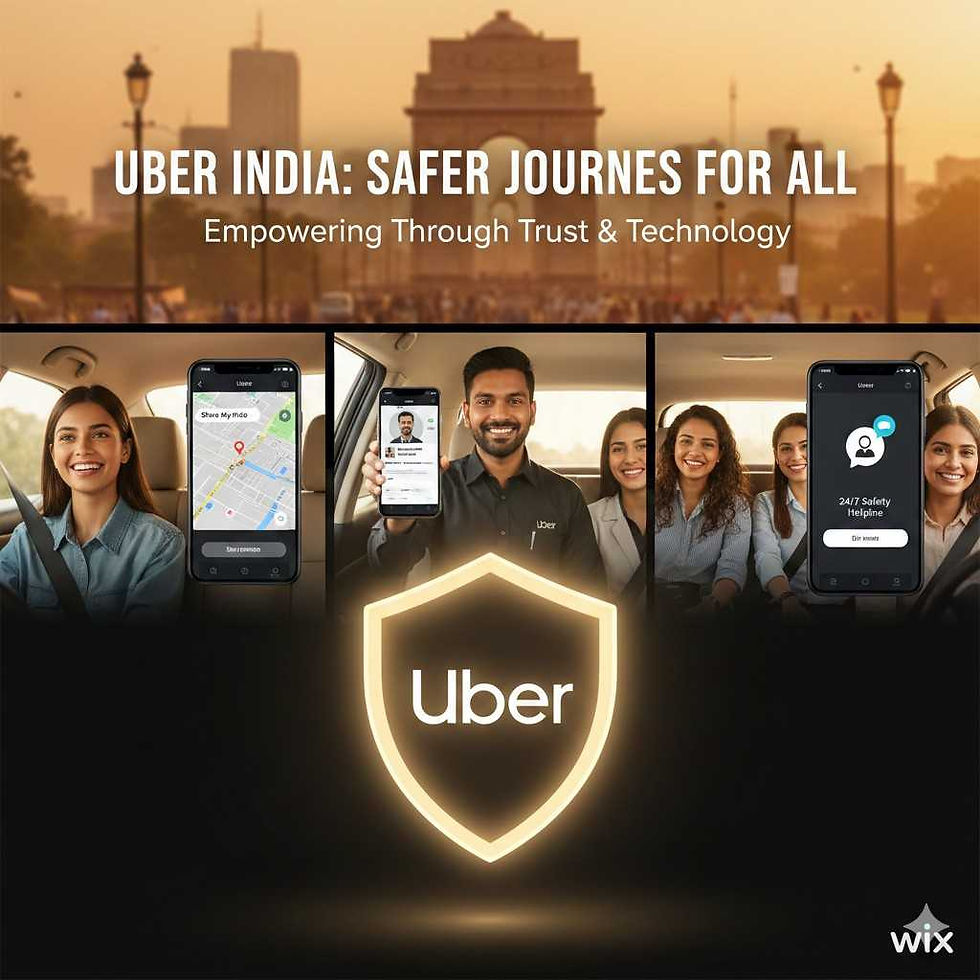
Following the 2014 incident, Uber implemented and prominently communicated safety features. According to company press releases and media coverage from 2015 onward documented in The Economic Times, features included in-app emergency assistance button connecting to local police, trip sharing allowing passengers to share ride details with trusted contacts in real-time, GPS tracking visible to passengers and Uber's systems, driver profile information including photo and vehicle details, and two-way feedback and rating systems.
The communication strategy emphasized technology as safety enabler. According to Uber's blog posts and statements reported by Business Standard through 2015-2016, messaging highlighted how GPS tracking, route monitoring, driver identification, and emergency connectivity provided transparency and accountability lacking in traditional transportation. Technology was positioned as inherent advantage of platform-based services over conventional taxis.
The company launched specific safety awareness campaigns. According to Campaign India from September 2016, Uber created educational campaigns explaining safety features to users, encouraging utilization of trip sharing and emergency features, and promoting awareness of available safety tools. These campaigns used television advertising, digital media, and in-app notifications to reach broad audiences.
Uber also communicated partnership with safety organizations. According to The Hindu from November 2016, the company announced collaboration with the National Commission for Women and other organizations to develop safety protocols, training programs for driver-partners, and awareness initiatives addressing women's safety specifically. These partnerships aimed to demonstrate commitment beyond profit-motivated compliance.
Driver screening processes were emphasized in communications. According to Mint from January 2017, Uber publicized enhanced background check procedures including police verification, document authentication, vehicle inspections, and ongoing monitoring of driver behavior through ratings and ride data. While implementation challenges existed, communicating rigorous screening aimed to rebuild trust.
The "Rider Zero" Safety Campaign
In March 2017, Uber India launched the "Rider Zero" safety campaign. According to exchange4media from March 2017, the campaign positioned safety as "Rider Zero"—the most important passenger on every trip—requiring driver attention and care. The campaign emphasized that driver-partners should treat safety as paramount responsibility before, during, and after every ride.
The campaign utilized emotional storytelling and human-centered messaging. According to Campaign India from March 2017, creative execution featured driver narratives, passenger testimonials, and scenarios illustrating safety consciousness. This approach humanized safety beyond technical features, emphasizing cultural and behavioral dimensions of creating safe ride experiences.
The initiative targeted both riders and drivers. According to The Economic Times from March 2017, campaign communications addressed dual audiences—reassuring passengers about safety prioritization while reminding driver-partners of their safety responsibilities and available support systems. This dual-audience approach recognized that safety required both platform capabilities and driver conduct.
Television, digital, and outdoor advertising supported the campaign. According to Afaqs from March 2017, multichannel execution aimed to maximize reach across demographics and geographies, with messaging adapted for regional markets. The investment level signaled safety's strategic priority in Uber's India positioning.
No verified public information is available on specific campaign effectiveness metrics including brand perception shifts, user adoption of safety features, or reported incident changes attributable to the campaign, as Uber has not publicly disclosed such detailed campaign performance data.
Women's Safety Initiatives and Communication
Women's safety received particular communication focus given heightened concerns and the 2014 incident's impact. According to The Hindu from March 2018, Uber launched specific initiatives targeting women including "Women Preferred View" allowing women drivers to receive more ride requests from women passengers, partnerships with women's safety organizations, and dedicated communication emphasizing features relevant to women's safety concerns.
The company communicated commitment to women driver-partner recruitment. According to Business Standard from April 2018, Uber publicized goals around increasing women driver percentages, providing training and support systems for women driver-partners, and creating women-focused driver communities. These initiatives addressed both supply-side safety (more women drivers increasing comfort for women passengers) and employment equity objectives.
Safety campaigns specifically addressed women passengers. According to exchange4media from September 2018, creative campaigns featured women passengers, emphasized features like trip sharing with trusted contacts particularly relevant for women traveling alone or at night, and included testimonials from women users about feeling safer using Uber compared to traditional transportation alternatives.
Uber collaborated with NGOs on women's safety awareness. According to The Economic Times from November 2018, partnerships with organizations like Breakthrough and Safecity involved developing educational content, conducting safety awareness sessions, and integrating safety advocacy into Uber's corporate social responsibility messaging. These partnerships added third-party credibility to safety communications.
The company also addressed concerns about driver harassment and inappropriate behavior. According to Mint from January 2019, communications highlighted reporting mechanisms, response protocols for harassment complaints, and driver deactivation policies for safety violations. Transparency about consequences for misconduct aimed to deter inappropriate behavior and reassure passengers about accountability.
Safety Report Publication and Transparency Communication
In September 2019, Uber published its first safety report covering U.S. rides. According to Reuters from September 2019, while the report focused on U.S. operations, the transparency approach represented broader shift toward data disclosure and accountability. The report documented serious safety incidents including sexual assaults and fatalities, demonstrating willingness to acknowledge problems while contextualizing incident rates relative to total trips.
India-specific safety reporting remained limited. According to The Economic Times from October 2019, Uber did not publish comparable safety reports for India despite the market's significant size and particular safety sensitivities. This absence raised questions about transparency standards and whether global safety communication approaches adapted sufficiently to local contexts and stakeholder expectations.
The company did communicate safety investments and technology enhancements specific to India. According to Business Standard from November 2019, announcements included expanded safety toolkit features, enhanced GPS accuracy, improved SOS button functionality connecting to local emergency services, and audio recording pilot programs allowing passengers to record trips for potential evidence and deterrence effects.
Transparency extended to regulatory engagement communication. According to The Hindu from December 2019, Uber publicized its cooperation with regulatory authorities, participation in policy development, and compliance with local licensing and safety requirements. This positioning aimed to demonstrate good-faith engagement with governance rather than regulatory evasion or minimal compliance.
COVID-19 Pandemic Safety Communication Shifts
The COVID-19 pandemic beginning March 2020 introduced health safety dimensions to ride-hailing. According to The Economic Times from April 2020, Uber suspended pooled rides, implemented driver and passenger masking requirements, reduced vehicle capacity, and introduced in-app health safety verification checklists. These health-focused safety measures required new communication approaches.
The company launched health safety awareness campaigns. According to Campaign India from May 2020, "No Mask No Ride" campaigns emphasized mandatory masking policies, encouraged social distancing, promoted contactless payment to reduce physical interactions, and explained vehicle sanitization protocols. These campaigns adapted existing safety communication frameworks to pandemic contexts.
Technology was positioned as enabling health safety verification. According to Business Standard from June 2020, Uber introduced features like selfie verification where drivers and passengers confirmed mask-wearing before rides, in-app health safety checklists, and ride cancellation options if counterparties weren't complying with safety protocols. Communication emphasized how technology supported health safety enforcement.
The pandemic period also saw general safety feature enhancements continue. According to Mint from August 2020, Uber introduced features like "Verify Your Ride" using PIN codes to prevent passengers entering wrong vehicles, audio recording features in additional markets, and enhanced emergency assistance capabilities. The company maintained communication about traditional safety even as health safety dominated immediate concerns.
Trust-building remained critical as ride-hailing resumed. According to The Economic Times from October 2020, consumer hesitancy about shared mobility during pandemic required safety communication reassuring users about health protocols, emphasizing enhanced cleaning, and positioning Uber as safer alternative to crowded public transportation where social distancing was difficult.
Partnership Communications and Stakeholder Engagement
Uber consistently communicated partnerships with government, NGOs, and safety organizations as trust signals. According to The Hindu from January 2021, announced partnerships included collaborations with police departments on safety training and incident response, NGOs focused on women's safety and transportation access, and technology providers enhancing security features. These partnerships added external validation to safety claims.
The company participated in policy dialogues and communicated this engagement. According to Business Standard from March 2021, Uber publicized participation in regulatory consultations about ride-hailing safety standards, driver background check requirements, and consumer protection frameworks. Positioning as collaborative policy participant rather than regulation opponent aimed to demonstrate responsibility and social license alignment.
Driver-partner safety also received communication attention. According to The Economic Times from May 2021, campaigns addressed driver safety including features allowing drivers to verify passengers, emergency assistance for driver-partners, insurance coverage for drivers, and protections against passenger misconduct. This balanced communication recognizing that safety was bidirectional concern for both passengers and drivers.
Community safety initiatives extended beyond direct platform operations. According to Mint from July 2021, Uber communicated about initiatives including road safety awareness campaigns, support for traffic safety NGOs, and participation in broader urban transportation safety dialogues. These extended initiatives positioned Uber as stakeholder in comprehensive urban safety rather than narrowly focused on immediate commercial interests.
Regional and Linguistic Adaptation
Safety communication adapted to India's linguistic and cultural diversity. According to exchange4media from September 2021, campaigns were created in multiple Indian languages including Hindi, Tamil, Telugu, Bengali, and others, recognizing that safety messaging needed cultural and linguistic accessibility to reach diverse populations across India's regions.
Regional variations addressed local contexts and concerns. According to Campaign India from November 2021, safety communications in different cities emphasized concerns relevant to local populations—for example, late-night safety for IT professionals in Bangalore, traffic safety in congested metros like Mumbai, and women's safety in cities where gender-based safety concerns were particularly acute.
Visual communication and iconography adapted to local cultural contexts. According to The Economic Times from January 2022, safety campaign creative featured diverse representation reflecting India's demographic variety, culturally appropriate scenarios and settings, and visual styles resonating with target audiences. This localization aimed to make safety messaging culturally relevant rather than appearing as imported Western communications.
The company also tailored communication channels to regional media consumption patterns. According to Business Standard from March 2022, while metro markets received heavy digital and television advertising, smaller cities and towns saw greater emphasis on radio, outdoor advertising, and vernacular press where reach and credibility differed from English-language digital channels.
Ongoing Challenges and Communication Complexities
Despite sustained safety communication, challenges persisted. Occasional safety incidents continued occurring and receiving media attention. According to various media reports through 2021-2022, assaults, harassment complaints, and driver misconduct allegations periodically surfaced, requiring reactive communication and damage control. These incidents demonstrated that no safety system eliminates all risks and that communication needed ongoing reinforcement.
Verification and enforcement challenges limited safety promise credibility. According to The Hindu from May 2022, reports suggested that background check rigor varied, fraudulent driver accounts occasionally appeared, and enforcement of safety policies wasn't uniformly consistent. These implementation gaps risked undermining safety communications if promises exceeded delivery capabilities.
Regulatory relationships remained complex. According to Mint from July 2022, state-level regulatory variations, periodic compliance disputes, and ongoing policy uncertainty created challenges for uniform safety communication. What Uber could promise in one state might not apply in others, complicating consistent national messaging.
Competition also engaged in safety communication. According to Business Standard from September 2022, competitor Ola emphasized its own safety features, local company positioning, and safety credentials in competitive campaigns. This necessitated differentiation in safety messaging rather than simply asserting safety as unique positioning.
Trust building required sustained investment beyond individual campaigns. According to analysis in The Economic Times from November 2022, safety perceptions were shaped by accumulated experiences, word-of-mouth, media coverage, and broader social discussions beyond controlled advertising. Sustained positive experiences and absence of negative incidents were ultimately most important, with communication supporting but not substituting for operational excellence.
Measuring Communication Effectiveness
Quantifying safety communication impact presented methodological challenges. According to marketing analysis in exchange4media from January 2023, while brand tracking studies could measure awareness and stated attitudes, directly attributing safety perception improvements or usage changes to specific campaigns amid numerous variables (actual safety record changes, competitive activities, media coverage, regulatory developments) was complex.
No verified public information is available on comprehensive campaign effectiveness metrics including aided/unaided safety awareness, feature adoption rates, incident reporting changes, or detailed consumer perception shifts attributable to communication campaigns, as Uber has not consistently disclosed such performance data for India operations.
The company did publicly communicate some aggregate safety statistics. According to Uber's blog posts and media statements from 2022-2023, the company shared data on emergency button usage, safety feature adoption rates, and driver screening volumes. However, comprehensive incident rate data or longitudinal safety outcome trends for India were not regularly published in verified public sources.
Proxy metrics suggested communication had some impact. According to The Economic Times from March 2023, Uber's user base growth and women user percentages reportedly increased through the late 2010s-early 2020s, suggesting that safety concerns weren't preventing adoption and that women specifically felt sufficient comfort to use the platform. However, attributing these trends specifically to safety communication versus other factors (pricing, convenience, competition) remained ambiguous.
Broader Implications for Trust-Building Communication
Uber's India safety communication illustrated several principles relevant to trust-building in contexts where service failures have severe consequences. Consistency and sustained investment mattered more than one-time campaigns. According to Campaign India from May 2023, Uber's multi-year commitment to safety messaging, feature enhancements, and stakeholder engagement demonstrated that trust rebuilding required long-term dedication rather than brief crisis response.
Transparency about both commitments and limitations enhanced credibility. According to communications analysis in exchange4media from July 2023, acknowledging that perfect safety was impossible while detailing specific measures, being transparent about incidents when they occurred, and avoiding overpromising created more sustainable trust than absolute safety claims that subsequent incidents would inevitably undermine.
Technology solutions needed complementary cultural and behavioral initiatives. According to The Economic Times from September 2023, while Uber emphasized technological safety features, effective safety also required driver training, passenger education about using features, cultural change around safety consciousness, and community norms supporting safe behavior. Communication needed to address these dimensions beyond purely technical solutions.
Stakeholder partnerships added third-party validation crucial for rebuilding damaged trust. According to analysis in Business Standard from November 2023, NGO partnerships, police collaborations, and regulatory engagement provided external credibility that corporate self-promotion couldn't achieve, particularly important when companies were rebuilding from trust deficits.
Conclusion
Uber's safety-focused communication campaigns in India, spanning from crisis response following the 2014 incident through sustained awareness initiatives, feature announcements, and stakeholder partnerships into the 2020s, represented sustained effort to rebuild and maintain trust in context where personal safety concerns directly affected business viability. The communication strategy emphasized technological solutions, transparency about safety measures, partnerships with credible organizations, and culturally adapted messaging addressing diverse Indian markets.
The campaigns demonstrated both the necessity and limitations of communication in trust-building. While messaging about safety features, screening processes, and company commitments played important roles in reassuring users and signaling priorities, communication ultimately supported rather than substituted for operational safety improvements, consistent execution, and accumulation of positive experiences. Safety perception was fundamentally shaped by actual incident rates, user experiences, and word-of-mouth alongside corporate messaging.
As ride-hailing matured in India and safety expectations evolved, Uber's communication adapted from crisis rehabilitation to proactive positioning, from defensive responses to confident assertions of safety leadership, and from generic promises to specific feature communications. The ongoing challenge remained maintaining vigilance and communication investment even when immediate crises faded, recognizing that trust was more easily lost than rebuilt and that sustained safety leadership required continuous operational and communicative reinforcement.
MBA-Style Discussion Questions
Crisis Communication and Long-Term Trust Rebuilding: Uber faced severe trust deficit following the December 2014 assault incident and Delhi ban. Evaluate the company's approach to transitioning from crisis response to long-term trust rebuilding. What frameworks should guide companies moving from defensive crisis communication to proactive trust-building? How should organizations balance acknowledging past failures with asserting current capabilities without appearing to minimize prior harms or overpromise on safety? What role should transparency about limitations play in trust-rebuilding communication?
Technology Solutions Communication in Human Safety Contexts: Uber's safety communication heavily emphasized technological features—GPS tracking, emergency buttons, trip sharing—as safety enablers. Critically assess the appropriateness and limitations of technology-focused communication for fundamentally human safety issues. Can technology solve behavioral and cultural safety challenges, or does technology-focused messaging risk oversimplifying complex human problems? How should companies balance communicating technological capabilities with acknowledging that technology alone cannot ensure safety? What communication approaches appropriately position technology as important tool without suggesting it's comprehensive solution?
Stakeholder Partnership Communication as Trust Signal: Uber extensively communicated partnerships with NGOs, police, and safety organizations as credibility signals. Analyze the effectiveness and authenticity of partnership communication for trust-building. Under what conditions do such partnerships enhance credibility versus appearing as superficial public relations exercises? How can companies ensure partnerships are substantive rather than merely communicative symbols? What responsibilities do partner organizations have in validating or challenging corporate safety claims? Should partnerships be formalized with measurable commitments and public accountability mechanisms?
Measuring Safety Communication Effectiveness: Unlike product marketing campaigns with clear sales metrics, safety communication effectiveness is difficult to quantify given attribution challenges and outcome measurement complexities. Evaluate appropriate frameworks for assessing safety communication impact. What metrics should companies use to evaluate trust-building and safety awareness campaigns when direct attribution is impossible? Should safety communication be held to measurable ROI standards, or is it inherently long-term brand investment accepting measurement ambiguity? How should marketing leaders justify sustained investment in safety communication without clear performance metrics? What proxy measures or alternative assessment approaches can guide resource allocation?
Communication Versus Operational Excellence Priority: Sustained safety communication requires ongoing investment, but ultimately safety perceptions depend on actual safety records and user experiences more than advertising. Analyze appropriate resource allocation between safety communication and operational safety improvements. Should companies prioritize operational capabilities over communication when resources are constrained, or is communication essential for ensuring operational improvements translate to perception changes? How should organizations balance "doing safety" (operational improvements, training, screening) versus "saying safety" (advertising, PR, awareness campaigns)? What are the consequences of communication outpacing operational capabilities or operational improvements remaining uncommunicated?


Comments