Consumer Emotion Trigger Map: Why Some Brands Make Us Feel and Others Just Make Noise
- Feb 13
- 6 min read
Last Diwali, my neighbor Priya bought three boxes of Cadbury Celebrations. Not because she needed that much chocolate—her family of four could barely finish one box. She bought them because of something she saw in an ad: a young woman surprising her elderly building watchman with a gift, his eyes lighting up with unexpected joy.
"I just... felt something," Priya told me later, almost embarrassed. "It reminded me of our Sharma uncle downstairs." That evening, Sharma uncle received his first Diwali gift in years. This is the power of emotion triggers in marketing. And somewhere in Mumbai, a Cadbury marketing team understood something fundamental: people don't buy products, they buy feelings.
The Hidden Map Behind Every Purchase Decision
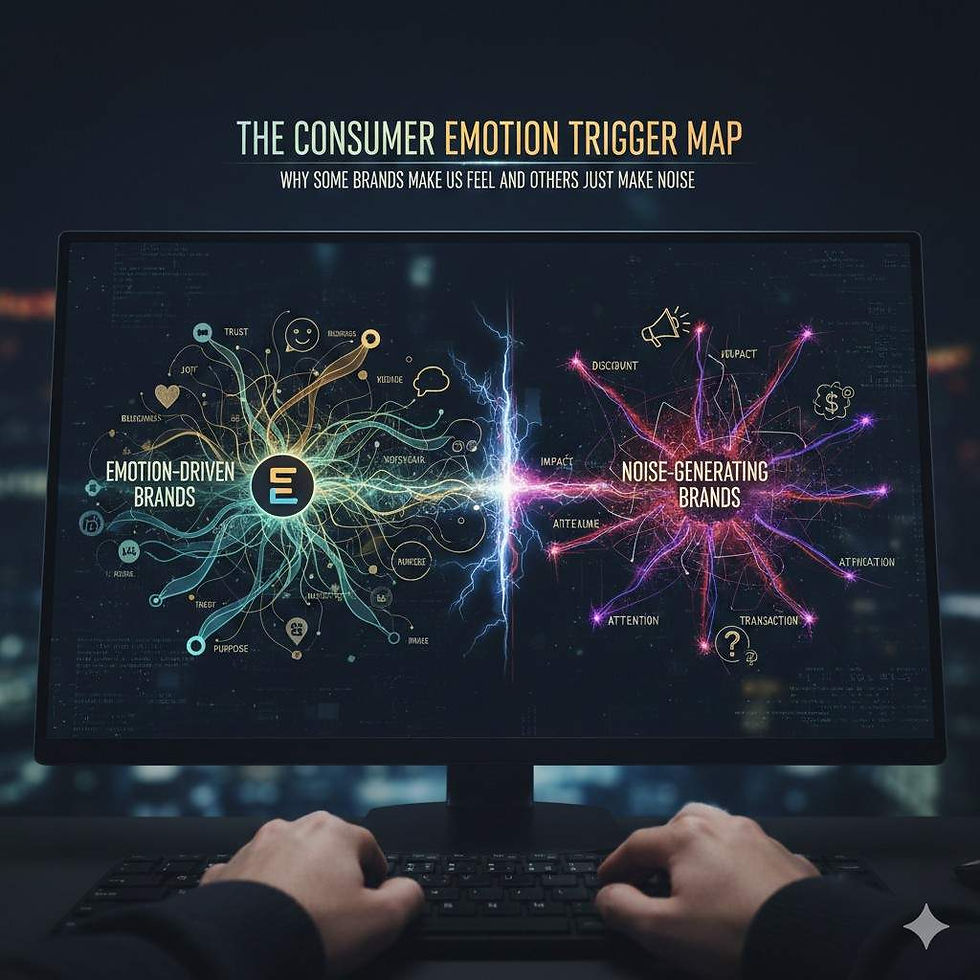
Think about the last time you made an impulse purchase. Maybe it was a pair of jujharis from a street vendor, or perhaps you splurged on a premium subscription you didn't quite need. If you dig deeper into why you bought it, you'll rarely find pure logic. Instead, you'll find an emotion—a feeling that was triggered at exactly the right moment. The Consumer Emotion Trigger Map is essentially a framework for understanding which emotions drive purchase decisions, and more importantly, when and how to activate them. It's not manipulation; it's about understanding the human experience deeply enough to connect authentically.
The Six Core Emotional Territories
1. Belonging and Identity
Remember when Tata Tea launched "Jaago Re"? They weren't selling tea—they were selling the idea of being a socially conscious Indian. Suddenly, your morning chai became a statement about who you are. Or consider the explosion of ethnic wear brands like Fabindia and Biba. Yes, the kurtas are beautiful, but what people are really buying is a connection to their cultural identity, especially young professionals who work in Western formals all week but want to feel rooted on weekends. The trigger here is simple: "This product makes me who I want to be."
2. Fear and Security
In 2020, when the pandemic hit, Dettol didn't need to change much about their messaging. Fear was already activated. But notice how they shifted from "protection against germs" to "protection for the people you love." The fear trigger was combined with love. Life insurance companies in India have mastered this territory. LIC's campaigns often show a father's worry about his daughter's wedding, or a mother's concern about her children's education. They're not selling policies; they're selling peace of mind, selling the ability to sleep at night. The trigger: "This product protects what matters most."
3. Achievement and Status
Why does a young professional in Bangalore spend ₹1.2 lakhs on an iPhone when a ₹20,000 Android phone does almost everything the same? It's not about the camera quality or the processor speed. It's about walking into a meeting and placing that iPhone on the table. It's about the Apple logo facing outward when you're on a video call. It's about the feeling of having "made it." Royal Enfield has built an entire empire on this emotion. Their bikes aren't the most practical or fuel-efficient, but riding a Bullet means something. It says something about who you are—or who you aspire to be. The trigger: "This product shows I've succeeded."
4. Joy and Excitement
Swiggy's "What's in a name?" campaign with celebrity name-based discounts was pure joy. No deep meaning, no social message—just the childlike excitement of discovering your name might get you free food today. People with common names actively looked forward to checking the app. Zomato's witty notifications work on the same principle. "Your order is arriving faster than your ex's replies" isn't selling food—it's selling a moment of unexpected laughter in your day. The trigger: "This product brings delight into my routine."
5. Trust and Nostalgia
Amul has barely changed their mascot or core messaging in decades. That little butter girl in the polka dot dress is now trusted by third-generation consumers. The emotion isn't excitement or status—it's the warm comfort of continuity. When Parle-G launched their campaign around chai and biscuits during the pandemic, they weren't introducing anything new. They were reminding us of grandmother's kitchens, of simpler times, of the one constant in every Indian household across economic classes. The trigger: "This product connects me to something timeless."
6. Empowerment and Possibility
Bajaj's "Hamara Bajaj" evolved over decades, but always carried one core message: possibility. Whether it was a middle-class family buying their first scooter or a young person's first bike, Bajaj sold the emotion of doors opening. More recently, digital payment platforms like PhonePe and Google Pay haven't just made transactions easier—they've made millions of Indians feel empowered, modern, included in the digital economy. A vegetable vendor in Kerala accepting UPI payments feels the same technological empowerment as a startup founder in Gurgaon. The trigger: "This product helps me do more, be more."
The Mapping Process: From Emotion to Action
Understanding these territories is just the first step. The real skill lies in mapping your specific product or service to the right emotional trigger. Here's how:
Start with the moment, not the product.
When does your consumer need you? A mother scrolling through her phone at 11 PM isn't looking for "organic baby food"—she's trying to quiet the anxiety about whether she's making the right choices for her child. That's the emotional entry point.
Identify the current emotional state.
Is your consumer frustrated? Overwhelmed? Aspirational? Tired? The same product can trigger different emotions depending on the consumer's current state. A premium coffee brand might trigger status for a young professional (achievement) but trigger comfort for an exhausted parent (joy/relief).
Map the transformation.
What emotion are they experiencing now, and what emotion do you want them to feel after engaging with your brand? Sleepy and stressed → Energized and capable (a morning beverage) Disconnected from roots → Proudly Indian (ethnic wear) Financially anxious → Secure about the future (insurance)
Find your authentic connection.
Here's where many brands fail. They identify the right emotion but execute it inauthentically. You can't fake belonging. You can't manufacture nostalgia if you're a brand launched last year. Paytm's early campaigns about digital India worked because they were genuinely part of that transformation. When they tried to pivot to lifestyle aspirations, it felt forced.
The Dark Side: When Emotion Triggers Backfire
Not every emotional trigger lands the right way. In 2017, Pepsi's ad featuring Kendall Jenner at a protest drew global outrage for trivializing serious social movements. In India, we've had our share of missteps too. A few years ago, a fairness cream brand tried to use empowerment messaging—suggesting that fairer skin would help women achieve their career goals. The emotional trigger they aimed for (empowerment) clashed violently with the problematic underlying message (your worth is tied to your skin color). The backlash was swift and deserved. The lesson? Emotional triggers must align with your brand truth and with evolving social values. What worked in 2005 might be offensive in 2025.
Practical Application: A Quick Exercise
Think about your own purchase behavior this week. Pick three things you bought or almost bought. For each one, ask:
What was I feeling right before I decided to buy this?
What feeling was I hoping to gain from this purchase?
Did the brand's marketing acknowledge that emotion, even implicitly?
When I did this exercise, I realized I'd subscribed to a meditation app not because I carefully evaluated its features, but because an ad showed a frazzled father finding five minutes of peace while his kids played nearby. As a parent working from home, I felt seen. That's the emotion trigger that converted me from aware to paying customer.
Building Your Own Emotion Map
If you're building a brand or marketing a product, start here:
List your top three customer segments. Not by demographics, but by the problems they're solving or desires they have.
For each segment, identify their dominant emotional state when they're in the market for your category. Are they excited? Anxious? Aspirational? Frustrated?
Map your product's natural emotional territory. Does your product logically connect to joy? To security? To belonging? Don't force a connection that isn't there.
Look for the overlap. Where does your customer's emotional need meet your product's natural emotional territory?
Test and refine. The map isn't static. As culture shifts, emotional triggers shift too.
The Truth About Emotion in Marketing
Here's what I've learned watching brands succeed and fail in the Indian market: the most powerful marketing doesn't create new emotions—it recognizes emotions that already exist and gives people permission to feel them. Dove didn't create insecurity about beauty standards, but they gave women permission to reject those standards. Surf Excel didn't invent children's messiness, but they gave parents permission to celebrate it rather than stress about it. The Consumer Emotion Trigger Map isn't about manipulation. It's about deep empathy. It's about understanding that when someone buys a product, they're not just solving a functional problem—they're trying to feel differently than they feel right now. The brands that win are the ones that understand: we're not in the business of selling things. We're in the business of feelings. And feelings, as my neighbor Priya proved that Diwali, are what move us to act. What emotion triggered your last purchase? Think about it. The answer might surprise you.


Comments