From a Small Town in Kansas to Every Corner of the World — The Untold Story of Aquafina
- 9 hours ago
- 7 min read
By the early 1990s, PepsiCo was one of the most powerful beverage companies on earth. Its cola competed with Coca-Cola in every country that had a convenience store. Its snack division, Frito-Lay, dominated American supermarket aisles. Its global distribution network was the envy of every consumer goods company that had ever tried to build one.
And yet, PepsiCo had tried — and failed — four times to enter the bottled water market.
Water. The most basic product on the planet. The one thing every human being consumes every day, without exception, without alternative, and without negotiation. PepsiCo had launched Ice Mountain in 1987. It had tried other water ventures. None had found traction. None had found the right combination of product, positioning, and timing.
The fifth attempt would be different.
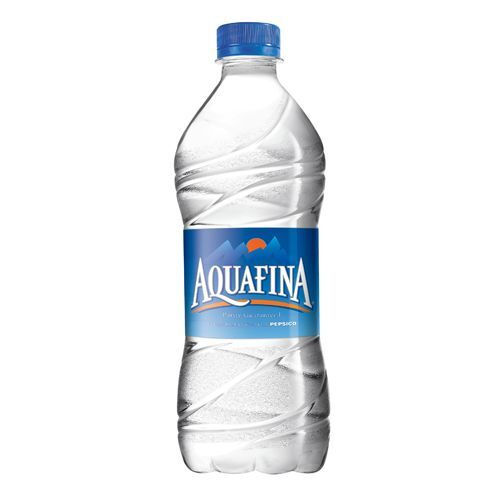
In 1994, in the unlikely city of Wichita, Kansas — better known for its aircraft manufacturing industry than for any culinary or beverage heritage — PepsiCo quietly began distributing the first bottles of a new purified water brand.
It was called Aquafina.
Wichita, Kansas: Where the Experiment Began
The choice of Wichita as Aquafina's launch market was not accidental. It was strategic in the way that only a company with PepsiCo's resources and analytical capability could be strategic: choose a market that is large enough to generate meaningful data, small enough to manage risk, and far enough from the glare of major media markets that a quiet test can remain quiet.
Wichita was all three.
The city's residents received Aquafina — a name chosen to evoke images of clarity, purity, and flowing water — through the same distribution channels that carried PepsiCo's cola and Frito-Lay snacks: supermarkets, convenience stores, petrol stations, and the vast informal network of PepsiCo's American bottling infrastructure.
The response was positive. More than positive. Wichitans, who had embraced the homegrown brand with a kind of civic pride, were buying Aquafina consistently and repeatedly. The feedback was clear: this was a product that worked, a brand that resonated, and a category that was ready. What PepsiCo could not have fully predicted in 1994 was the scale of what was coming.
The Purification That Became the Product
Aquafina's competitive claim was not taste in the conventional sense — water, by definition, is tasteless. Its claim was the absence of everything that makes water taste wrong: the chlorine of municipal treatment, the trace minerals of underground aquifers, the inconsistencies of different geographic sources.
The purification system Aquafina used — branded as HydRO-7 — was a seven-step process that included reverse osmosis, ultraviolet sterilisation, ozone treatment, and charcoal filtration. The result was water so thoroughly purified that it had no regional character, no mineral variation, no flavour fingerprint tied to where it was produced.
This was the product insight that PepsiCo had spent four failed attempts to find: consumers did not want water that tasted interesting. They wanted water that tasted like nothing except clean. The consistency that Aquafina's purification process guaranteed — the same taste in every bottle, from every bottling plant, in every city — was itself the premium.
The water source — municipal public water supply, the same infrastructure that supplied tap water to homes and offices — was purified so thoroughly that its origins became essentially irrelevant to the final product's quality. The purification was the product.
By 1997, Aquafina had achieved national distribution across the United States, rolling through PepsiCo's bottling network at a pace that no independently built water brand could have matched. The platform was in place. The growth that followed was extraordinary.
America's Best-Selling Water — and India's Introduction
The numbers that marked Aquafina's early American growth are striking.
In 2001, Aquafina captured 12.3% of the United States' $6 billion bottled water market — the largest share of any single brand. By 2003, it had become the best-selling bottled water brand in measured retail channels across the United States. By 2009, it represented 13.4% of domestic bottled water sales — holding its position as the number one bottled water brand in America by retail sales.
Internationally, the expansion followed the logic of PepsiCo's existing bottling and distribution relationships. Aquafina entered Canada, Turkey, Vietnam, Pakistan, Lebanon, and Spain. Each market was served through the local PepsiCo bottling infrastructure — which meant that Aquafina arrived with immediate distribution depth in every country it entered.
In India, Aquafina's journey began in 1999 with its Bombay — now Mumbai — launch. By 2000, it had been rolled out nationally. The Indian bottled water market was already contested — Bisleri had been operating since the 1960s and held deep brand recognition. But Aquafina arrived with PepsiCo's distribution muscle, its premium positioning, and the aspirational value of an international brand in a market that was rapidly becoming more urban and more health-conscious.
Across 19 bottling plants in India, Aquafina ensured its availability in over half a million retail outlets. It was sold in 300ml, 500ml, 1 litre, and 2 litre bottles — as well as 25-litre bulk water jars — covering every consumption occasion from a single commuter's drink to a household week's supply.
The Controversy That Forced Transparency
By the mid-2000s, Aquafina's brand imagery had — whether by deliberate design or consumer inference — acquired associations with natural spring water, mountain purity, and the kind of pristine origins that its icy blue packaging suggested.
The reality was more prosaic. Aquafina's source water was municipal public supply — the same tap water that flowed from kitchen taps across American homes. The difference was the purification: Aquafina's seven-step HydRO-7 process removed essentially everything from that source water, producing a result that was, by any technical measure, extremely pure. But the source itself was public infrastructure.
In 2007, following advocacy from environmental groups and consumer transparency organisations, PepsiCo made a decision that required genuine corporate honesty: it updated its Aquafina labels to explicitly state that the water came from a "public source." The change took effect on 27 July 2007.
The announcement generated significant media coverage. Critics who had felt misled by the brand's imagery were vocal. PepsiCo's own statement, made through a spokesperson, was characteristically direct: "If this helps clarify the fact that the water originates from public sources, then it's a reasonable thing to do."
What followed the controversy was instructive about the brand's actual foundations. Aquafina's sales did not collapse. Its market position did not crumble. Consumers who understood what the product offered — rigorous purification of public source water, consistent quality, convenient packaging — continued to buy it. The brand's value proposition had never actually depended on the romance of mountain springs. It had depended on the reliability of the purification process. That process had not changed. Only the label had.
The episode became a reference point in discussions about bottled water marketing practices globally. It also demonstrated that a brand built on genuine product quality can survive transparency in a way that a brand built on misleading imagery cannot.
The Marketing Strategy Built on Purity, Partnership, and PepsiCo Power
Aquafina's marketing has always operated within the specific constraints and advantages of its parent company's ecosystem — using those advantages with more consistency than creativity, and more effectiveness than imagination.
The PepsiCo distribution moat as the primary competitive advantage. Aquafina did not build a distribution network. It inherited one — one of the most sophisticated beverage distribution systems ever constructed, reaching every corner of every country in which PepsiCo operated. This meant that from the moment Aquafina arrived in a new market, it was available in essentially every retail location that carried PepsiCo's core cola portfolio. For a bottled water brand, distribution density is the first and most critical competitive variable. Aquafina had it from day one in every market it entered.
Purification technology as the brand's differentiating story. In a category where the product is chemically identical across most brands — water is water — the process of making that water became Aquafina's primary brand narrative. HydRO-7 was not just a technical specification. It was the brand's reason for existing. The seven-step purification process — reverse osmosis, ultraviolet sterilisation, ozone treatment, charcoal filtration — was communicated not as a health claim but as a quality claim. Aquafina did not promise to make you healthier. It promised to give you the cleanest water you could buy.
Bundling with PepsiCo's meal occasion strategy. One of Aquafina's most effective marketing mechanisms was not a campaign but a placement: Aquafina was consistently positioned alongside PepsiCo's food service relationships — stadiums, restaurants, fast food chains, and convenience stores — as the water option within a full PepsiCo beverage portfolio. Consumers who ordered a Pepsi got the option of Aquafina. Consumers eating at venues with PepsiCo exclusivity contracts found Aquafina already there. The brand was built into the occasion, not marketed to it separately.
Sponsorships that carry the brand into sporting moments. Aquafina has served as the official water sponsor of Major League Baseball — a sponsorship that placed the brand in stadiums, on television broadcasts, in dugouts, and in the hands of athletes and spectators across one of America's most-watched sporting seasons. In a category where the emotional connections are functional rather than aspirational, the sporting association provides the aspirational layer without requiring the brand to make health claims it cannot substantiate.
The Eco-Fina bottle as sustainability marketing. Aquafina introduced the Eco-Fina bottle — made with 50% less plastic than its standard bottle — as both a genuine environmental initiative and a marketing statement. In a category that had come under sustained environmental pressure for contributing to plastic waste, the Eco-Fina bottle allowed Aquafina to participate in the sustainability conversation with a concrete, measurable product change rather than a marketing campaign.
India-specific advertising built on aspiration. In the Indian market, Aquafina's advertising was built around the tagline "Pure Water Pure Joy" — communicating the brand's positioning in language that resonated with a market increasingly conscious of water quality, health, and the aspirational value of an internationally recognised brand. The campaigns were "refreshing and edgy," as Aquafina's own brand documentation describes them — designed to stand out in a market dominated by the long-established Bisleri and to attract the urban, health-conscious consumer who associated international brands with higher quality standards.
Thirty Years of Clean Water
In July 2024, Aquafina turned 30 years old. The brand that had begun as a quiet experiment on a Wichita production line was, by that anniversary, available in more countries than most people can name — a global presence built on a single, unglamorous, endlessly executable proposition: the most thoroughly purified water you can buy, in a bottle, anywhere in the world.
It never promised mountain springs. Its best marketing was not a tagline or a celebrity endorsement but the consistent experience of opening a bottle of Aquafina in Kansas and getting the same taste as opening one in Mumbai or Istanbul or Ho Chi Minh City. In a global consumer goods landscape full of brands that compete on story and emotion and heritage, Aquafina competed on something more fundamental and more durable: the reliability of a process.
The controversy of 2007 tested whether that reliability was real enough to sustain the brand through transparency. It was.
The four failed attempts before 1994 taught PepsiCo what water marketing required. The fifth attempt — modest, midwestern, unhurried — answered every question.
From Wichita to the world. Seven steps at a time.


Comments