The Story of Bajaj Auto
- Apr 3
- 6 min read
In 1942, when 27-year-old Kamalnayan Bajaj inherited leadership of the family business after his father Jamnalal's death, he faced a India consumed by its final struggle for independence.
Kamalnayan was preoccupied with freedom—as the son of Jamnalal Bajaj, whom Mahatma Gandhi called his "fifth son," he had responsibilities beyond business. His father had been Gandhi's closest confidant, his patron, and fellow freedom fighter who'd spent time in British prisons for India's sake.
"Whenever I spoke of wealthy men becoming the trustees of their wealth for the common good I always had this merchant prince principally in mind," Gandhi said after Jamnalal's death.
But when independence arrived in 1947, Kamalnayan faced a new challenge: transforming his father's legacy into sustainable businesses for a newly independent nation. He consolidated and diversified the Bajaj Group into cement, ayurvedic medicines, electrical equipment, appliances—and scooters.
On November 29, 1945, even before independence, Kamalnayan had incorporated M/s Bachraj Trading Ltd.—the precursor to what would become Bajaj Auto. Initially, it imported and sold two- and three-wheeled vehicles. In 1948, formal trading began.
Eleven years later, in 1959, the company obtained a license from the Government of India to manufacture two- and three-wheelers. In 1960, it became a public limited company. That same year, a 22-year-old named Rahul Bajaj—Kamalnayan's nephew and Jamnalal's grandson—who "reportedly adored" Italian Vespa scooters, became the Indian licensee for Piaggio to manufacture Vespas in India.
In 1961, Bajaj Auto began producing its first two-wheelers.
Today, eighty years after that 1945 incorporation, Bajaj Auto is the world's third-largest motorcycle manufacturer, second-largest in India, world's largest three-wheeler manufacturer, and in December 2020, crossed Rs 1 trillion ($12 billion) market capitalization—making it the world's most valuable two-wheeler company—proving that sometimes the greatest business empires are built by families who first fought for freedom.
This is the story of how Gandhi's "fifth son" built a family committed to India's progress—and how that commitment transformed scooters into an industrial empire serving millions.
1889-1942: The Gandhian Foundation
Jamnalal Bajaj was born in 1889 into a poor family in Rajasthan. At age six, he was adopted by Seth Bachharaj Bajaj, a wealthy Wardha merchant and distant relative. This adoption gave Jamnalal opportunities but never made him forget his roots.
As an adult, Jamnalal became Gandhi's closest follower—so devoted that Gandhi called him his "fifth son" (after his four biological sons). Jamnalal funded Gandhi's causes, hosted him at Wardha, and participated actively in India's freedom struggle, spending time in British prisons.
In 1914, Jamnalal established Shiksha Mandal Wardha for educating India's youth—the first institute to prepare textbooks and conduct examinations in Hindi and Marathi at graduate level. In 1926, he founded the Bajaj Group.
When Jamnalal died in 1942, his eldest son Kamalnayan—age 27—inherited leadership.
1945-1960: From Trading to Manufacturing
On November 29, 1945, Kamalnayan incorporated M/s Bachraj Trading Ltd., beginning the journey toward Bajaj Auto.
In 1948, the company began selling imported two- and three-wheeled vehicles.
In 1959, Bajaj obtained government license to manufacture (not just import) two- and three-wheelers. This was transformational—moving from trading to manufacturing meant control over quality, costs, and supply.
In 1960, Bajaj Auto became a public limited company, opening ownership beyond the family while the Bajajs maintained control.
Also in 1960, 22-year-old Rahul Bajaj—who had graduated from St. Stephen's College, Delhi with an economics honors degree in 1958—secured the Indian license for Piaggio's Vespa scooters. The Italian scooters were iconic, stylish, and perfectly suited for India's roads.
In 1961, Bajaj Auto began manufacturing its first two-wheelers—Vespa scooters under license from Piaggio.
1968: The MBA Who Lived Next to His Factory
In 1968, Rahul Bajaj—having completed his MBA from Harvard Business School—became CEO of Bajaj Auto at age 30, making him one of India's youngest CEOs.
His approach was revolutionary: he lived next to the factory in Pune, an industrial city three hours from Bombay. The hands-on leadership style meant understanding every detail of production, quality, and employee concerns.
When Rahul took over, annual turnover was Rs 72 million.
By 1970, Bajaj had produced 100,000 vehicles cumulatively.
1970s: The Oil Crisis Gift
The 1970s oil crisis drove cars off roads in favor of fuel-efficient two-wheelers—dramatically expanding Bajaj's addressable market.
New models launched systematically:
Early 1970s: Three-wheeler goods carrier, Bajaj Chetak scooter
1976: Bajaj Super
1977: Three-wheeled rear-engine autorickshaw
In the 1976-77 fiscal year alone, Bajaj Auto produced 100,000 vehicles—matching what had taken cumulative years to achieve earlier.
1977: Breaking Free from Piaggio
In 1977, the technical collaboration agreement with Piaggio expired. Afterward, Piaggio filed patent infringement suits attempting to block Bajaj scooter sales in the United States, United Kingdom, West Germany, and Hong Kong.
This forced Bajaj to innovate independently—developing proprietary designs rather than relying on Italian technology. What seemed like a crisis became liberation, pushing Bajaj toward self-reliance and indigenous innovation.
1980s-1990s: License Raj Defiance
India's License Raj restricted production volumes through permits. Bajaj Auto was licensed to produce just 20,000 units annually despite massive demand—customers waited roughly ten years after ordering to receive scooters.
Rahul Bajaj made a bold decision: ignore government regulations and increase production by more than the permitted 25% limit to achieve economies of scale.
"His grandfather had been known as the 'fifth son' of Mahatma Gandhi and his parents and grandparents had spent time in British prisons for the sake of Indian independence. Hence, he didn't fear going to jail for the (illegal) excess production," historical accounts note.
This calculated risk paid off—Bajaj became the world's lowest-cost scooter maker through volume production.
He established factories at Akurdi and Waluj, aggressively expanding capacity.
1990s: Liberalization Challenges
When India liberalized in 1991, Rahul Bajaj became famous—or notorious—as head of the "Bombay Club" opposing rapid liberalization, fearing cheap imports and foreign competition.
His fears materialized. Hero Honda's motorcycles decimated Bajaj's scooter sales. By 1997-98, domestic market share slipped to 40.5%.
Yet remarkably, Bajaj's profits increased. Rahul boasted: "My competitors are doing well, but my net profit is still more than the next four biggest companies combined."
The secret? Operational efficiency, low costs, and expanding export markets.
2001: The Reinvention
In 2001, India faced recession. Stock markets collapsed. Analysts predicted Bajaj Auto would shut down.
Instead, Bajaj Auto reinvented itself:
Established world-class factory in Chakan
Invested aggressively in R&D
Quadrupled product design staff to 500
Partnered with Kawasaki (motorcycles), Kubota (diesel engines), Cagiva (scooters) for technology
Most importantly, Bajaj launched the Pulsar motorcycle—which became a market leader, transforming Bajaj from scooter-centric to motorcycle-dominant.
2005-Present: The New Generation
In 2005, Rahul Bajaj stepped aside, passing leadership to the next generation. Rajiv Bajaj became Managing Director.
Under new leadership:
January 2020: Launched Chetak electric scooter (revival of iconic brand)
December 2021: Announced Rs 300 crore EV production facility (500,000 EVs annually capacity)
November 2019: Invested Rs 57 crore in Yulu (bicycle/e-scooter rental startup)
The Current Empire (2025)
Founded: November 29, 1945 (80 years)
Market Cap: Rs 1+ trillion (crossed December 2020; world's most valuable two-wheeler company)
Global Rank: 3rd-largest motorcycle manufacturer; largest three-wheeler manufacturer
Employees: 10,000+ (2019: 10,000; 51 women, 25 differently-abled)
Plants: Chakan, Waluj (Aurangabad), Pantnagar; R&D center 'Ahead' (Akurdi, Pune)
Stock: Listed BSE (SENSEX constituent), NSE (CNX Nifty constituent); 54.98% promoter-owned (Dec 31, 2022)
2024 Wealth: Bajaj family ranked 10th on Forbes India's 100 richest ($23.4 billion net worth, October 2024)
The Legacy
From Jamnalal's 1926 founding to Kamalnayan's 1945 incorporation to Rahul's 1968 transformation to 2020's Rs 1 trillion valuation—the Bajaj journey teaches timeless truths.
First, values compound across generations. Gandhi's "trusteeship" philosophy embedded social responsibility into Bajaj DNA—still evident in CSR commitments today.
Second, calculated risks drive breakthroughs. Defying License Raj production limits risked jail but created economies of scale competitors couldn't match.
Third, crises force reinvention. The 2001 near-death experience birthed Pulsar and transformed Bajaj from scooters to motorcycles.
Fourth, patriotism builds trust. The family that fought for independence earned credibility when building India's industrial future.
Finally, long-term thinking beats quarterly results. Living next to the factory, investing in R&D during downturns, maintaining family control while going public—all prioritized sustainable value over short-term gains.
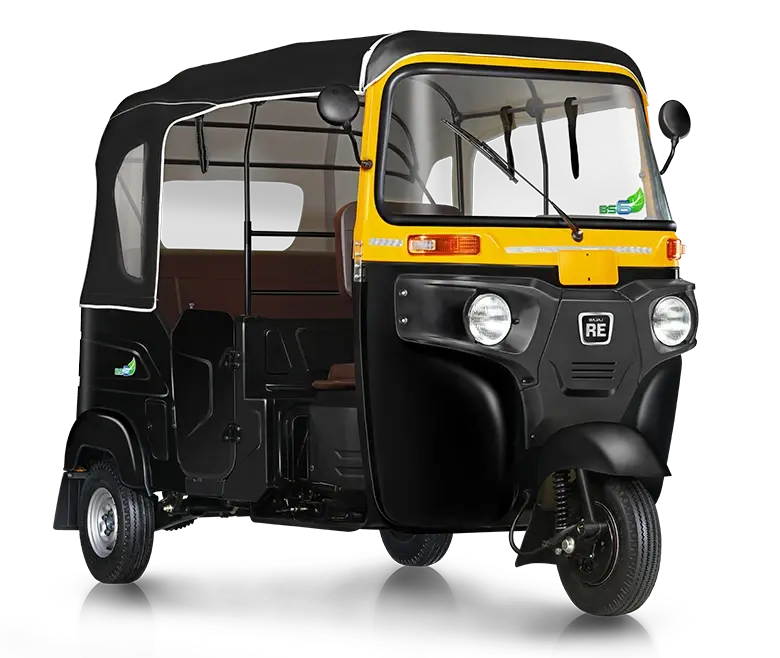
When Indians ride Bajaj motorcycles, autorickshaws, or electric Chetaks today, they're riding vehicles from a company built by Gandhi's "fifth son"—a family that spent time in British prisons for India's freedom, then spent 80 years building India's industrial strength.
That's not just manufacturing two-wheelers. That's proving that sometimes the best businesses are built by families who first fought for something bigger than profit.


Comments