How Bhushan Steel Rose From a Struggling Plant to India's Third-Largest Producer—The Story of Bhushan Steel
- Mar 16
- 7 min read
On January 14, 1987, Brij Bhushan Singal and his sons Sanjay and Neeraj walked into a struggling steel plant in Sahibabad, Ghaziabad. Jawahar Metal Industries Private Limited—incorporated just days earlier on January 7, 1983—was dying. It manufactured cold rolled steel strips and steel ingots, but survival seemed impossible.
Most entrepreneurs would have avoided a failing business. The Singal family saw opportunity. They acquired the entire stake, taking over management of the troubled company. Within two years, in 1989, the company became a deemed public limited company.
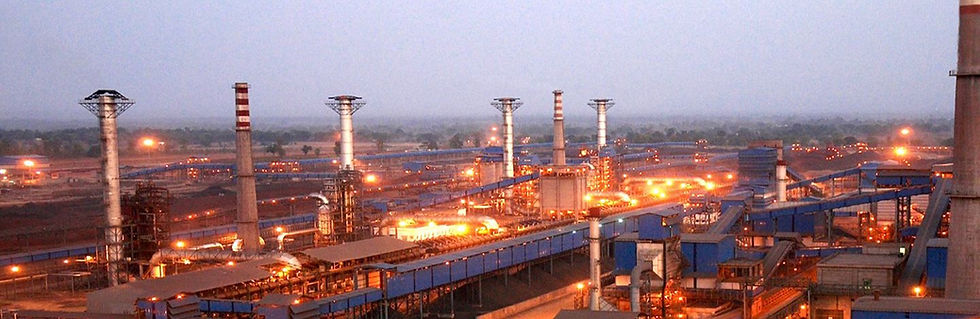
By 1992, after diversifying into wide-width cold-rolled steel strips, they renamed it Bhushan Steel & Strips Limited. In 2007, it became simply Bhushan Steel Limited. By then, it had achieved something extraordinary: becoming India's third-largest secondary steel producer with 5.6 MTPA capacity, supplying automotive giants like Maruti Suzuki, Tata Motors, and Mahindra & Mahindra.
Then everything collapsed.
On July 26, 2017, insolvency proceedings began under India's new Insolvency and Bankruptcy Code. The company owed Rs 63,020 crore to creditors—becoming one of India's biggest corporate loan defaulters. On May 18, 2018, Tata Steel acquired 72.65% stake for Rs 35,200 crore through subsidiary Bamnipal Steel, plus Rs 1,200 crore to operational creditors over 12 months.
This is the story of how one family built India's third-largest steel producer through Japanese technology and automotive partnerships—and how ambition, the 2008 financial crisis, and alleged fraud destroyed it all, creating India's first successful bankruptcy resolution case.
1983-1992: From Jawahar to Bhushan
January 7, 1983: Jawahar Metal Industries Private Limited incorporated in Sahibabad Industrial Area, Ghaziabad district, Uttar Pradesh. The company manufactured cold rolled steel strips and steel ingots—basic secondary steel products serving small-scale industries.
But the business struggled. By 1987, survival was uncertain. That's when Brij Bhushan Singal—an entrepreneur with vision but no steel background—made his move.
On January 14, 1987, Brij Bhushan Singal and his sons Sanjay and Neeraj Singal acquired the entire stake, taking over management. The family brought fresh capital, ambition, and willingness to learn an industry from scratch.
In 1989, the company became a deemed public limited company—expanding shareholding beyond the immediate family and preparing for growth.
The real transformation came in 1992. After diversifying into wide-width cold-rolled steel strips, they renamed the company Bhushan Steel & Strips Limited on June 9, 1992. They also completed their cold rolling plant during this year.
In 1993, Bhushan Steel came out with their first public issue to finance forward integration projects manufacturing 100,000 tonnes per annum of continuous products.
The Strategic Decision: Secondary Steel for Auto Sector
Bhushan Steel made a crucial strategic choice: focus on secondary steel production serving the automotive industry.
The steel industry divides into primary (producing raw materials like billets, coils, plates) and secondary (producing rods, coils, sheets). Primary steel requires massive capital, integrated plants, and iron ore mines. Secondary steel starts with purchased primary products, processing them into specialized products.
This capital-light approach allowed Bhushan to grow faster with less investment. They established plants at Sahibabad, Khopoli (Maharashtra), Odisha, and Hosur (Tamil Nadu).
2003: The Japanese Technology Advantage
In 2003, Bhushan Steel entered a strategic alliance with Sumitomo Metal Industries of Japan for process know-how manufacturing automotive steel sheets.
This partnership proved transformative. Japanese high-end technology gave Bhushan an edge over competitors using conventional methods. The sophisticated manufacturing processes produced superior quality steel sheets automotive companies demanded.
During 2004-05, they commissioned Cold Rolled (Narrow) and Pipe plants at Sahibabad.
By mid-2000s, Bhushan Steel had become India's third-largest secondary steel producer, supplying major automotive players. The order book looked spectacular: Maruti Suzuki, Mahindra & Mahindra, Tata Motors, and other giants relied on Bhushan's automotive-grade steel.
2007: The Name Change and Peak Success
On April 12, 2007, the company simplified its name from Bhushan Steel and Strips Ltd to Bhushan Steel Ltd—reflecting confidence and market positioning.
During 2007-08, they successfully completed Phase I of their ambitious Orissa (Odisha) Project: Sponge Iron plant (680,000 TPA), Billets plant (300,000 TPA), and Power Plant (110 MW).
They also acquired major stake in Bowen Energy Ltd of Australia. Through 100% subsidiary Bhushan Steel (Australia) Pty Ltd, they entered joint ventures developing coking coal and thermal coal projects in Australia. They incorporated Bhushan Steel Global FZE as another wholly owned subsidiary.
During 2008-09, they commissioned Cold Rolling Mill (narrow, 50,000 TPA) and Tube Mill (40,000 TPA).
Everything looked perfect. Bhushan Steel was riding high on India's infrastructure boom, automotive growth, and steel sector optimism.
2003-2008: The Fatal Decision
But one decision would doom everything: building an integrated steel plant in Odisha.
Until 2003, Bhushan's business model worked brilliantly—buy primary steel, process it, sell to automotive companies. But this created vulnerability: "Bhushan Steel's control over availability, quality and cost of input steel was very limited," according to their 2009-10 annual report.
In 2003, they decided to build an integrated plant in Odisha, becoming a primary steel producer. The timing seemed perfect—steel prices soaring, Chinese demand driving global markets, banks eager to lend, impressive automotive order books.
The project required massive debt. But everyone—Bhushan's management, lending banks, analysts—believed that once the plant reached full capacity, profits would easily cover debt servicing.
2008: The Crisis That Changed Everything
Then came the 2008 global financial crisis.
Chinese demand collapsed after the Beijing Olympics. Steel prices plummeted from $1,265 per tonne to just $300 per tonne—a 76% crash. The profitable margins Bhushan had projected disappeared overnight.
For secondary steel companies buying inputs, price crashes are manageable—input costs also fall. But for integrated producers with massive fixed debt, price crashes are catastrophic. Revenue collapses while debt obligations remain constant.
By 2010, Bhushan Steel's debt stood at Rs 11,404 crore. The Odisha plant's Phase I was complete, but profitability remained elusive.
Rather than consolidate, Bhushan kept borrowing to complete Phase II. The logic: only at full capacity would the plant generate sufficient cash flows to service debt.
Banks agreed. In March 2014, when Bhushan Steel was on the brink of default, SBI and a consortium of lenders sanctioned fresh loans—extending the gamble.
But steel prices remained stubbornly low. Interest costs escalated. Total debt rose 30% in two years: from Rs 35,710 crore (March 2014) to Rs 46,062 crore (March 2016).
The Fraud Allegations
In 2014, investigations revealed alleged systematic fraud. The Serious Fraud Investigation Office (SFIO) probe suggested promoters siphoned off funds, deteriorating the company's financial health.
According to SFIO, ex-promoters Brij Bhushan Singal and Neeraj Singal allegedly used illegal means to receive bank loans totaling Rs 45,800 crore between 2013-14 and 2016-17.
Specific allegations included:
Inflating Stock-in-Transit to increase Drawing Power against Cash Credit Facility
Misusing letters of credit with fabricated documents
Bribing bank officials for loan extensions
CBI probes claimed then-Chairman S.K. Jain bribed bank officials and defaulted over Rs 100 crore.
Stock prices crashed. Stakeholders panicked. By 2014, the company officially entered bankruptcy court.
July 26, 2017: India's Insolvency Test Case
On July 26, 2017, insolvency proceedings were initiated against Bhushan Steel under India's new Insolvency and Bankruptcy Code (IBC), 2016—enacted just one year earlier.
Total claims from lenders and creditors: Rs 63,020 crore.
Bhushan Steel became one of twelve companies referred by the Reserve Bank of India to bankruptcy court for debt resolution—part of India's aggressive cleanup of bank non-performing assets.
Multiple bidders emerged: Tata Steel and JSW Steel led the competition. Both saw strategic value in Bhushan's 5.6 MTPA capacity, automotive relationships, and plant locations.
March 22, 2018: Tata Steel Wins
On March 22, 2018, Tata Steel was declared the successful resolution applicant by the Committee of Creditors.
The rationale was compelling:
Capacity addition: 5.6 MTPA immediately vs. 4-5 years building greenfield
Cost advantage: Rs 35,200 crore vs. Rs 31,000 crore for equivalent greenfield capacity, plus Rs 1,300-1,500 crore present value cash flow benefit
Auto sector dominance: Bhushan's Ghaziabad plant supplied Maruti Suzuki; Khopoli plant had proximity to Pune and Gujarat auto hubs
Vertical integration: Tata's captive iron ore could feed Bhushan's plants
Target achievement: Helped Tata reach its 40 MTPA by 2030 goal
May 18, 2018: The Acquisition
On May 18, 2018, NCLT (National Company Law Tribunal) approved Tata Steel's resolution plan.
Tata Steel, through wholly-owned subsidiary Bamnipal Steel Limited, acquired 72.65% stake in Bhushan Steel for:
Rs 35,200 crore to creditor banks
Rs 1,200 crore to operational creditors over 12 months
Total: Rs 36,400 crore
Banks took a 37% haircut on their dues—accepting Rs 35,200 crore against claims of Rs 56,000+ crore.
Erstwhile promoters (Bhushans) saw their stake written down from approximately 44% to merely 3% post-reorganization.
The company was renamed Tata Steel BSL (Bhushan Steel Limited).
2018-2021: The Remarkable Turnaround
Under Tata ownership, transformation was swift:
FY2021 Q4: Consolidated net profit Rs 1,913.73 crore vs. Rs 5.93 crore year-ago—a 322x increase. Total income: Rs 7,348.66 crore vs. Rs 4,288.87 crore—71% growth.
Debt reduction: From Rs 63,020 crore to Rs 17,651 crore through prepayments and operational cash flows.
2019: Acquired 99.9% stake in Bhushan Energy Limited (renamed Anugul Energy Limited) for Rs 765 crore for captive power.
2021: Tata Steel amalgamated Bamnipal Steel and Tata Steel BSL, resulting in Tata holding 72.65% direct stake.
The Legacy
From Brij Bhushan Singal's 1987 acquisition of a dying plant to 2007's third-largest producer status to 2017's Rs 63,000 crore bankruptcy to 2018's Tata rescue—Bhushan Steel's 31-year journey teaches harsh truths.
First, secondary-to-primary transitions are perilous. Bhushan succeeded as secondary processor but failed expanding into integrated production.
Second, timing matters more than ambition. The 2003 Odisha decision seemed brilliant. The 2008 crisis made it fatal.
Third, debt magnifies both success and failure. Leverage accelerates growth in good times but destroys in downturns.
Fourth, corporate governance failures compound business mistakes. Alleged fraud transformed recoverable challenges into irreversible collapse.
Finally, India's IBC works. Bhushan Steel became India's first successful major bankruptcy resolution—proving the 2016 code could resolve NPAs efficiently.
When Tata Steel BSL supplies automotive steel today, the metal carries Brij Bhushan Singal's legacy—a family that rescued a dying plant, built India's third-largest producer, then lost everything through a combination of bad timing, excessive leverage, and alleged fraud.
That's not just a business failure. That's a case study in how vision without governance, ambition without risk management, and growth without sustainability can destroy even India's most promising industrial champions.
One decision in 2003 changed everything. And Rs 63,000 crore later, a new owner proved the assets were valuable—just not under the management that built them.


Comments