How Frooti Turned a Tetra Pak People Mistook for Soap Into India's 48% Market Share Mango Drink Empire
In 1985, Prakash Chauhan walked into Mumbai schools with a product nobody understood. The green rectangular package looked like soap. Parents couldn't figure out how to open it. Children stared at the strange box, confused.
"Use a straw," Prakash explained patiently, demonstrating how to pierce the top. "It's fresh mango juice."
The skepticism was understandable. India's beverage market was dominated by Coca-Cola and Pepsi selling carbonated drinks in glass bottles that required returns to shopkeepers. Nobody had seen fruit juice in a disposable package. Nobody had heard of Tetra Pak—the Swedish packaging technology that kept drinks fresh without refrigeration or preservatives.
But Prakash Chauhan wasn't launching just another beverage. He was creating India's first ready-to-drink mango product in revolutionary packaging—a vision born from watching dairy cooperatives transform India through the White Revolution and asking: "Why not fruits?"
That same year—1985—his daughter Nadia was born. Forty years later, Frooti commands 48% of India's Rs 8,000 crore mango drink market, contributes 60% of Parle Agro's net worth, exports to 20+ countries including the US, UK, UAE, Japan, and Australia, and has become so ubiquitous that Indians call any Tetra Pak drink "Frooti"—regardless of actual brand.
This is the story of how a product people mistook for soap became India's most loved mango drink—and how a 17-year-old girl joining the family business transformed a one-product company into an Rs 8,000 crore beverage giant.
1929-1985: The Chauhan Family Legacy
The story begins decades before Frooti. In 1929, Mohanlal Chauhan founded Parle in British India in Vile Parle, Mumbai—creating iconic biscuit brands that would become household names.
Mohanlal's youngest son, Jayantilal Chauhan, started the beverages business around 1959. His two sons—Ramesh and Prakash Chauhan—developed iconic brands: Thums Up, Limca, Gold Spot, Citra, and Maaza.
By the early 1990s, Parle controlled 60% of India's carbonated soft drink market. In 1993, the brothers sold these brands to Coca-Cola for $40 million—a landmark deal that reshaped India's beverage industry.
Post-divestment, the brothers split due to internal family succession issues and lifestyle differences. Ramesh retained Bisleri (which would become India's bottled water leader with 30%+ market share). Prakash continued with Parle Agro.
Meanwhile, the original Parle biscuit company split into three entities: Parle Products (led by Vijay, Sharad, and Raj Chauhan—owners of Parle-G, Melody, Monaco), Parle Agro (led by Prakash Chauhan), and Parle Bisleri (led by Ramesh Chauhan). All three continue using the "Parle" trademark.
1984-1985: The Frooti Launch
Parle Agro commenced operations in 1984. Prakash Chauhan's vision was clear: create a homegrown fruit drink from Indian orchards—not imported carbonated soft drinks.
After experimenting with mango and orange test products, Parle Agro decided on mango in 1985. Mangoes were India's beloved "king of fruits"—familiar, seasonal, craved year-round but available only during summer months.
The innovation wasn't just the product—it was the packaging. Frooti became India's first beverage sold in Tetra Pak, using Swedish technology that kept drinks fresh for months without refrigeration or preservatives.
The launch faced immediate challenges. The green rectangular package confused consumers. Many thought it was soap. The concept of disposable packaging was alien. Traditional glass bottles were returnable; Tetra Pak was single-use—unfamiliar to 1980s Indian consumers.
Prakash patiently educated the market, distributing through local dairy channels rather than traditional retail—tapping into the milk delivery network's existing customer relationships and leveraging "coolness" benefits from refrigerated distribution.
The Name and Positioning
The name "Frooti" was Prakash's eureka moment. "Mangoes are tropical fruits. And the drink was fresh and fun. So I named it Frooti," he explained.
The tagline "Mango Frooti, Fresh and Juicy"—created by marketing duo Arun Lahori and GM Menon—made Frooti synonymous with freshness and juiciness.
Packaging colors were vibrant golden yellow and bright green—instantly recognizable as mango hues, grabbing eyeballs on shelves flooded with red and brown carbonated drinks.
Crucially, early advertising linked Frooti to milk: "Doodh pi lo Frooti pi lo" (Drink milk, drink Frooti). This positioned Frooti not as a soft drink but as nourishment—a familiar, healthy product for all ages rather than just youth-focused carbonated beverages.
This strategy widened Frooti's demographic beyond typical soft drink consumers, making it acceptable for parents to give children.
1985-2003: Market Domination
Once product-market fit was established, Frooti dominated. For over a decade, it held 61% market share—unchallenged supremacy. The brand became so synonymous with Tetra Pak packaging that Indians started calling any drink in such packaging "Frooti," regardless of actual brand.
By the early 2000s, Frooti's contribution to Parle Agro reached a staggering 95% of revenue. The company was essentially a one-product business generating Rs 300 crore annually.
This dominance created vulnerability. Competitors like Slice, Maaza (ironically, Parle's former brand now owned by Coca-Cola), and Real were entering the mango drink category. Relying on a single product—however successful—posed existential risk.
2003: The 17-Year-Old Game Changer
In 2003, Nadia Chauhan joined Parle Agro at age 17 (some sources say 18). Born in 1985—the same year Frooti launched—she had been groomed by her father from childhood, spending after-school hours at the company's Mumbai headquarters.
Despite her youth, Nadia immediately recognized the strategic vulnerability: 95% revenue from one product was unsustainable. She set out to diversify.
2005: Appy Fizz Revolution
In 2005, Nadia launched Appy Fizz—India's first sparkling apple drink in a champagne-shaped PET bottle. The idea was revolutionary: a carbonated fruit beverage bridging soft drinks and fruit juices.
Appy Fizz became a runaway hit, proving Parle Agro could succeed beyond mango drinks.
Nadia also innovated India's first packaged Nimboo Pani (lemonade)—called LMN, launched in March 2009—and later Smoodh shakes, expanding the portfolio systematically.
2015: The Frooti Relaunch
By 2015, with her sister Schauna Chauhan as CEO and Nadia as CMO and Joint Managing Director, the sisters spearheaded Frooti's remarkable relaunch.
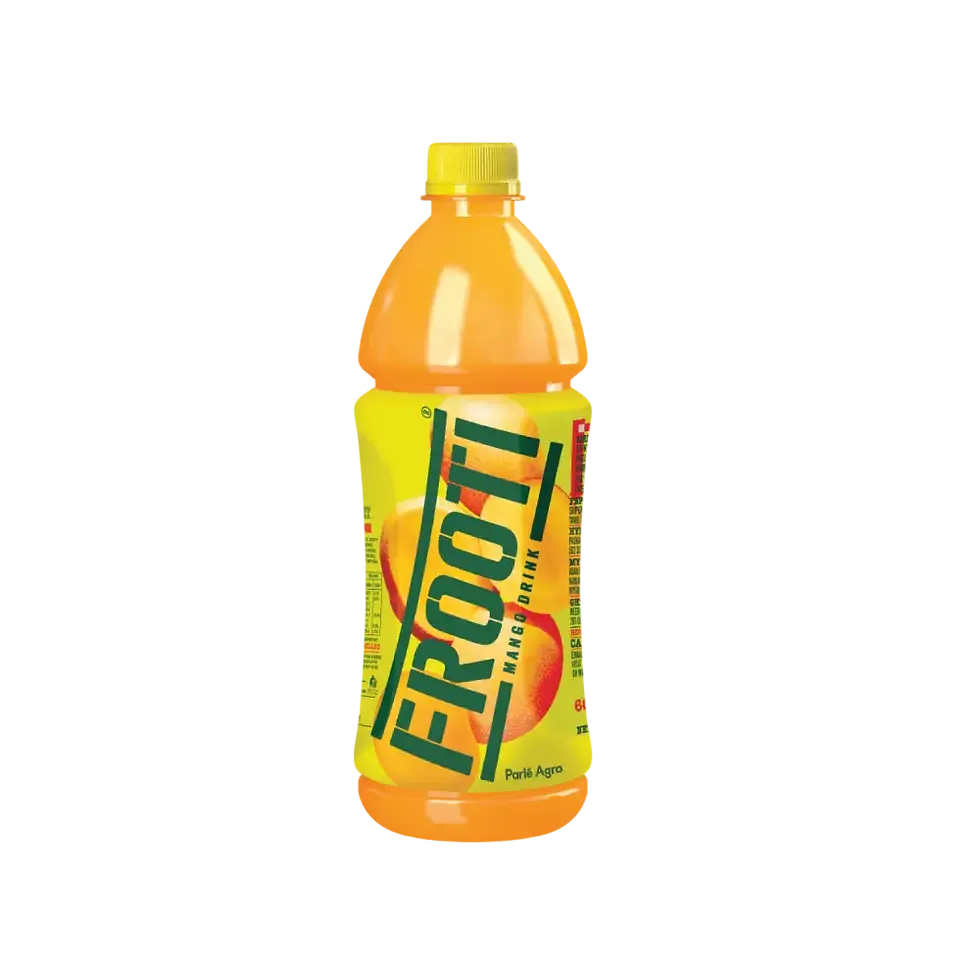
The most visible change: packaging redesign. Collaborating with New York-based studio Sagmeister & Walsh, Nadia changed the iconic green rectangular pack to vibrant yellow—better reflecting the mango juice inside—while retaining only the title in green. The shape evolved from rectangle to pentagon.
This bold redesign refreshed the brand for a new generation while maintaining recognition.
The Pricing Innovation
Nadia introduced small SKUs targeting rural India where purchasing power was lower. These smaller packs—though specific sizes aren't publicly disclosed—became so successful that Nadia fondly calls them "Magic Frooti" due to their remarkable sales impact.
This strategy allowed Frooti to penetrate India's remotest areas, democratizing access to packaged beverages.
2017: Frooti Fizz
In 2017, after Nadia saw her children mixing soda with Frooti at home, she launched Frooti Fizz—a sparkling mango drink. Bollywood actress Alia Bhatt endorsed the product. It's available in 250ml PET bottles, 500ml PET bottles, and 250ml cans.
The Current Scale
As of 2025, Frooti's transformation is complete:
Market Share: 48% (down from 95% revenue contribution, but diversification was the goal)
Revenue Contribution: 60% of Parle Agro's net worth
Company Revenue: Rs 8,000 crore (2022-23) vs. Rs 300 crore (2003)—a 26.6x increase in 20 years
Bailey Water: Became Rs 1,000 crore business
Target: Rs 20,000 crore by 2030
Exports: US, Canada, UK, UAE, Saudi Arabia, Malaysia, Maldives, Singapore, Thailand, New Zealand, Australia, Mozambique, Ghana, Malawi, Zambia, Nigeria, Tanzania, Japan, Ireland
Packaging: Tetra Pak (125ml, 200ml, 250ml, 1L), PET bottles (200ml, 250ml, 300ml, 500ml, 600ml, 1.2L, 1.8L), rectangular packs
The Product Range Today
Beyond original Frooti:
Frooti Fizz (2017)
Various sizes and formats
Made with real mango pulp from fresh mangoes
Parle Agro portfolio now includes:
Appy Classic (1986), Appy Fizz (2005)
LMN (2009)
Saint Juice (2008)
Grappo Fizz (2008)
Smoodh (flavored milk, 2021)
Bailey packaged drinking water (1993)
Confectionery: Mintrox mints, Buttercup sweets, Kaccha Aam toffee (2007+)
Hippo Namkeens
The Leadership
Parle Agro is led by:
Schauna Chauhan: CEO (elder daughter of Prakash)
Nadia Chauhan: CMO and Joint Managing Director (younger daughter)
Alisha Chauhan: Also involved (third daughter)
Prakash Chauhan: Chairman
The three daughters represent strong examples of Indian women in business leadership.
The Legacy
From a green box people mistook for soap to 48% market share commanding Rs 8,000 crore revenues—Frooti's 40-year journey teaches timeless truths.
First, consumer education builds categories. Prakash didn't abandon Tetra Pak when consumers were confused—he patiently taught them how to use straws, creating an entirely new beverage segment.
Second, monopoly invites complacency. Frooti's 61% share and 95% revenue contribution felt safe. Nadia recognized it was dangerous.
Third, youth brings fresh perspective. At 17, Nadia saw what industry veterans missed: single-product dependence was existential risk.
Fourth, packaging innovation differentiates commodities. Mango drinks existed before Frooti. Tetra Pak made Frooti distinctive.
Finally, diversification protects legacies. Reducing Frooti from 95% to 60% of revenue wasn't failure—it was strategic brilliance ensuring long-term survival.
When Indians reach for Frooti today—whether in Mumbai, rural Uttar Pradesh, Dubai, or New York—they're drinking a product born from one entrepreneur's vision that fruit juices deserved the same packaging revolution that made dairy successful.
Prakash Chauhan named it Frooti because mangoes are tropical fruits and the drink was fresh and fun. Forty years later, that simple logic created a brand so powerful that it became the generic term for an entire packaging category.
That's not just launching a mango drink. That's creating a category, educating a nation, surviving intense competition, and building a 48% market share empire—one confused consumer, one explained straw, one "Magic Frooti" at a time.


Comments