Personal Brand Starter Kit: From Invisible to Influential
- Jan 14
- 8 min read
Priya sat in the corner of a bustling Bangalore café, scrolling through LinkedIn with a familiar knot in her stomach. Another former colleague had just been featured in Your Story. Another peer was speaking at a tech conference.
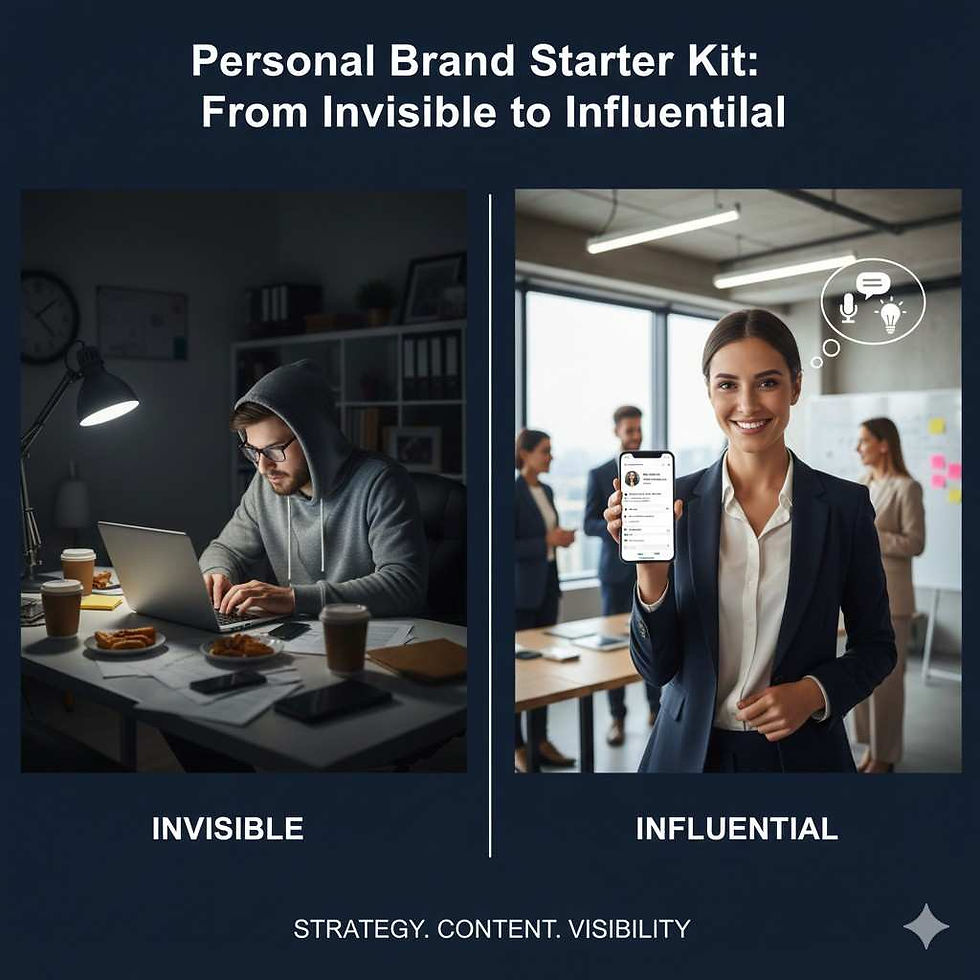
Meanwhile, her own profile looked like a digital ghost town—sparse, outdated, and utterly forgettable. She had the skills: ten years in product management, three successful app launches, and a track record that spoke volumes. But here was the hard truth—without a Personal Brand Starter Kit, nobody was listening, because nobody knew she existed. Sound familiar?
The Invisible Expert Problem
India is home to millions of talented professionals who are exceptional at what they do but terrible at showing it. We've been raised on the belief that "work speaks for itself." But in 2026, with over 100 million Indians on LinkedIn and countless others competing for the same opportunities, silence isn't humility—it's invisibility. Priya's story isn't unique. Whether you're a designer in Delhi, a consultant in Chennai, or a developer in Pune, the challenge remains the same: how do you stand out without standing on a soapbox? The answer lies in something that sounds corporate but is deeply personal—your personal brand.
What Exactly Is a Personal Brand?
Let me tell you about Ankur Warikoo. Twenty years ago, he was just another entrepreneur with failed ventures. Today, he's India's go-to voice on career advice, personal finance, and life lessons. The difference? He consistently showed up, shared his failures and learnings, and built a brand around being refreshingly honest. Your personal brand isn't about becoming an influencer or collecting followers like cricket cards. It's simply the answer to this question: "What do people think of when they think of you?" Right now, for most professionals, the answer is: "Um... nothing?" Let's change that.
The Foundation: Know Your 'Why'
Before Priya could build her brand, she needed to answer a harder question: Why does this matter? For her, it wasn't about fame. She wanted to transition into a leadership role, but every time she applied, she'd hit the same wall. Recruiters would say, "We're looking for someone with visibility in the space." Translation: we don't know who you are. Your 'why' might be different:
Landing better clients as a freelancer
Getting invited to speak at industry events
Attracting partnerships for your startup
Simply being recognized for your expertise
Write it down. This becomes your North Star when the process feels overwhelming.
The Three Pillars of Your Personal Brand
Pillar 1: Your Unique Point of View
Remember when Ashish Chanchlani started making comedy videos? YouTube was already crowded with comedians. But Ashish had a unique style—relatable middle-class scenarios with his signature overacting. That distinctiveness made him unmissable. You don't need to be wildly original. You just need to be distinctively you. Priya realized her supermarket was the intersection of product management and mental health. She'd spent years building products while managing anxiety, and she had unique insights about sustainable productivity. Nobody else in her circle was talking about this combination. Ask yourself:
What do people always ask your advice about?
What can you talk about for hours without getting bored?
Where do your professional skills and personal passions overlap?
That intersection is your goldmine.
Pillar 2: Consistent Presence
Here's where most people fail. They create a LinkedIn post, get 15 likes, hear crickets the next week, and give up. Building a personal brand is like running a chai stall. You can't open for business one Tuesday, close for three weeks, and expect regular customers. Show up consistently, and people will know where to find you. Kusha Kapila didn't become India's favorite content creator overnight. She posted consistently for years, slowly building her audience one relatable video at a time. For Priya, consistency meant:
One LinkedIn post every week about product management lessons
Commenting thoughtfully on others' posts three times a week
Writing a monthly deep-dive article on her experiences
No fancy equipment. No viral hacks. Just regular, valuable presence.
Pillar 3: Genuine Connection
Raj Shamani built his entire brand on having conversations. His podcast "Figuring Out" isn't about him talking at people—it's about genuine dialogue. That authenticity resonates. Your personal brand cannot be a one-way broadcast. Respond to comments. Answer DMs. Engage with other creators in your space. The 'personal' in personal brand isn't just about you—it's about the relationships you build. When Priya started responding thoughtfully to every comment on her posts, something shifted. People weren't just reading her content; they were talking with her. That's when opportunities started appearing.
Your Starter Kit: The Practical Steps
Step 1: Audit Your Digital Footprint
Google yourself. What comes up? For most people, it's either nothing or that embarrassing college photo they forgot existed. Check your:
LinkedIn profile (Is it updated? Does it tell a story?)
Twitter/X presence (Are your tweets adding value or just noise?)
Any old blogs or portfolios (Are they helping or hurting?)
Clean up the mess. Remove what doesn't serve your goals.
Step 2: Optimize Your Foundation
Your LinkedIn profile is your digital visiting card. Priya's transformation started here:
Before: "Product Manager at TechCorp" After: "Helping startups build products that don't burn out their teams | Product Leader | Mental Health Advocate" See the difference? The second version tells you what she stands for. Your profile should include:
A headline that explains your value, not just your title
A summary that tells your story (yes, actually write in first person)
Experience sections that showcase impact, not just responsibilities
Recommendations that validate your claims
Step 3: Create Your Content Themes
Trying to post about everything is like trying to be every snack in a samosa stall—confusing and unsatisfying. Priya identified her three content pillars:
Product management frameworks and lessons
Workplace mental health and sustainable productivity
Career growth stories (including failures)
This gave her endless content ideas while maintaining clear positioning. What are your three themes? Write them down. Every piece of content should fit into at least one.
Step 4: Start Creating (Imperfectly)
The biggest killer of personal brands is perfectionism. You wait for the perfect insight, the perfect words, the perfect moment. Meanwhile, someone with half your expertise but twice your courage is building the brand you wish you had. Priya's first post got 11 likes. Eleven. Six of those were probably from family. But she posted again the next week. And the next. Six months later, her posts were regularly hitting thousands of views. Not because she suddenly became brilliant, but because she kept showing up. Start with:
One post per week sharing a lesson you learned
One comment per day on someone else's content
One direct message per week to someone you admire (genuine, not salesy)
That's it. That's the formula.
The Content Formats That Work
You don't need to be a writer or a video creator. Pick what feels natural: The Lesson Post: "Here's what I learned after 50 user interviews..." The Story Post: "Five years ago, I got fired. Here's what happened next..." The Framework Post: "My 3-step process for prioritizing features..." The Question Post: "What's the best career advice you've received?" Tanmay Bhat built his comeback by simply reacting to things authentically. Kunal Shah grew Cred partly by sharing thoughtful observations about consumer behavior. Neither required expensive production—just clarity of thought.
Dealing with the Doubts
Three months into her journey, Priya hit a wall. "Who am I to give advice? There are VPs and founders saying the same things." This is the imposter syndrome speaking. Here's the truth: Your VP might have more experience, but they don't have your story, your struggles, or your specific way of explaining things. Someone out there is exactly three steps behind where you are now. They need to hear from you, not from the person at the summit who's forgotten what the climb feels like. Also, remember: Bhuvan Bam wasn't a trained actor. Prajakta Koli wasn't a media professional. They were regular people who started anyway.
The 90-Day Challenge
Here's what Priya committed to, and it changed everything:
Weeks 1-4: Set up and optimize all profiles. Define your three content themes.
Weeks 5-8: Post once per week. Comment on 15 posts per week. Send 4 connection requests to people in your industry.
Weeks 9-12: Increase to two posts per week. Write one longer article. Engage with everyone who comments on your content.
After 90 days: Assess what's working. Double down on that.
She tracked her progress in a simple spreadsheet: followers gained, engagement rates, opportunities received. Not to obsess over numbers, but to see what resonated. By day 90, she had:
2,000 new followers
Three speaking opportunity inquiries
Two job offers (both better than her current role)
One consulting client
More importantly, she had confidence. She was no longer invisible.
The Mistakes to Avoid
Mistake 1: Being everyone's echo Don't just reshare others' content. Add your perspective. That's where your value lives.
Mistake 2: Selling too soon If every post is "Hire me!" or "Buy my course!", people will scroll past. Give value first, for months if needed.
Mistake 3: Comparing your beginning to someone's middle That person with 50,000 followers? They started at zero too. Focus on your own growth.
Mistake 4: Waiting for perfection Done is better than perfect. Always.
When Opportunities Start Knocking
About five months in, Priya got a message from a startup founder. They'd been reading her posts and wanted to discuss a Head of Product role. No job application. No begging. Just an inbound opportunity because her brand made her visible and credible. That's when personal branding clicks—when opportunities find you instead of you chasing them. But here's what she learned: success isn't just the big moments. It's also:
The junior PM who thanked her for making them feel less alone
The recruiter who said, "I've been following your work"
The confidence to speak up in meetings because she'd practiced articulating ideas online
Your Personal Brand Evolution
Personal brands aren't built in a day, and they're never truly finished. They evolve as you grow. Ranveer Allahbadia started as a fitness YouTuber and evolved into one of India's biggest podcasters covering everything from business to spirituality. Your brand can grow with you. The key is to start with something specific, own it completely, and let it naturally expand as you gain credibility.
The Real ROI of Personal Branding
One year after starting her journey, Priya looked back at her old café moment with a smile. She'd since:
Landed her dream role at a fast-growing startup
Been invited to speak at two industry conferences
Started a side newsletter with 5,000 subscribers
Most importantly, felt seen and valued for her expertise
But the real return on investment? The relationships. The community. The sense of purpose that came from knowing her voice mattered.
Your Turn Starts Today
You don't need permission to start. You don't need a massive following or a fancy website. You just need clarity about what you stand for, the courage to share it, and the consistency to keep going. Your personal brand isn't about becoming someone you're not. It's about becoming more visible as who you already are. Somewhere right now, there's another Priya sitting in a café, scrolling through success stories and feeling invisible. Maybe that's you. This is your sign. Start today. Open LinkedIn. Write one post about something you learned this week. Hit publish. That's step one of your starter kit. The rest? We'll figure out together, one post at a time.
Because the world needs what you know. It's time to stop being the best-kept secret in your industry. What's one thing you want to be known for in your industry? Drop it in the comments. Let's start building your personal brand together.


Comments