The Simple Fix to India's Most Complicated Problem: The Story of Yulu
- 1 hour ago
- 7 min read
Bengaluru, sometime around 2016. Amit Gupta — co-founder of InMobi, India's first profitable internet unicorn — is stuck in traffic. Again.
It was a joke he and his colleagues at InMobi repeated to each other often: if you ask anyone in Bengaluru what their biggest problem is, besides relationship issues, they'll say traffic. But jokes about traffic don't move cars. And the longer Amit sat still in a city that was visibly choking — on congestion, on pollution, on the sheer inefficiency of millions of people each driving their own fossil-fuel-powered vehicle to move just a few kilometres — the less funny it became.
He had spent years building InMobi into a global mobile advertising platform operating across 15 countries. He knew how to scale technology. He knew how to solve hard problems. Now he wanted to solve one that mattered in a different way — not just commercially, but for the city he lived in, and for the millions of Indians living in cities just like it.
The solution he landed on was elegant in its simplicity: give people a clean, affordable, shared two-wheeler they could pick up and drop off anywhere, powered by an app. No fossil fuels. No parking headaches. No cost barrier.
That solution, in 2017, became Yulu. The name itself means "simple" in one of the Chinese languages — chosen deliberately, because Amit had learned from InMobi's original name, mKhoj, how a complicated name becomes a liability when you want to scale globally. Yulu would be simple to say, simple to understand, and simple to use.
Building Something India Had Never Seen
Amit Gupta co-founded Yulu in 2017 alongside RK Misra — a serial entrepreneur who had previously founded and successfully exited Tenet Technologies and Traveljini, and who had since devoted himself to public policy and governance through organisations like Carnegie India and the Center for Smart Cities — along with Naveen Dachuri as CTO and Hemant Gupta.
In January 2018, Yulu began operations in Bengaluru and Pune with a fleet of IoT-enabled, app-unlockable bicycles. The model was deliberately uncomplicated: scan the QR code on a Yulu bike, ride it to your destination, and park it at any designated Yulu zone. No docking stations. No fixed routes. No need to own anything.
The vision was first and last mile connectivity — the short, frustrating stretches between a metro station and an office, or between a bus stop and a home — that people either drove for in their own vehicles, took expensive autos for, or simply walked through exhaustion. Yulu was designed to fill that gap affordably, cleanly, and at scale.
Expansion followed quickly. By the end of 2018, Mumbai and Bhubaneswar had joined the network. City and metro authorities began calling — the Pune Municipal Corporation, the Delhi Metro, the MMRDA in Mumbai — because what Yulu was doing aligned with what city planners had been struggling to achieve: getting private vehicles off congested urban roads.
The Electric Leap
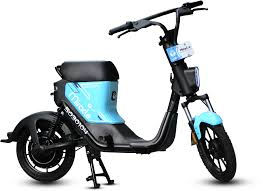
In 2019, Yulu made the decisive shift to electric mobility, launching its first shared electric vehicle — the Yulu Miracle — in Bengaluru and later in New Delhi.
The Miracle was built for the Indian context. A low-speed EV with a 250-watt motor, a top speed of 25 km/h, and a designation as a non-motorised vehicle under Indian traffic rules — meaning riders needed no licence, no helmet, and faced no registration requirements. It was accessible to virtually everyone.
That same year, in November 2019, Bajaj Auto invested ₹56 crore ($8 million) in a Series A round, beginning a partnership that would reshape Yulu's trajectory. The strategic fit was obvious: Bajaj, one of India's most respected two-wheeler manufacturers, brought manufacturing capability. Yulu brought technology and distribution. Together, they began developing vehicles specifically designed for Indian roads and Indian use cases — a critical refinement after early versions of Yulu's bikes had been built largely with imported components.
The Pandemic Pivot Nobody Planned
When COVID-19 struck in 2020, Yulu faced the same existential freeze as every transport business. Events and offices shut. People stopped commuting. The fleet sat still.
But inside the crisis was an unexpected signal.
Food delivery companies like Swiggy and Zomato were facing a severe shortage of delivery executives — many had returned to their home towns during the lockdowns. They began calling Yulu directly. Could Yulu's bikes be used for deliveries?
As Amit Gupta and co-founder Anuj Tewari have both recounted: "This was never the plan."
But Yulu did something remarkable. Rather than laying off its workforce, it handed employees chargers so they could power the bikes at home, and repurposed them as delivery agents. The pivot was pragmatic, accidental, and transformative.
In 2022, Yulu launched the DeX — a vehicle purpose-built for delivery professionals, with a rear carrier and structural improvements informed by years of real-world feedback. The DeX became the backbone of a business that none of the founders had originally designed Yulu to be: the electric mobility backbone of India's quick commerce revolution.
Yuma Energy: Building the Infrastructure of Electric India
By 2021, Yulu had identified its next constraint: charging. Managing a fleet of EVs in dense urban areas required a different solution than plugging vehicles into a wall. The answer was battery swapping — a system where a delivery rider could simply exchange a depleted battery for a fully charged one at a station, in minutes, without waiting for a charge cycle.
In 2022, Yulu partnered with Magna International, a Canadian automotive components giant, to form Yuma Energy — a joint venture focused exclusively on Battery-as-a-Service (BaaS). Yuma operates a growing network of battery swapping stations across India and currently handles over one million battery swaps every month.
In September 2022, Magna International and Bajaj Auto co-led a Series B round of $82 million in Yulu — the largest single fundraise in the company's history at that point. With this, Yulu had raised over $135 million in total funding. Its investors also include Wavemaker, Rocketship, 3One4, and Blume Ventures.
Yuma Energy expanded further by partnering with Hindustan Petroleum Corporation Limited, leveraging HPCL's network of over 24,000 retail outlets to deploy Yuma Stations at scale — bringing battery swapping to locations ranging from metros to Tier-2 towns.
The Marketing Strategy Built on Infrastructure, Not Advertising
Yulu's growth story is defined not by a conventional marketing playbook but by a strategy of building critical infrastructure and letting the network effects do the work.
Cluster-first expansion. Rather than entering a city with a thin, city-wide footprint, Yulu targets specific high-demand pin codes — near metro stations, tech campuses, dark stores, railway stations, and apartment clusters. The density of coverage in each cluster drives visibility and organic adoption among commuters and delivery riders who see and use the bikes daily.
Making delivery platforms the distribution channel. Yulu's most powerful marketing insight was understanding that gig workers — delivery executives for Swiggy, Zomato, Zepto, Blinkit, and Flipkart Minutes — were its most reliable and highest-frequency customers. By building a subscription product specifically for this audience (weekly and monthly plans ranging from ₹1,200 to ₹7,300), Yulu embedded itself into the operational infrastructure of India's largest quick commerce platforms. Within its operational areas, Yulu is the largest EV partner for quick commerce platforms — in some locations, Yulu bikes account for up to 80% of all vehicles at a dark store.
The franchise model as distributed marketing. In 2023, Yulu launched the Yulu Business Partner programme, empowering local entrepreneurs to operate Yulu's platform in their own cities. Partners in Indore, Kochi, Tirunelveli, Vadodara, Kolkata, Zirakpur, and other cities bring local market knowledge, local relationships, and local visibility — effectively making every franchise partner a ground-level marketing and operations team.
Data-driven city entry. Yulu enters new cities only when profitability milestones in existing cities are met. Pilot programmes with distribution centres and dark stores precede full launches. This disciplined approach means every Yulu entry into a new market is backed by demand validation — reducing wasted spend and building the credibility of a brand that grows sustainably.
The result: over 4 million users, 45,000 EVs across 13 cities, 100 million rides completed, and 850 million kilometres travelled — with 32 million kilograms of CO₂ emissions saved in the process.
From EBITDA Positive to IPO Ready
In 2024, Yulu achieved a milestone that had eluded it for years: it became India's largest EBITDA-positive shared electric mobility company. It reported an Annual Recurring Revenue of $30 million in FY2025 — a seven-fold increase in both revenue and users over the preceding two years.
The company has announced an IPO target, with plans for a public listing not before the end of FY2027.
The numbers behind the business have shifted. Quick commerce now accounts for 55% of Yulu's revenue, and food delivery for 40%. The consumer rental business — the original Yulu — remains alive and is being expanded with a new mid-speed EV that targets bike taxis, longer delivery routes, and higher-payload use cases.
A Simple Name for a Complex Mission
When Amit Gupta was stuck in that Bengaluru traffic jam in 2016, he wasn't thinking about funding rounds or EBITDA. He was thinking about a city that was slowly being strangled by the very vehicles people used to get around it — and whether someone could do something about it.
Yulu's journey from a fleet of app-unlockable bicycles in two cities to the electric backbone of India's quick commerce economy is not the story anyone planned. The pivot to delivery was accidental. The partnership with Bajaj was a turning point. The pandemic was nearly the end — and then became the beginning of something larger.
But through every turn, the name held. Simple. Clean. Scalable. A complex problem solved with an uncomplicated idea: share the journey, share the cost, share the air.
India's cities are still congested. The work is far from done. And Yulu — with 45,000 EVs, a battery-swapping network, a franchise model reaching smaller cities, and a public listing on the horizon — is still at it.
One ride at a time.
Founded 2017. Born in a traffic jam. Built to unclog a nation.


Comments