Modern Consumer Behavior: How Decision-Making Has Changed
- Jun 27
- 10 min read
Industry & Competitive Context
For most of the twentieth century, the consumer goods and services industry operated on a relatively stable informational asymmetry. Brands held the dominant share of knowledge about their products, and consumers received that knowledge primarily through broadcast advertising and in-store experience. The competitive battlefield was largely defined by distribution reach and share of voice — both of which favored incumbents with large advertising budgets and established retail relationships.
The arrival of broadband internet in the early 2000s began to disturb this equilibrium, but it was the convergence of the smartphone, social platforms, and algorithmic recommendation engines in the late 2000s and 2010s that fundamentally rewired consumer agency. By the mid-2010s, documented research from multiple consulting and technology firms confirmed that the majority of purchase decisions in categories as varied as electronics, apparel, financial services, and FMCG were being influenced by digital touchpoints that brands could neither fully own nor fully control.
This shift unfolded across industries simultaneously, eliminating the previously clean distinction between "high-involvement" and "low-involvement" purchases. Consumers were bringing smartphone-level research behavior to grocery aisles and luxury showrooms alike, collapsing the time and deliberateness traditionally separating impulse purchases from considered ones. The competitive context today is one in which the speed of information retrieval, the credibility of peer validation, and the friction-reduction in digital transactions define competitive advantage more reliably than product differentiation alone.

The Pre-Digital Decision Model and Its Limitations
The classical consumer decision-making framework, most commonly associated with the funnel metaphor — Awareness, Interest, Desire, Action — was developed in an era when the mass media ecosystem made linear progression through these stages a reasonable approximation of consumer behavior. Advertising created awareness; point-of-sale materials stimulated desire; purchase closed the loop. Brand managers could model investment across each stage with a degree of predictability grounded in reach and frequency metrics.
The limitations of this model were not fully exposed until the digital environment made them impossible to ignore. The funnel assumed a one-directional flow, a passive consumer receiving information, and a relatively short consideration phase. None of these assumptions survived contact with the internet at scale. Consumers began looping between stages, revisiting consideration long after initial awareness, seeking out negative reviews, and abandoning purchase intent hours before completing a transaction. The funnel's predictive power declined not because it was conceptually wrong, but because it had been designed for a market architecture that no longer existed.
Several large-scale research initiatives published in the early 2010s documented this empirically. Google's research into what it termed the "Zero Moment of Truth" established that consumers were conducting significant pre-purchase research online before engaging with any brand-controlled touchpoint. McKinsey's consumer decision journey research, based on surveys of thousands of consumers across multiple categories, confirmed that post-purchase brand advocacy and loyalty loops had become as commercially significant as the initial awareness-to-purchase arc. These were not marginal findings — they described a structural change in how markets function.
Strategic Shifts in the Consumer Decision Journey
The most consequential structural change in modern consumer behavior is the decoupling of information-gathering from the purchase act itself. Historically, information and transaction occurred in close proximity — a consumer entered a store, a salesperson provided information, and a purchase followed. Today, the research phase and the purchase phase are separated not only by time but often by platform, device, and social context. A consumer may research a product category on a video platform, validate it through peer reviews on a retail site, receive a targeted reminder through social advertising, and complete the transaction through a voice-activated interface. No single brand communication is decisive; the purchase is the product of an accumulated weight of micro-interactions across multiple channels.
Equally significant is the documented rise of what researchers and practitioners have called "messy middle" behavior — a non-linear exploration and evaluation phase in which consumers oscillate between expanding their consideration set and contracting it through filters of trust, price, and social proof. Google's published research on this phenomenon, released in 2020, used simulation-based models to demonstrate that even highly brand-loyal consumers were vulnerable to switching during this phase if a competitor's offer scored more favorably across cognitive biases such as social proof, authority, and scarcity.
The documented effect of mobile penetration on this journey is substantial. As smartphone ownership reached majority status across developing and developed markets, the boundary between online and offline consumer behavior dissolved. Publicly available data from Indian digital market research consistently documented consumers using mobile devices to compare prices in physical retail environments, scan product codes for ingredient or review information, and consult peer networks in real time before committing to in-store purchases. This behavior pattern — confirmed by multiple industry studies — represents a fundamental renegotiation of the role of the physical retail environment from a place of transaction to a place of experience validation.
Consumer Psychology and Behavioral Drivers
The strategic analysis of modern consumer behavior cannot be separated from its psychological architecture. Contemporary consumers do not make decisions in the rational, utility-maximizing manner implied by classical economic models. Behavioral economics, formalized in the documented research of Kahneman, Thaler, and others and now widely applied in marketing practice, has established that cognitive shortcuts — heuristics — govern most purchase decisions. What the digital environment has done is create an unprecedented infrastructure for exploiting and, from the consumer's perspective, navigating these heuristics.
Trust has become the primary currency of influence, and its sources have shifted decisively away from brand-controlled communications. Nielsen's widely cited consumer trust research, published across multiple waves, has consistently documented that consumer recommendations — whether from known individuals or anonymous reviewers — command significantly higher trust than paid advertising across virtually all demographic segments. This is not merely a preference for authenticity; it reflects a rational response to an environment in which marketing communications are ubiquitous and easily dismissed, while peer-generated content is perceived as motivated by experience rather than commercial interest.
The implications for brand strategy are structural. Brands that invested primarily in awareness-driving paid media during the pre-digital era now must compete in an environment where that investment cannot substitute for the organic social proof that increasingly determines purchase outcomes. The documented success of platforms built on user-generated review architectures — across e-commerce, travel, hospitality, and financial services — reflects not a consumer preference for technology but a preference for credible, unsponsored information that the technology makes accessible at scale.
Purpose and values alignment have also entered the documented decision-making calculus in a measurable way. Multiple publicly available consumer surveys conducted by firms including Edelman and Deloitte have established a consistent correlation between perceived brand values and purchase consideration, particularly among younger consumer segments. While the precise commercial magnitude of this effect varies by category and methodology, its directional consistency across studies representing hundreds of thousands of respondents makes it strategically significant rather than anecdotal.
Positioning and Consumer Insight: How Brands Have Responded
The most strategically agile brands of the past decade have restructured their positioning around the documented realities of the modern decision journey rather than the inherited architecture of the traditional funnel. This repositioning has manifested in several observable ways. First, leading brands have shifted investment from impression-based awareness advertising toward content strategies designed to be present and credible during the pre-purchase research phase — search-optimized content, product review ecosystems, and educational video formats that serve consumer information needs rather than brand messaging priorities.
Amazon's documented dominance as a product search starting point, with publicly available data consistently placing it ahead of general search engines for product-intent queries in major markets, illustrates the consequence of failing to compete at the point of consideration. Brands that historically relied on retail shelf presence and mass advertising to drive discovery have been structurally disadvantaged in a marketplace where the digital shelf — characterized by algorithmic ranking, review volume, and price transparency — determines visibility more reliably than physical distribution or advertising spend.
Direct-to-consumer models, which expanded significantly through the mid-2010s and accelerated during the COVID-19 period, represent a strategic response to the documented fragility of intermediary-dependent distribution in a transparent pricing environment. Brands operating DTC channels gained documented advantages in first-party consumer data, pricing control, and the ability to build loyalty relationships unmediated by retail platform algorithms. These are not merely operational shifts; they reflect a repositioning of the brand as a relationship entity rather than a product supplier.
Digital and Media Channel Dynamics
The media landscape through which consumer decisions are influenced has undergone a documented and permanent fragmentation. Television, once the uncontested reach vehicle for brand building, has experienced sustained viewership decline among younger demographics across every major market tracked by public research. Digital video, social platforms, and streaming services now compete for the attention that broadcast television previously commanded, and they do so in an environment in which targeting precision is far higher and attention duration per exposure is far lower.
The rise of influencer marketing as a documented commercial channel reflects the trust dynamics described earlier. Publicly available data from multiple industry bodies including the Interactive Advertising Bureau confirms the substantial and growing share of brand media investment directed toward creator and influencer partnerships. This is not a cosmetic trend; it represents a structural shift in the belief that paid media operating through an authentic human voice is more commercially effective per impression than equivalent investment in traditional display or broadcast advertising.
Social commerce — the documented integration of product discovery and transaction within social media platforms — has compressed the decision journey in ways that are strategically significant. When a consumer can move from initial product exposure to completed purchase within a single platform session, the traditional consideration phase is shortened and the role of comparison is reduced. Publicly available data from platforms operating social commerce features in markets including China, India, and the United States confirm transaction volumes that have grown at rates substantially exceeding those of traditional e-commerce, particularly in fashion, beauty, and lifestyle categories.
The acceleration of these dynamics during the COVID-19 pandemic has been documented extensively. Lockdown conditions globally produced compressed adoption curves for digital commerce behaviors that industry observers had projected would develop over years. McKinsey's published research noted that ten years of e-commerce penetration growth occurred in approximately three months across major markets in 2020. Critically, post-pandemic research has documented that the majority of these behavioral changes have persisted, establishing a permanently higher baseline for digital commerce participation across age and income cohorts previously considered resistant to channel migration.
Brand Outcomes
The business consequences of adapting or failing to adapt to modern consumer behavior are documented at an industry level across multiple public data sources. E-commerce platforms that invested early in review architecture, recommendation systems, and frictionless checkout have consistently outgrown the broader retail sector across every documented reporting period since 2015, as confirmed in the annual reports of major publicly listed e-commerce operators in Asia, North America, and Europe.
Brands that have built documented consumer loyalty programs with high engagement rates have demonstrated observable revenue predictability advantages over those relying on transactional, price-driven models. This is confirmed in the publicly available annual reports of subscription-model businesses across sectors including media, software, consumer goods, and financial services, where recurring revenue metrics have been cited as a primary indicator of commercial health by investors and analysts alike.
The documented growth of the creator economy and influencer marketing sector, reaching an estimated multi-billion dollar scale globally by the early 2020s according to publicly available industry reports, reflects the commercial validation of trust-based marketing as a business model. This is not merely an advertising format innovation; it represents the institutionalization of the insight that consumer trust, once concentrated in brands, now operates through human intermediaries at scale.
Conversely, brands and retailers that delayed investment in digital commerce capability, data infrastructure, and digital consumer engagement faced documented market share erosion during and after the pandemic period. Several major brick-and-mortar retail operators that filed for insolvency protection or significantly reduced their physical footprints during 2020 and 2021 cited structural shifts in consumer behavior as documented contributing factors in their public filings. The strategic lesson is not that physical retail is obsolete, but that its role in the consumer decision journey has been redefined from a primary purchase channel to an experiential and discovery layer within a predominantly digital consideration process.
Strategic Implications
For marketing leaders, the documented evolution of consumer decision-making carries several strategic imperatives that cannot be addressed through incremental channel addition or budget reallocation alone. They require a reconceptualization of where marketing's value is created and how competitive advantage is built.
The first imperative is presence and credibility at the point of consideration. The research phase of the modern consumer journey occurs independently of brand-initiated communication, on platforms and in formats that brands do not control. Competing effectively in this environment requires investment in content strategy, search visibility, review ecosystem management, and earned credibility — none of which produce immediate transactional returns, all of which are strategically essential to long-term purchase probability. Brands that treat these as operational costs rather than strategic investments systematically underinvest in the phase of the journey where most decisions are effectively made.
The second imperative is trust architecture at scale. If consumer trust has migrated from brand institutions to human intermediaries and peer networks, the brand's role is not to simulate that trust through influencer partnerships alone, but to create conditions under which genuine advocacy becomes commercially productive. This requires product and service experience quality that reliably generates positive word-of-mouth, complaint resolution infrastructure that converts dissatisfied customers into documented loyalty cases, and community-building investment that creates durable social proof ecosystems around the brand.
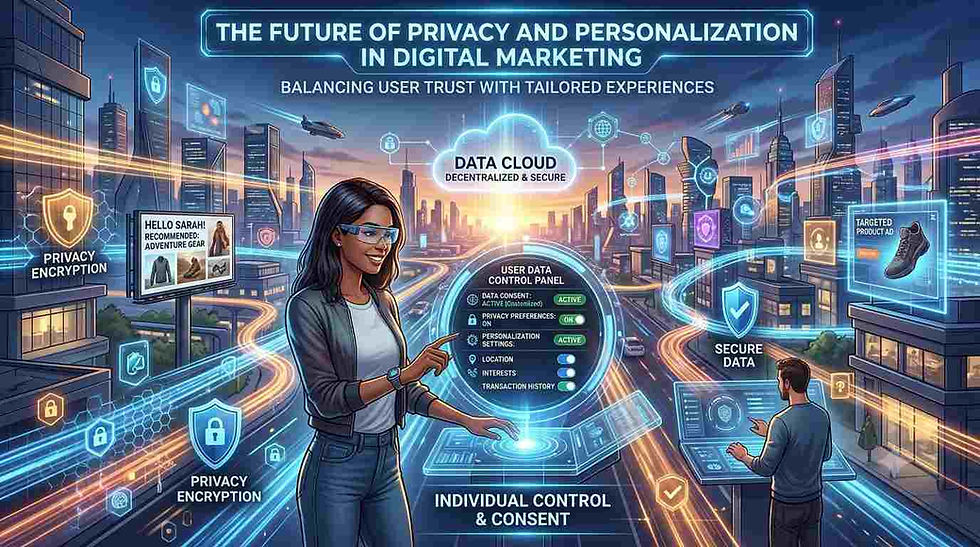
The third imperative is first-party data strategy. As third-party tracking infrastructure is progressively dismantled — driven by regulatory changes including GDPR in Europe and equivalent frameworks globally, as well as platform-level deprecation of third-party cookies — the commercial advantage of owning direct, consented consumer relationships has increased substantially. Brands that have invested in CRM infrastructure, loyalty programs, and DTC channel development are documented to be better positioned for the post-cookie media environment than those relying predominantly on purchased audiences through third-party data intermediaries.
Finally, the documented non-linearity of the modern consumer decision journey demands a shift in marketing performance measurement frameworks. The attribution models inherited from the direct marketing era, which assign commercial value to the last touchpoint before conversion, systematically misrepresent the value of brand-building and consideration-phase investment. Marketing leaders who operate with these models face structural pressure to underinvest in exactly the activities most essential to long-term competitive positioning. Developing measurement frameworks that account for the full documented complexity of the multi-channel journey is not a technical challenge — it is a strategic leadership one.
MBA Discussion Questions
Question 1
The classical marketing funnel assumed a linear, brand-controlled information flow. Given the documented architecture of the modern consumer decision journey, how should CMOs restructure their organizational and budget allocation frameworks to reflect the commercial reality that most effective influence now occurs outside brand-controlled channels?
Question 2
Consumer trust research consistently demonstrates that peer recommendations outperform paid advertising in documented influence across categories. If trust has structurally migrated from brand institutions to human networks, what is the enduring strategic value of brand equity, and through what mechanisms should modern brands build it?
Question 3
The COVID-19 pandemic is documented to have accelerated e-commerce adoption by a decade within months. Critically evaluate the strategic risks facing brands that interpreted this acceleration as a temporary anomaly versus those that treated it as a permanent structural shift. What frameworks should guide this distinction in future disruption scenarios?
Question 4
Last-touch attribution models systematically undervalue brand-building and consideration-phase investment in a non-linear consumer journey. How should a Chief Marketing Officer make the internal business case for rebalancing investment toward activities whose commercial impact is distributed across a multi-month decision arc rather than attributable to a single conversion event?
Question 5
As regulatory frameworks and platform-level changes progressively eliminate third-party tracking data, the commercial value of first-party consumer relationships increases significantly. For a mid-sized brand currently dependent on third-party audience targeting, design a two-year strategic roadmap for building first-party data infrastructure without sacrificing the short-term commercial performance required to fund the transition.


Comments