Hero MotoCorp: How a Bicycle Spare-Parts Shop Became the World's Largest Two-Wheeler Maker
Long before Hero became a name associated with motorcycles roaring down Indian highways, it was a small shop in Amritsar selling bicycle spare parts, run by four brothers trying to rebuild a livelihood in the years just before India's independence.
From Bicycle Parts to a Motorcycle Partnership
The Hero Group's roots trace back to 1944, when the Munjal brothers started a modest bicycle components business in Amritsar, which would eventually grow into Hero Cycles. Decades later, that same family, led by Brijmohan Lall Munjal, set its sights on a bigger opportunity: motorised two-wheelers. On January 19, 1984, Hero Honda Motors Limited was established as a joint venture between the Munjal family's Hero Group and Japan's Honda Motor Company, based in Dharuhera, India, with each partner holding a 26 percent stake in the new company.
The partnership combined two genuine strengths, Honda's advanced engine technology and manufacturing expertise, and Hero's deep understanding of the Indian market and its existing distribution relationships. In 1985, the joint venture launched its first motorcycle, the CD 100, built specifically around the promise of exceptional fuel efficiency, a genuinely important selling point in a price-conscious Indian market.
The Bike That Became a Household Word
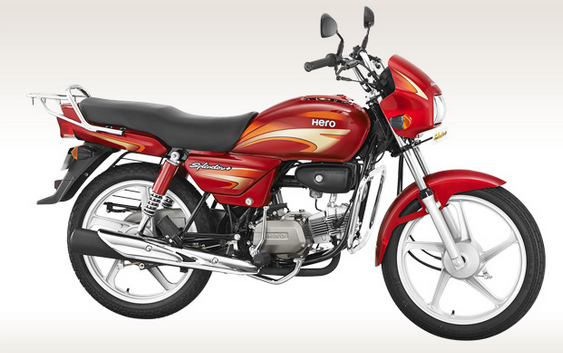
The defining moment in Hero Honda's early history arrived in 1994, with the launch of the Splendor. The bike became an extraordinary commercial success, eventually recognised as the world's largest-selling motorcycle, with annual sales exceeding a million units at its peak. Marketing materials at the time pointed to a striking statistic, that somewhere in India, a new Splendor was being sold roughly every thirty seconds.
That success was inseparable from the advertising campaign that introduced it: "Fill it. Shut it. Forget it." The line turned a purely technical benefit, the bike's fuel efficiency, into one of the most memorable slogans in Indian advertising history, a rare example of a functional claim becoming genuinely beloved rather than merely informative.
From a Functional Promise to a National Identity
As Hero Honda's dominance grew, so did the ambition behind its marketing. The company gradually moved beyond the purely practical appeal of "Fill it, Shut it, Forget it" toward a much broader emotional platform, "Desh Ki Dhadkan," meaning "Heartbeat of the Nation." The new positioning reframed Hero Honda not simply as a motorcycle manufacturer, but as something woven into everyday Indian life itself, present at weddings, commutes, festivals, and family milestones across the country.
In 2000, the company launched the Hero Honda Passport Program, an early and long-running customer loyalty initiative, later renamed the Hero GoodLife Program, reinforcing brand relationships well beyond the point of purchase.
Taking the Brand Where the Roads Got Rougher
One of Hero Honda's most strategically significant decisions came in 2007, when it established a dedicated rural marketing vertical under the banner "Har Gaon Har Aangan," meaning "Every Village, Every Home." Recognising that rural India represented a vast, largely untapped market with very different buying behaviour than urban customers, the company deployed around 500 sales representatives directly into villages, tasked not with pushing immediate sales, but with building genuine brand awareness among local residents and community opinion leaders. The approach worked, reportedly generating an additional 15,000 to 16,000 motorcycle sales per campaign wave, and rural markets eventually came to represent more than 40 percent of the company's total sales.
A Marriage That Had to End
By the late 2000s, cracks had begun to show in the Hero-Honda partnership. Disagreements emerged over export strategy, and a particular point of friction arose when Honda decided to establish its own fully-owned Indian subsidiary, Honda Motorcycle and Scooter India, while the Munjal family refused to merge Hero Honda's existing spare parts business into that new Honda entity. In December 2010, the joint venture's board decided to terminate the partnership in a phased manner, with the Munjal family, through an overseas special purpose vehicle backed by bridge loans, buying out Honda's remaining stake entirely.
On July 29, 2011, the company was formally renamed from Hero Honda Motors Limited to Hero MotoCorp Limited, marking its full transition into an independent, India-owned company. The split also freed Hero to source components from any vendor it chose, rather than being restricted to Honda-approved suppliers, a genuine operational change alongside the symbolic rebrand.
The Marketing Strategy: Let Distribution Become the Real Advertisement
What makes Hero MotoCorp genuinely distinctive as a brand is how deliberately it treated distribution infrastructure itself as a core marketing asset, not just a logistics function. For a motorcycle buyer in small-town or rural India, the real question was rarely just "is this a good bike," it was "can I actually get it serviced nearby, and will spare parts be available when something breaks." By building an extraordinarily extensive dealer and service network reaching deep into towns and villages most competitors overlooked, Hero made reliability a lived reality rather than just an advertising claim, turning its distribution reach into part of the product's actual value proposition.
The company's evolving tagline strategy showed similar sophistication, moving deliberately from a narrow, functional promise, fuel efficiency, toward a broader emotional claim of national belonging through "Desh Ki Dhadkan," and later, following its split from Honda, reframing its new independent identity with the confident, aspirational line "Hum Mein Hai Hero," "There's a Hero in All of Us," turning what could have been a moment of corporate uncertainty into a fresh, emotionally resonant brand narrative.
Its rural strategy stood out for a similarly thoughtful reason, rather than simply adapting urban advertising for rural audiences, Hero built a dedicated village-level sales force explicitly tasked with earning trust through relationships and local credibility first, understanding that in rural India, a recommendation from a trusted local voice carried more weight than any television commercial.
From a Spare-Parts Shop to a Name Written Into India's Daily Commute
Hero MotoCorp's journey, from a modest bicycle parts business in pre-independence Amritsar to the world's largest two-wheeler manufacturer, is ultimately a story about understanding that trust in India isn't built through advertising alone, it's built through presence, reliability, and relationships that reach all the way down to the smallest village roads. Four decades after the Splendor first rolled off assembly lines, Hero's enduring claim to being the "heartbeat of the nation" still rests less on a slogan and more on how deeply its service network actually reaches into the country it claims to represent.


Comments