HUL Lifebuoy "School of 5": Communication for Behavioral Change
Executive Summary
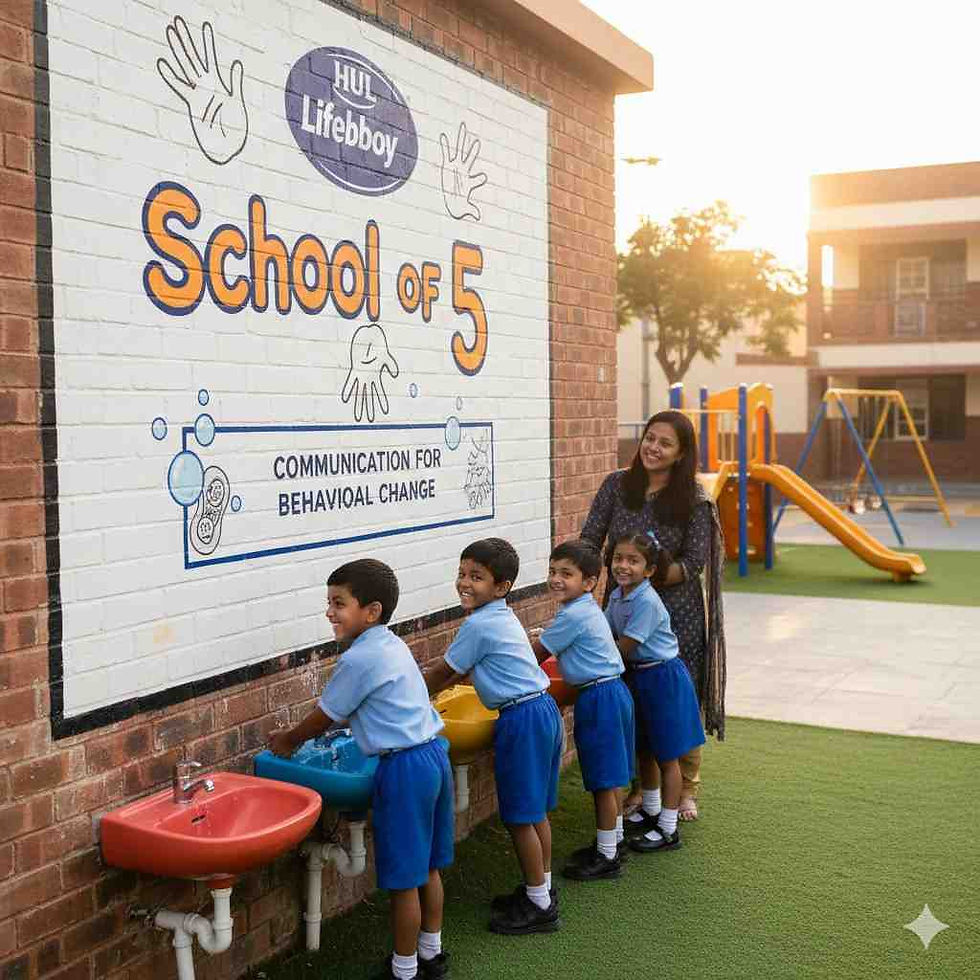
Hindustan Unilever Limited (HUL)'s Lifebuoy brand launched the "School of 5" campaign as part of its broader handwashing behavior change initiative in India. The campaign sought to address the public health challenge of inadequate handwashing practices, particularly among children, by creating an educational intervention focused on teaching proper handwashing technique. According to multiple credible sources, the campaign utilized a simple five-step handwashing method and deployed various communication channels including on-ground activations, digital media, and partnerships with educational institutions. The initiative represents a case study in how consumer goods companies can pursue social mission objectives while building brand equity and market presence.
Company Background
Hindustan Unilever Limited is India's largest fast-moving consumer goods company, with Lifebuoy being one of its flagship personal care brands. According to HUL's official communications, Lifebuoy has been present in India for over a century and holds significant market share in the soap category. The brand has historically positioned itself around health and hygiene messaging, making it a natural vehicle for public health interventions.
The Public Health Context
The context for the "School of 5" initiative was rooted in significant public health challenges in India. According to UNICEF data cited in multiple news reports, diarrheal diseases and respiratory infections were among the leading causes of child mortality in developing countries, with proper handwashing with soap identified as one of the most cost-effective interventions to prevent disease transmission.
The Economic Times reported in October 2013 that HUL's research, conducted in partnership with various organizations, indicated that while awareness of handwashing existed, the practice of washing hands with soap at critical times (such as before eating and after using the toilet) remained low in many communities across India. This gap between awareness and behavior formed the strategic rationale for focusing on behavior change rather than merely awareness creation.
Campaign Genesis and Objectives
According to information published by HUL and reported in business media, the "School of 5" campaign was conceived as part of Lifebuoy's broader "Help a Child Reach 5" program, which itself was launched globally by Unilever with the mission to change handwashing behavior and reduce child mortality. The Campaign India website reported in 2014 that the "School of 5" specifically aimed to teach children a simple, memorable five-step handwashing technique that could be easily replicated.
The stated objectives, as documented in various marketing and advertising publications, included: educating children and their families about proper handwashing technique, making the behavior change intervention scalable and sustainable, and building the Lifebuoy brand's association with health and hygiene at a grassroots level.
The Five-Step Method
Central to the campaign was a simplified five-step handwashing method. According to descriptions in advertising case studies and news reports, the five steps were: (1) wet hands with water, (2) apply soap, (3) rub palms together, (4) rub the back of hands, and (5) rinse with clean water. This simplification made the technique easy to teach and remember, particularly for children in primary schools.
The Brand Equity publication (part of The Economic Times) reported that the campaign used the metaphor of "5 buddies" or animated characters representing each finger to make the technique engaging and memorable for children. This creative approach transformed a health behavior into an interactive learning experience.
Implementation Strategy
On-Ground Activations
According to multiple reports in marketing trade publications, the primary implementation mechanism was on-ground village and school visits. The Economic Times reported that HUL deployed teams to rural areas and urban slums to conduct handwashing demonstrations and educational sessions. These sessions typically involved interactive demonstrations where children were taught the five-step method through songs, games, and hands-on practice.
Campaign India reported in 2014 that the initiative reached schools across multiple states in India, with particular focus on areas with higher disease burden and lower hygiene awareness. The on-ground teams would conduct sessions with schoolchildren, teachers, and sometimes parents, demonstrating the technique and distributing educational materials.
Mass Media and Digital Communication
The campaign was supported by integrated marketing communications across multiple channels. According to reports in exchange4media and other advertising trade publications, Lifebuoy created television commercials, digital content, and print advertisements that reinforced the "School of 5" messaging. These mass media elements served to amplify the on-ground efforts and create broader awareness of proper handwashing technique.
The Hindu BusinessLine reported that the campaign utilized emotional storytelling in its advertisements, showing children learning and practicing the five-step method, thereby creating aspirational value around the behavior change. The creative execution aimed to make handwashing appear as a positive, empowering action rather than merely a health directive.
Partnerships and Collaborations
Multiple sources indicate that HUL partnered with various organizations to scale the initiative. According to CSR reports and news coverage, these partnerships included collaborations with state governments, educational departments, NGOs working in rural development, and international health organizations. These partnerships provided access to schools, credibility in communities, and support for sustained behavior change efforts.
Communication Strategy and Creative Approach
The communication strategy for "School of 5" demonstrated several notable characteristics based on publicly available campaign materials and industry analysis.
Simplicity and Memorability
Marketing publications analyzing the campaign noted that the five-step approach was deliberately simplified from more complex handwashing protocols recommended by health organizations. This simplification made the behavior change more achievable and memorable for the target audience, particularly children who could then become agents of change within their households.
Localized Execution
According to reports in business media, the campaign was adapted for different regions and languages across India. The core five-step method remained consistent, but the communication materials, songs, and demonstration approaches were localized to ensure cultural relevance and higher engagement. This localization strategy recognized India's linguistic and cultural diversity as a factor in achieving behavior change at scale.
Child-Centric Approach
The decision to focus on children as the primary target audience, as documented in various marketing case studies, reflected both public health evidence (children being particularly vulnerable to preventable diseases) and strategic communication thinking (children as effective conduits for behavior change within families). By making children the heroes of the story and empowering them with knowledge, the campaign created peer-to-peer and child-to-parent education pathways.
Measurement and Claimed Outcomes
Reach Metrics
HUL publicly shared certain reach metrics through press releases and sustainability reports. According to the company's communications cited in multiple news outlets, the broader "Help a Child Reach 5" program, of which "School of 5" was a component, reached millions of people across India and other countries over several years. The Economic Times reported in various articles between 2013 and 2016 that Lifebuoy's handwashing campaigns had reached over 100 million people in India through various interventions, though specific attribution to "School of 5" alone was not always clearly delineated in public sources.
Behavior Change Claims
HUL cited behavior change research in its corporate communications, though the detailed methodologies and independently verified results are not comprehensively available in the public domain. No verified public information is available on the precise percentage increase in handwashing with soap at critical times specifically attributable to the "School of 5" campaign alone, as distinct from other concurrent interventions.
Brand Impact
While HUL has not publicly disclosed specific sales data or market share changes directly attributed to the "School of 5" campaign in isolation, industry analysts noted in business publications that Lifebuoy maintained strong market leadership in the soap category during the campaign period. The brand's association with health and social purpose was frequently cited in marketing analyses as a contributor to its market position, though quantifying the precise commercial impact of individual campaigns remains speculative without company-disclosed data.
Challenges and Limitations
Several challenges emerged in the implementation and assessment of the campaign based on information available in public sources.
Sustainability of Behavior Change
Public health literature, referenced in general discussions about handwashing campaigns though not specifically about "School of 5," notes that achieving sustained behavior change requires repeated reinforcement and enabling conditions such as access to soap and water. Whether one-time school visits translated into long-term behavior change, and how the campaign addressed ongoing reinforcement, is not fully documented in publicly available sources regarding this specific initiative.
Measurement Complexity
The complexity of measuring behavior change, particularly in attributing changes to specific interventions versus other factors (such as concurrent government health programs, general economic development, or other hygiene campaigns), represents a methodological challenge. No verified public information is available on comprehensive, independently conducted longitudinal studies specifically measuring the isolated impact of the "School of 5" campaign.
Access to Infrastructure
News reports and public health analyses have noted that the effectiveness of handwashing campaigns can be limited by access to clean water and affordable soap. While Lifebuoy's campaign taught the technique, the broader enabling environment for handwashing behavior was influenced by factors beyond the campaign's control, such as water infrastructure and household economic conditions. The extent to which the campaign addressed or coordinated with infrastructure development initiatives is not comprehensively documented in available public sources.
Strategic Implications
The "School of 5" campaign offers several strategic insights for behavioral change communication, based on the publicly documented approaches and outcomes.
Integration of Social Purpose and Brand Building
The campaign demonstrated how consumer goods companies can pursue social mission objectives while simultaneously building brand equity. By associating Lifebuoy with child health and positioning the brand as an enabler of positive behavior change, HUL created differentiation in a competitive category. Marketing analysts writing in industry publications noted that purpose-driven marketing, when executed authentically and at scale, can create stronger emotional connections with consumers.
Simplification as a Change Strategy
The reduction of handwashing technique to five simple, memorable steps represented a strategic choice to prioritize adoption over comprehensiveness. This approach reflected behavior change principles that emphasize making desired behaviors as easy as possible to perform and remember. The campaign design acknowledged that a simpler behavior that is actually practiced is more valuable than a complex ideal behavior that is rarely executed.
Scaling Through Education Systems
By focusing on schools as a primary channel, the campaign leveraged existing institutional infrastructure to achieve scale. Schools provided captive audiences, credible environments for health education, and potential for sustained reinforcement through teacher involvement. This channel strategy, while not unique to this campaign, was executed extensively according to available reports.
Limitations of Communication-Only Interventions
The campaign also illustrated the limitations of communication interventions when not coupled with comprehensive ecosystem changes. Effective handwashing requires not just knowledge and motivation but also access to water, soap, and appropriate facilities. No verified public information is available on how extensively the "School of 5" campaign coordinated with water and sanitation infrastructure development or soap accessibility programs.
Broader Context: Purpose-Driven Marketing in FMCG
The "School of 5" campaign should be understood within the broader trend of purpose-driven marketing in the FMCG sector. Multiple business publications have noted that leading consumer goods companies increasingly link their brands to social missions, both to differentiate in crowded markets and to address societal expectations for corporate responsibility.
Industry analyses in publications such as Business Standard and The Economic Times have discussed how campaigns like Lifebuoy's handwashing initiatives serve multiple stakeholder interests: they address genuine public health needs, they build brand equity and loyalty, they create positive public relations, and they may expand market access to underserved populations who become familiar with the brand through such initiatives.
Conclusion
The Lifebuoy "School of 5" campaign represents an example of large-scale behavior change communication in a public health context, executed by a commercial entity with both social mission and business objectives. The campaign's approach—simplifying the desired behavior, targeting children as change agents, utilizing on-ground education combined with mass media support, and leveraging partnerships for scale—reflects established principles of social marketing and behavior change communication.
Based on publicly available information, the campaign achieved significant reach across India and contributed to HUL's positioning of Lifebuoy as a health-focused brand. However, the precise measurement of behavior change outcomes, the sustainability of behavior change beyond initial interventions, and the attribution of specific health or commercial impacts to this campaign alone remain areas where comprehensive, independently verified data is not fully available in the public domain.
The case offers valuable insights for marketing practitioners and public health professionals regarding the potential and limitations of private sector-led behavior change initiatives, the strategic choices involved in simplifying complex behaviors for mass adoption, and the integration of social purpose with commercial brand building.
Discussion Questions
Multi-Stakeholder Value Creation: How should companies balance genuine social impact with commercial objectives when designing purpose-driven campaigns like "School of 5"? What governance structures or accountability mechanisms could ensure that social mission objectives are not subordinated to marketing objectives, and how can success be measured across both dimensions when they may sometimes conflict?
Behavior Change Sustainability: Given the challenges of sustaining behavior change through time-limited interventions, what additional elements would you recommend HUL incorporate into the "School of 5" model to ensure long-term adoption of handwashing practices? Consider the roles of infrastructure development, community ownership, ongoing reinforcement mechanisms, and partnership with government health systems in your analysis.
Measurement and Attribution Challenges: The case highlights limited publicly available data on independently verified behavior change outcomes specifically attributable to "School of 5." As a marketing strategist or public health professional, what measurement framework would you propose to rigorously assess the campaign's impact on actual handwashing behavior (not just awareness or reach), and how would you design studies to isolate this campaign's effects from confounding factors?
Scalability Versus Depth Trade-offs: The campaign emphasized reaching millions of people through relatively brief school interventions. Analyze the trade-off between achieving wide reach versus creating deeper, more intensive behavior change in fewer communities. Under what conditions is each approach more appropriate, and could a hybrid model be designed that optimizes both reach and depth of impact?
Ethical Considerations in Commercial Health Interventions: When commercial brands become primary drivers of public health behavior change campaigns, what ethical considerations arise regarding market creation, brand messaging in vulnerable communities, and the role of government versus private sector in public health? How should companies navigate the tension between building brand presence in underserved markets and providing genuine health education without exploitative marketing to economically disadvantaged populations?


Creating comfortable and healthy environments is essential for learning and growth, and thoughtful climate control plays a role in that. Classroom air quality management helps maintain fresh, comfortable spaces where children can focus and engage.