Cadbury Dairy Milk's Celebration-Led Communication in India
Executive Summary
Cadbury Dairy Milk, the flagship chocolate brand of Mondelez International in India, has established itself as a category leader through a distinctive marketing strategy that positions chocolate as an integral part of Indian celebrations and emotional moments. This case study examines how Cadbury transformed chocolate from a children's product into a culturally embedded offering suitable for gifting, sharing, and celebrating across diverse Indian occasions. The analysis focuses on publicly documented advertising campaigns, brand positioning evolution, cultural adaptation strategies, and market outcomes that illustrate how a global brand achieved local relevance in a market with different consumption traditions and price sensitivities compared to Western markets. The celebration-led communication approach, sustained over three decades, demonstrates the importance of cultural insight, consistent brand building, and long-term strategic patience in emerging market contexts.
Company Background and Market Entry
Cadbury's presence in India dates to 1948 when the company began importing chocolates, according to Mondelez India's official company history published on its corporate website. Manufacturing operations commenced in 1948 in Mumbai, establishing local production capabilities that would prove essential for market development given India's import restrictions and price-sensitive consumer base.
The Indian chocolate market during Cadbury's early decades was characterized by low per capita consumption, limited retail infrastructure, and cultural unfamiliarity with chocolate as a regular consumption item. According to market research data cited in business publications including The Economic Times and Business Standard in the 1990s, chocolate was largely perceived as a product for children, typically consumed on special occasions rather than as routine snacking.
Cadbury Dairy Milk was launched in India in 1948 as the company's primary chocolate offering, according to brand heritage documentation. However, the brand faced significant market development challenges. India's hot climate created distribution and storage difficulties for chocolate products. Traditional Indian sweets (mithai) dominated the confectionery and gifting categories, supported by deep cultural associations and extensive distribution through specialized sweet shops. Price points for chocolate were significantly higher than local alternatives on a per-gram basis, limiting accessibility for mass market consumers.
By the early 1990s, Cadbury held a dominant position in the organized chocolate market in India, but the absolute size of the market remained small relative to the country's population. According to industry reports cited in The Economic Times in 1993, the total Indian chocolate market was estimated at approximately 2,000 tonnes annually, minuscule compared to developed markets and even smaller Asian markets.
Strategic Repositioning and the "Kuch Meetha Ho Jaaye" Campaign
Cadbury's transformational repositioning in India began in the mid-1990s with research-driven insights about consumption occasions and cultural barriers. According to interviews with Cadbury marketing executives published in advertising industry publications including Afaqs! and Campaign India between 2000 and 2010, research identified that chocolate was narrowly associated with children, limiting consumption among adults who represented larger purchasing power and consumption volume potential.
The strategic response was to reposition Cadbury Dairy Milk from a children's product to a brand suitable for all ages, particularly targeting adult consumption occasions. The creative execution of this strategy materialized in campaigns developed by Ogilvy & Mather India, Cadbury's long-standing advertising agency in the country, as documented in advertising industry case studies and agency credentials.
The landmark "Kuch Meetha Ho Jaaye" (literally "Let's have something sweet") campaign launched in the mid-1990s, according to advertising industry coverage in publications including The Hindu Business Line and Brand Equity (The Economic Times' marketing supplement). The tagline connected Cadbury Dairy Milk to an existing Indian cultural tradition of consuming something sweet during auspicious moments, celebrations, and after positive events—a tradition typically fulfilled by traditional Indian sweets.
According to analysis published in the Journal of Marketing Management and case studies in advertising textbooks, the campaign featured television commercials showing adults consuming Cadbury Dairy Milk in everyday celebratory moments—exam results, job promotions, family gatherings, and small victories. The advertising explicitly positioned chocolate as an alternative to traditional sweets for these occasions, directly challenging mithai's dominance in the "moment of celebration" consumption occasion.
One particularly notable advertisement from this campaign period, widely discussed in marketing literature and advertising case studies, featured a young woman dancing on a cricket field after her romantic partner scored a century in a cricket match. According to coverage in Campaign India and the book "The Case of the Curious Case Studies" published by advertising industry observers, this advertisement became iconic in Indian advertising for its depiction of spontaneous adult joy associated with Cadbury Dairy Milk, breaking conventions of how chocolate was portrayed in India.
The campaign's cultural resonance was documented through various industry awards and recognition. According to reports in advertising publications, the cricket field advertisement and subsequent executions won multiple awards at Indian and international advertising festivals, indicating professional recognition of the creative strategy's effectiveness.
Expansion into Festival and Gifting Occasions
Building on the foundation established by positioning chocolate in celebratory moments, Cadbury systematically expanded into specific Indian festivals and gifting occasions. According to company press releases, advertising campaign announcements, and coverage in marketing publications between 2000 and 2020, Cadbury developed targeted communication and product offerings for major Indian festivals including Diwali, Raksha Bandhan, and regional celebrations.
Diwali, the most significant festival in the Indian calendar associated with extensive gifting and sweet consumption, became a particular focus. According to reports in The Economic Times, Business Standard, and Mint during Diwali seasons from 2005 onwards, Cadbury launched specialized packaging, gift packs, and advertising campaigns specifically designed for Diwali consumption and gifting.
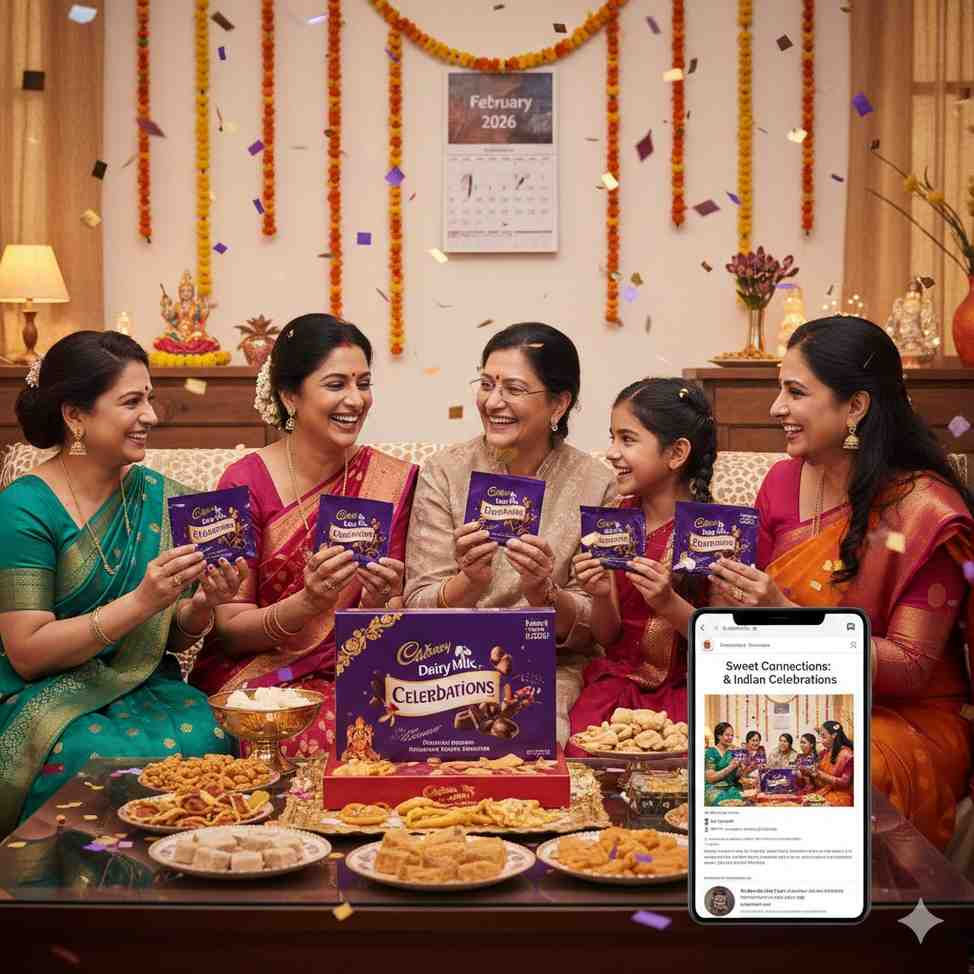
Cadbury Celebrations, a boxed assortment product introduced to the Indian market, was explicitly designed for gifting occasions according to product launch coverage in business publications. The product combined multiple Cadbury chocolate varieties in gift-appropriate packaging, directly competing with traditional mithai boxes that dominated the Indian gifting category. According to Nielsen market research data cited in The Economic Times and other business publications from 2010 onwards, Cadbury Celebrations became a significant contributor to Cadbury's seasonal sales, particularly during Diwali.
The communication strategy for festival periods emphasized chocolate's suitability for expressing emotions, strengthening relationships, and honoring traditions in contemporary ways. According to advertising campaign coverage in Brand Equity and Campaign India, Cadbury's Diwali advertising featured families, friends, and colleagues exchanging Cadbury products alongside or instead of traditional gifts, positioning chocolate as modern yet culturally appropriate.
Raksha Bandhan, a festival celebrating sibling relationships where sisters traditionally tie a rakhi (sacred thread) on brothers' wrists and receive gifts in return, provided another expansion opportunity. According to campaign coverage in advertising publications, Cadbury developed specific advertising showing siblings celebrating with Cadbury Dairy Milk, positioning the brand within this emotionally significant occasion.
Cultural Adaptation and Regional Customization
Cadbury's celebration-led strategy involved deliberate cultural adaptation beyond direct translation of global campaigns. According to analysis in the International Journal of Advertising and case studies examining multinational marketing in India, Cadbury's Indian advertising featured distinctly Indian contexts, relationships, celebrations, and emotional expressions rather than adapted Western creative executions.
The use of cricket, India's most popular sport, in advertising provided cultural resonance. According to advertising case studies and sports marketing analysis published in business publications, Cadbury strategically featured cricket contexts in multiple campaigns, leveraging the sport's emotional significance in Indian culture to connect the brand with moments of joy and celebration.
Regional customization was implemented for India's linguistically and culturally diverse market. According to company announcements and advertising industry reports, Cadbury developed advertising in multiple Indian languages including Hindi, Tamil, Telugu, Bengali, and others, with creative executions sometimes customized for regional festivals, preferences, and cultural nuances beyond simple translation.
The adaptation extended to product formats and price points. According to business press coverage in publications including The Economic Times and Business Today, Cadbury introduced small, affordable pack sizes specifically designed for Indian market conditions, making chocolate accessible to consumers across economic segments while maintaining premium positioning relative to local confectionery alternatives.
"Shubh Aarambh" and Auspicious Moments
Cadbury extended celebration positioning into the concept of "Shubh Aarambh" (auspicious beginning) with campaigns in the 2010s according to advertising industry coverage. This positioning connected Cadbury Dairy Milk to new beginnings, inaugurations, and starting moments—occasions where Indians traditionally consume sweets for good fortune.
According to campaign coverage in Brand Equity and Campaign India, the "Shubh Aarambh" advertising showed people consuming Cadbury Dairy Milk at the beginning of ventures, journeys, purchases of new items, and other fresh starts. The campaign explicitly referenced and positioned chocolate within the Indian tradition of consuming sweets at auspicious moments, further embedding the brand into cultural consumption patterns.
The strategic intent, as explained in interviews with Cadbury marketing executives published in business and advertising publications, was to create "permission" for chocolate consumption across an ever-expanding range of occasions in Indian consumers' lives, systematically building consumption frequency and household penetration.
Emotional Positioning and Relationship-Centric Communication
Throughout its celebration-led communication, Cadbury maintained focus on emotional connections and relationships rather than product attributes or functional benefits. According to analysis in advertising case studies and marketing journals, Cadbury's Indian advertising rarely emphasized taste, quality, or product features, instead focusing on the emotional and social context of consumption.
The "Kuch Accha Ho Jaaye, Kuch Meetha Ho Jaaye" evolution of the original tagline (adding "Kuch Accha" meaning "something good happens") explicitly connected the brand to positive life moments. According to advertising campaign documentation, this positioning encouraged consumers to associate Cadbury Dairy Milk with good news, achievements, and happy occasions across everyday life.
Campaigns frequently featured family relationships, friendships, romantic relationships, and community bonds. According to content analysis published in the Journal of Marketing Communications and advertising effectiveness studies, the emotional content and relationship focus distinguished Cadbury's communication from competitor approaches that emphasized product attributes or functional consumption occasions.
The long-running consistency of relationship and celebration themes, sustained across multiple creative executions over decades, was documented in brand tracking studies referenced in business publications. According to reports in The Economic Times citing market research data, Cadbury Dairy Milk achieved strong brand associations with celebration, sharing, and emotional moments in consumer perception studies conducted in India.
Generosity and Sharing Campaigns
Cadbury developed specific campaign initiatives focused on generosity and sharing behaviors aligned with Indian cultural values. The "Donate Your Words" campaign, launched around 2017 according to coverage in Campaign India and other advertising publications, encouraged consumers to donate advertising space on Cadbury Dairy Milk packaging to promote endangered Indian languages, connecting the brand to cultural preservation and community contribution.
According to the campaign coverage, consumers could choose to have packaging printed with words from endangered languages instead of standard Cadbury branding, with the company partnering with linguists and cultural organizations. The initiative received coverage in mainstream media beyond advertising publications, including The Hindu and The Indian Express, indicating broader social relevance beyond commercial messaging.
The "Not Just A Cadbury Ad" campaign, documented in advertising industry coverage around 2019-2020, promoted small local businesses during the Diwali season by allowing them to advertise within Cadbury's television commercials. According to reports in Brand Equity, Campaign India, and Economic Times, the campaign featured actual small business owners advertising their shops, services, and products during slots paid for by Cadbury, positioning the brand as supporting local communities during festive seasons.
These initiatives extended celebration positioning beyond personal consumption to community contribution and social generosity, aligning with Indian cultural values around communal celebration and supporting one's community, according to analysis in marketing publications examining purpose-driven advertising in India.
Market Outcomes and Category Development
Cadbury's celebration-led communication coincided with substantial growth in the Indian chocolate market and Cadbury's position within it. According to Mondelez International's investor presentations and annual reports referencing India operations from 2015 onwards, India represented one of the company's priority growth markets with strong performance in chocolate categories.
The Indian chocolate market expanded significantly from the mid-1990s onwards. According to market research data from Euromonitor International cited in business publications including The Economic Times, Mint, and Business Standard from 2010 to 2023, the Indian chocolate confectionery market grew from a small base to become one of the larger markets in value terms in Asia, though per capita consumption remained significantly below developed markets.
Cadbury maintained dominant market share in the Indian chocolate market throughout this growth period. According to Nielsen retail audit data and market research cited in business publications, Cadbury's market share in chocolate confectionery in India ranged between 65-70% during the 2010s, with Dairy Milk representing the flagship brand driving this leadership.
The expansion of consumption occasions beyond children represented documented market development. According to consumer research cited in business publications and marketing journals, adult consumption of chocolate in India increased substantially from the 1990s baseline, with chocolate consumption becoming socially acceptable and culturally appropriate for adult consumers across occasions.
Gifting and festival occasions became significant revenue contributors. According to reports in The Economic Times and Business Standard during festival seasons, Cadbury's sales exhibited strong seasonality with major spikes during Diwali and other festival periods, indicating successful positioning in celebration and gifting contexts. Specific quantitative sales data for festival periods was not consistently disclosed in public sources.
The category expansion included increased retail distribution. According to Mondelez investor communications and business press coverage, Cadbury expanded distribution from urban centers into smaller towns and rural areas, supported by affordable pack sizes and adapted distribution strategies, though specific distribution metrics were not comprehensively disclosed publicly.
Competitive Response and Market Dynamics
Cadbury's success in India attracted competitive response from domestic and international players. Nestlé, the other major multinational chocolate company in India with brands including KitKat and Munch, competed for market share according to business press coverage. According to market research data cited in business publications, Nestlé's chocolate brands gained market share during the 2010s but remained substantially smaller than Cadbury's portfolio.
Mars entered the Indian market with imported brands and subsequently established local manufacturing, according to business press reports in The Economic Times and other publications from the 2010s. The company's brands including Snickers and Galaxy competed in premium segments but faced distribution and pricing challenges relative to Cadbury's established position.
Indian companies including Amul (a dairy cooperative) launched chocolate offerings targeting value segments and local preferences, according to business press coverage. Amul positioned its chocolates as affordable alternatives with dairy heritage credentials, though remained smaller in the chocolate category compared to its dairy product dominance.
Despite competitive entry, Cadbury maintained market leadership. According to Euromonitor International data cited in business publications through 2023, Cadbury retained majority market share in Indian chocolate confectionery, indicating sustained brand strength and distribution advantages despite increased competition.
The competitive environment influenced Cadbury's continued emphasis on celebration and emotional positioning. According to advertising industry analysis, competitors often competed on product attributes, value positioning, or functional benefits, while Cadbury maintained distinctive emotional and cultural positioning that appeared difficult for competitors to replicate effectively.
Evolution in Digital and Social Media Era
Cadbury adapted its celebration-led communication to digital and social media platforms while maintaining core strategic positioning. According to coverage in Campaign India and social media marketing case studies from 2015 onwards, Cadbury developed digital campaigns that extended celebration themes to online environments.
During festival seasons, Cadbury launched digital activations encouraging social sharing and online celebration. According to campaign coverage in advertising publications, these initiatives included personalized greeting creation tools, social media challenges, and digital gifting options that maintained celebration positioning while adapting to digital consumption patterns.
The company maintained consistent communication during the COVID-19 pandemic period with messaging adapted to changed celebration circumstances. According to reports in Brand Equity and The Economic Times during 2020-2021, Cadbury's advertising acknowledged restricted gatherings while maintaining themes of connection, celebration, and emotional bonds across physical distance.
No verified public information is available on specific digital campaign performance metrics, social media engagement rates, or quantified outcomes of digital initiatives beyond general industry coverage of campaign launches and creative approaches.
Distribution and Availability Strategy
The celebration-led positioning required supporting distribution strategies to ensure product availability during key consumption occasions. According to Mondelez investor presentations and business press coverage, Cadbury invested in distribution expansion across retail formats including traditional trade (small independent stores), modern trade (supermarkets and organized retail), and online channels.
Seasonal distribution surges during festival periods required supply chain coordination. According to reports in business publications during festival seasons, Cadbury scaled production and distribution to meet heightened demand during Diwali and other occasions, though specific operational details were not comprehensively disclosed publicly.
Small pack formats priced for accessibility supported mass market penetration. According to product offering documentation and retail observations reported in business press, Cadbury offered Dairy Milk in pack sizes starting from approximately Rs. 5-10, enabling trial and purchase across economic segments while maintaining premium positioning relative to local alternatives.
The availability in both impulse purchase contexts (checkout counters, small stores) and considered purchase occasions (gift shopping, festival preparation) was documented in retail coverage. According to business press reports, Cadbury's products were distributed across diverse retail formats appropriate for different consumption and gifting occasions.
Cultural Embedding and Brand Ritualization
The sustained celebration-led communication over three decades contributed to cultural embedding of Cadbury Dairy Milk in Indian consumption patterns. According to brand equity studies referenced in marketing journals and business publications, Cadbury achieved strong spontaneous association with celebration, gift-giving, and sweet consumption occasions among Indian consumers.
The brand's integration into festival rituals represented documented cultural acceptance. According to retail observations and consumer behavior studies cited in business publications, Cadbury gift packs became standard offerings alongside traditional mithai in sweet shops and gifting contexts during major festivals, indicating category crossover from Western chocolate to Indian celebratory traditions.
The positioning influenced competitor framing and category definition. According to market research cited in business publications, the chocolate category in India became partially defined by celebration and sharing occasions rather than purely snacking or confectionery contexts, reflecting Cadbury's influence on category perception.
The long-term consistency of communication themes distinguished the strategy. According to advertising effectiveness literature and brand building case studies, Cadbury maintained core celebration positioning across creative executions, celebrity endorsements, festival campaigns, and communication evolution over multiple decades, creating cumulative brand building effects.
Strategic Implications and Transferable Principles
Cadbury's celebration-led communication in India demonstrated several principles with broader applicability in emerging market contexts. The strategy illustrated how cultural insight could inform brand positioning that aligns with local traditions while expanding consumption occasions, as discussed in international marketing textbooks and emerging market strategy literature.
The approach showed the value of long-term positioning consistency. According to brand building research cited in the Journal of Advertising Research and marketing strategy literature, Cadbury's sustained focus on celebration themes over decades created strong brand associations that would be difficult to establish through short-term campaigns or frequently changing positioning.
The cultural adaptation while maintaining global brand identity provided insights for multinational brand management. According to analysis in the International Journal of Research in Marketing, Cadbury maintained Dairy Milk's global brand elements while developing India-specific communication and cultural associations, demonstrating how standardization and adaptation could coexist.
The expansion of consumption occasions through marketing communication illustrated demand creation in developing categories. According to emerging market marketing literature, Cadbury's success showed how brands could expand category consumption by creating cultural permission and occasion appropriateness rather than relying solely on economic development to increase consumption.
The challenge of measuring long-term brand building versus short-term sales remained relevant. According to marketing effectiveness discussions in business publications and academic literature, attributing specific sales outcomes to brand communication versus other factors (distribution, pricing, competitive actions, economic conditions) was methodologically complex, though directional market growth and share maintenance suggested strategic effectiveness.
Current Positioning and Continued Evolution
Cadbury Dairy Milk continued celebration-led positioning in recent years according to current advertising and campaign coverage. The brand maintained presence in festival marketing, emotional storytelling, and celebration occasions through advertising campaigns documented in Campaign India and Brand Equity through 2023.
According to Mondelez International's public communications, India remained a priority market for the company's growth strategy, with chocolate category leadership maintained through the Cadbury portfolio. Specific strategic priorities and quantified targets were not comprehensively disclosed beyond general growth ambitions stated in investor communications.
The brand faced evolving challenges including increased health consciousness, sugar consumption concerns, and regulatory scrutiny of food marketing to children, according to coverage in business and health publications. Cadbury's response included product innovation in dark chocolate and portion control sizes according to product launch coverage, while maintaining core Dairy Milk positioning in celebration contexts.
Competition from premium and artisanal chocolate brands emerged in urban markets according to business press coverage, creating differentiation between mass market celebration positioning and premiumization trends. Cadbury's response included both defending mass market celebration occasions and launching premium variants according to product portfolio coverage in business publications.
Conclusion
Cadbury Dairy Milk's celebration-led communication in India represents a sustained strategic approach to building brand relevance and expanding consumption occasions in an emerging market with different cultural traditions compared to chocolate's origin markets. Through systematic positioning of chocolate as appropriate for celebrations, festivals, gifting, and emotional moments—contexts traditionally dominated by indigenous sweet traditions—Cadbury created cultural permission for chocolate consumption across ages and occasions.
The strategy required deep cultural understanding, creative excellence in communication, long-term strategic patience, and supporting investments in distribution, product formats, and availability. The documented market outcomes including category growth, maintained leadership position, and strong brand associations suggested the approach's effectiveness, though isolating specific causal attribution remained methodologically challenging.
The case illustrated fundamental marketing principles including the importance of occasion-based positioning, cultural adaptation of global brands, consistency in long-term brand building, and the role of communication in creating consumption contexts beyond functional product benefits. For marketers operating in emerging markets or seeking to expand consumption of categories with limited cultural precedent, Cadbury's Indian experience provided documented insights about patient brand building aligned with local cultural values and traditions.
Discussion Questions for MBA Analysis
Cultural Adaptation versus Brand Consistency: Cadbury maintained global brand identity for Dairy Milk while developing India-specific celebration positioning distinct from Western communication. What framework should multinational companies use to determine which brand elements to standardize globally versus adapt locally? How can companies ensure local adaptations don't dilute global brand equity or create brand confusion across markets?
Long-term Brand Building versus Short-term Performance: Cadbury's celebration-led strategy was sustained over three decades with consistent thematic focus, requiring patient investment in brand building over immediate sales optimization. In contemporary business environments emphasizing quarterly performance and rapid experimentation, how should marketing organizations balance long-term positioning consistency with pressure for measurable short-term results? What organizational structures, incentive systems, or governance approaches support multi-decade brand building strategies?
Occasion Expansion versus Usage Intensification: Cadbury's strategy focused primarily on expanding consumption occasions (from children's treats to adult celebrations, festivals, gifting) rather than increasing frequency within existing occasions. When should brands prioritize occasion expansion versus intensifying consumption within current usage contexts? What market conditions, category characteristics, or competitive dynamics favor each approach?
Emotional Positioning versus Functional Differentiation: Cadbury's communication emphasized emotional contexts and relationships rather than product attributes, taste, or functional benefits. Given that chocolate products from different brands have relatively similar functional attributes, to what extent can emotional positioning alone sustain market leadership? What risks does emotion-focused positioning face from competitors with functional innovations, and how should brands balance emotional and functional communication?
Category Creation versus Market Share Competition: Cadbury's strategy involved expanding the overall chocolate category in India by creating new consumption occasions and cultural acceptance, rather than purely competing for share within an existing category. How should companies evaluate whether to invest in category expansion versus competitive share gain? What metrics, timeframes, and strategic conditions indicate when category development investments are likely to benefit the investing brand versus creating opportunities that competitors can appropriate?



Comments