JBL: The Engineer Who Couldn't Stay Quiet, and the Sound That Never Stopped Playing
Long before JBL became a brand you'd spot on a beach, at a festival, or in a backpack, it was a man's name. He was born James Martini in 1902 in Illinois. As a young man he moved west and threw himself into the young world of sound. Just before registering his first company in 1927, he changed his name to James Bullough Lansing, reportedly at the suggestion of his future wife, Glenna.
With his business partner Ken Decker, Lansing started Lansing Manufacturing Company in Los Angeles. It built loudspeakers and drivers, and its work reached cinemas, including the famous Shearer Horn, a speaker system designed for movie theatres. In the early days of Hollywood sound, Lansing's name was already tied to some of the most advanced audio equipment around.
Loss, Reinvention and a Second Beginning
Success didn't last. Decker was killed in an airplane crash a few years later, and the company hit financial trouble. In 1941 it was bought by the Altec Service Corporation and became Altec Lansing. As part of the deal, Lansing agreed not to start a competing business for five years.
He kept his word. When the agreement ended in 1946, Lansing left and started over. His new company, first called Lansing Sound, Incorporated, was renamed James B. Lansing Sound, Incorporated, because the original name resembled trademarks Altec Lansing had built. The full name was a mouthful, so it was soon shortened to three letters that still ring out today: JBL.
Its first products in 1946 were a 15-inch loudspeaker and a high-frequency driver. Lansing had originally hoped to build audio equipment for homes, but the company's work spread into several directions, including cinema and professional sound.
A Founder Gone Too Soon
Lansing was widely regarded as a brilliant engineer, but not a strong businessman. In 1949, only a few years after founding JBL, he died. It was a devastating blow to a young company. William Thomas stepped in as president and is often credited with steering JBL through its next two decades of growth, as rock and roll and live music pushed demand for powerful, reliable sound.
The Harman Chapter
In 1969, Thomas sold JBL to Sidney Harman of the Jervis Corporation, later renamed Harman International. The wider distribution network under Harman took JBL's sales worldwide. During Harman's stewardship, the business grew from about $8 million in annual gross sales to about $60 million.
It wasn't a straight line. In early 1977, Harman sold JBL, along with his other high-fidelity holdings, to Beatrice Foods. About three and a half years later he bought it back. JBL remained a major force in both consumer and professional audio.
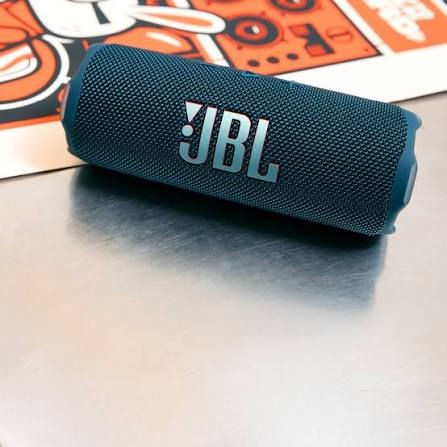
Today JBL is part of Harman International, a subsidiary of Samsung Electronics since 2017. JBL's own products span professional and consumer categories, from portable Bluetooth speakers such as Flip, Charge and Xtreme, to headphones, earbuds, soundbars and home audio systems.
What Makes JBL's Marketing Different
JBL's marketing has moved away from traditional advertising and toward culture. According to reporting in the marketing trade press, the brand has shifted from campaign-driven thinking to building its presence where music, creators and audiences meet in real life.
Being part of the moment, not just sponsoring it. At SXSW, JBL reportedly positioned itself as sound infrastructure rather than a logo on a banner. It provided audio for performances, hosted emerging artists, and helped connect creators with fans. Harman's marketing lead for the Americas has said the company doesn't treat marketing as something separate from the product experience.
Partnerships with rising artists and media. For the Flip 7 and Charge 6 launch, JBL formed its first partnerships with SXSW and Rolling Stone, and worked with young artists and creators. It also runs a creator programme called JBL Campus.
Long-running artist collaborations. JBL's summer campaign "First Doesn't Follow" for its Tour Pro 3 earbuds featured pop star Benson Boone, and the brand described it as one of its largest marketing pushes. It has also worked with brand ambassadors including Doja Cat, Mariano Rivera and Jay Park.
Retail as an experience. Trade coverage describes JBL treating physical stores as brand environments, combining product trial, content creation and storytelling rather than acting only as points of sale.
Why the Story Still Resonates
There's something fitting about how JBL started. A man who changed his name, lost a company, waited out a five-year non-compete, and then started again with just his initials. The brand that grew from that restart now shows up at music festivals, in creators' hands, and on speakers taken everywhere.
James Lansing never got to see JBL become a global name. But the idea he built it on, that sound should be powerful, clear and made to be experienced, is still the thread running through everything the brand does. The name began as a person's, and it now belongs to anyone who has ever turned the volume up.


Comments