Royal Enfield: How a Needle-Making Firm in England Became the World's Oldest Motorcycle Brand Still Running
Most legendary motorcycle brands start with an engine. Royal Enfield started with sewing needles, and somewhere between that small English workshop and the mountain passes of the Himalayas, it became the longest continuously produced motorcycle marque on the planet.
From Needles to the Royal Small Arms Factory
Royal Enfield's story began in 1891, when Albert Eadie and Robert Walker Smith acquired a small needle-making firm in Redditch, England. The company soon diversified into precision engineering, including supplying components to the British government's Royal Small Arms Factory in Enfield, a connection that would eventually gift the brand both its name and its most famous slogan. In 1890, the company was licensed by the Crown to use the word "Royal" in its branding, and it combined that with the name of the town associated with its arms-manufacturing work, Enfield, to create a name that sounded suitably impressive for a company with serious engineering ambitions.
The Bicycle That Grew an Engine
The first true Royal Enfield motorcycle arrived in 1901, essentially a bicycle with an engine bolted onto the front downtube. From there, the Redditch factory spent the following decades experimenting widely, producing two-stroke and four-stroke engines, V-twins and singles, with displacements ranging from 249cc all the way up to 1,140cc between the two World Wars. The company weathered the Great Depression relatively unscathed and, like Harley-Davidson, Triumph, and BSA, supplied motorcycles to the military during the Second World War.
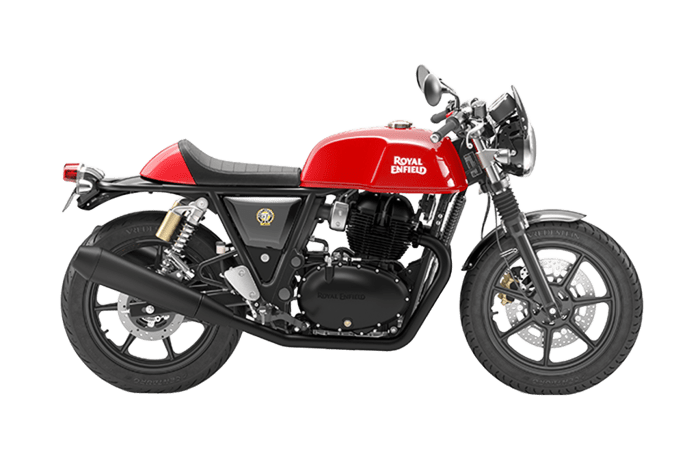
The brand's defining design arrived in 1932, with the introduction of the Royal Enfield Bullet, a model that would go on to become the longest continuously produced motorcycle design in history, a title it still holds today.
A Bullet Built for the Indian Army
Royal Enfield's Indian story began with a very specific, practical order. In 1952, Madras Motors received a request from the Indian Army for 500 units of the 350cc Bullet motorcycle. The bikes arrived from Redditch in early 1953 and proved exactly what the Army needed, rugged, reliable, and easy to maintain under demanding conditions.
Building on that success, and in line with Indian government requirements that certain goods be manufactured domestically, the Redditch company formally partnered with Madras Motors in 1955 to establish Enfield India, based in what was then Madras, now Chennai. Under Indian law, Madras Motors held the majority stake, over 50 percent, in the new venture. Initial production relied on assembling "knockdown" kits shipped from England, but in 1957, the original British tooling equipment was sold outright to Enfield India, allowing the company to begin manufacturing its own components and move toward full local production.
The English Parent Fades, the Indian Child Survives
As motorcycle markets shifted globally through the 1960s, Royal Enfield's original English operation struggled. Its Redditch factory closed in 1967, and the original UK company was formally dissolved in 1971. But the Indian venture, by then well-established and producing the Bullet under its own steam, carried the Royal Enfield name forward on its own.
In 1990, Enfield India entered a strategic alliance with the Eicher Group, an Indian automotive company, and in 1994, Eicher Motors acquired full ownership, rescuing a brand that had been struggling to compete against the wave of Japanese manufacturers reshaping the Indian motorcycle market at the time.
A 26-Year-Old CEO and a Brand Reborn
Royal Enfield's modern transformation is closely tied to one individual: Siddhartha Lal, son of Eicher Motors' Vikram Lal, who became CEO of Royal Enfield in 2000 at just 26 years old. Under his leadership, the brand underwent a genuine turnaround, later expanding its engineering capabilities through the 2015 acquisition of Harris Performance Products, a respected British chassis design firm with experience in World Superbike and MotoGP racing. Lal stepped down specifically as Royal Enfield's CEO in 2019, though he remained central to Eicher Motors' broader leadership. Under his tenure, Royal Enfield's growth was dramatic, annual sales climbed from under 500,000 units to more than a million, and the brand earned a place among BrandZ's Top 10 Risers in 2016.
The Marketing Strategy: Build a Tribe, Not Just a Customer Base
What makes Royal Enfield genuinely distinctive as a brand is how deliberately it chose community over conventional advertising. Rather than competing primarily through television campaigns, the brand has run remarkably few major TV advertisements over its modern history, leaning instead on experiential events that turn actual owners into the brand's most credible advocates. Royal Enfield Rider Mania, held annually in Goa, and the Himalayan Odyssey, an extended expedition-style ride through challenging terrain, became signature gatherings that built genuine community identity around the brand rather than simply selling a product.
This approach was reinforced by a deliberate philosophical shift, from the brand's old utilitarian motto, "Made Like a Gun, Goes Like a Bullet," toward a newer, more experiential positioning built around what the company calls "Pure Motorcycling," emphasising the emotional, exploratory experience of riding itself rather than pure mechanical specification. Distribution reinforced this identity further, with Royal Enfield selling primarily through its own exclusive branded stores rather than broad multi-brand retail, keeping tighter control over how customers actually experienced the brand at the point of sale. More recently, the company has layered sustainability directly into its community-first identity through initiatives like its #LeaveEveryPlaceBetter campaign and partnerships tied to responsible travel.
Even so, this strategy hasn't been without challenge. A 2023 case study highlighted a genuine concern within the company, Royal Enfield's classic Bullet brand had seen declining resonance among Generation Z riders, pushing the brand to keep evolving its community-and-experience-led playbook for a newer, more digitally native audience without losing the retro, heritage appeal that built its reputation in the first place.
From a Redditch Workshop to the World's Oldest Running Motorcycle Brand
Royal Enfield's journey, from a needle-making firm in Victorian England to a globally recognised motorcycle brand built on community rather than conventional marketing, is ultimately a story about reinvention happening twice over, once when an Indian partnership kept the brand alive after its English parent faded, and again when a young CEO rebuilt it around the simple idea that people don't just want a motorcycle, they want to belong to something larger than the ride itself.


Comments