The Shift From Customer Acquisition to Customer Retention
Industry & Competitive Context
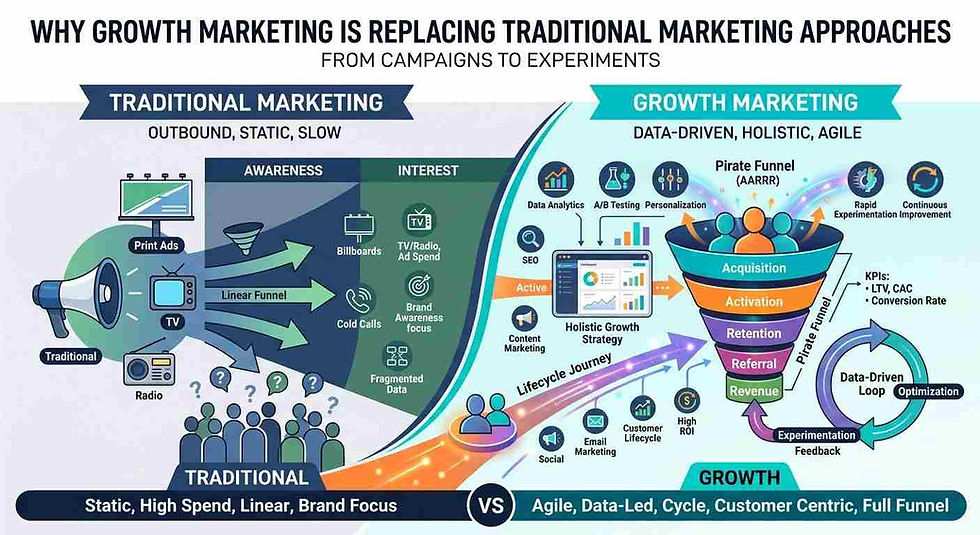
The period following the 2008 financial crisis saw a structural shift in how venture-backed startups approached customer acquisition. Capital for aggressive paid-media spending was harder to justify to investors, and in software categories with low switching costs, paid acquisition economics were often unsustainable relative to subscription prices. Cloud storage was a particularly exposed category: file-sync services competed on the same functional promise, faced imminent entry from Microsoft and Google, and sold a product priced too low to absorb expensive paid-acquisition costs. This environment is widely credited, including by growth-marketing practitioner Sean Ellis (who coined the term "growth hacking"), with pushing a cohort of startups Dropbox, Airbnb, PayPal, and others toward acquisition models built on product mechanics and word-of-mouth rather than conventional advertising. This shift is what is now commonly referred to as the "growth hacking" or product-led growth playbook, and it forms the basis of what is described today as the new growth playbook for startup marketing.

Brand Situation Prior to the Program
Dropbox was founded in 2007 by MIT students Drew Houston and Arash Ferdowsi and had reached 100,000 registered users by September 2008, a base concentrated among early technology adopters, largely in Silicon Valley. According to Houston's own account, delivered publicly at the "Startup Lessons Learned" conference in 2010, Dropbox initially tested paid search advertising as a growth channel and found that customer acquisition through AdWords cost between $233 and $388 per paying customer. Houston stated this was financially unworkable against a product priced at $99 per year, since the cost to acquire a customer materially exceeded the annual revenue that customer would generate. This mismatch, publicly disclosed by the company's own CEO, is the documented starting point for Dropbox's pivot away from paid acquisition.
Strategic Objective
Based on Houston's public presentation and subsequent reporting, Dropbox's stated objective was to find a scalable acquisition channel that did not carry the unsustainable unit economics of paid search, by converting the product's existing, organically observed word-of-mouth pattern into a structured, repeatable growth mechanism. Houston has stated that the company's data showed a meaningful share of new signups were already arriving through unprompted referrals from existing users before any formal program existed, which shaped the decision to build a dedicated referral mechanic rather than simply scale paid channels further.
Campaign Architecture & Execution
Dropbox engaged Sean Ellis, along with an intern, Albert Ni, to design a referral system modeled explicitly on PayPal's earlier refer-a-friend program, according to accounts from Houston's public talks and PayPal's own well-documented early referral history. Rather than using PayPal's cash-based incentive, which Dropbox could not afford given its free-to-paid business model, the team used the product itself as the reward: both the referring user and the new user received additional free storage space. The program launched with 250MB of bonus storage for each party and was later expanded, with other accounts describing an increase to 500MB per referral up to a cumulative cap of 16GB, awarded immediately upon a successful referral rather than after a delay.
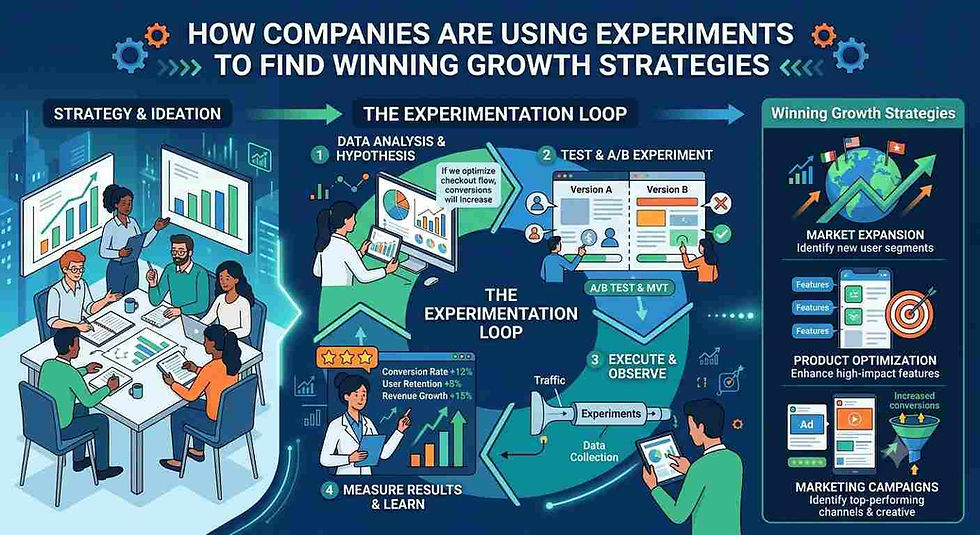
Houston's public account describes the execution as iterative rather than a single launch event: the team tested variations in messaging, the mechanics of the invitation flow, and the onboarding experience to improve how effectively the referral offer converted into both outbound invitations and completed signups. The program was embedded directly into the product interface, making the invitation mechanism a native, always-available feature rather than a time-bound promotional campaign.
Positioning & Consumer Insight
The underlying consumer insight, as described by Houston, was that Dropbox's value proposition was inherently collaborative and became more useful to an existing user as more of that user's contacts also adopted it, since the product's core function involved sharing and syncing files with others. This meant that asking a user to invite a friend was not an artificial marketing request layered on top of the product, but an extension of behavior the product already encouraged. The positioning of the incentive — more storage, the product's core unit of value — reinforced this alignment, rather than introducing an unrelated reward such as cash, which the team concluded would have felt disconnected from the product experience and which the company could not economically sustain given its freemium pricing model.
A comparable, independently documented example of this same growth-playbook logic is Airbnb's early integration with Craigslist, reported by Forbes, TechCrunch, Wikipedia's entry on growth hacking, and growth strategist Andrew Chen, who has written extensively on the mechanism. According to these sources, Airbnb built a tool, beginning around 2010, that allowed hosts to cross-post their Airbnb listings to Craigslist with a single click, using an unofficial integration since Craigslist did not provide a public API for this purpose. This gave Airbnb hosts additional distribution on a platform with a far larger existing user base, directing Craigslist users back to Airbnb listings. As with Dropbox, the underlying insight was that the startup could use an adjacent existing user base and a native product feature — rather than a paid campaign — to solve a cold-start distribution problem, and the Craigslist mechanism was eventually discontinued once Craigslist closed the technical pathway that made it possible. No verified, company-disclosed quantitative figure for user or listing growth directly attributable to the Craigslist integration specifically is available in the public sources reviewed; the documented record describes the mechanism and its strategic logic but does not provide an audited metric isolating its individual contribution to Airbnb's growth.
Media & Channel Strategy
Dropbox's referral program did not rely on a paid media channel; its channel was the product's own user base and interface, with invitations distributed by users through whatever external channels they chose, including email and social media, as noted in Houston's public account. The company's role was to build the in-product mechanism and incentive structure, not to run advertising directing users toward specific external platforms. Houston's data, presented publicly, indicated that in April 2010, Dropbox users sent 2.8 million direct referral invites in a single trailing 30-day period, illustrating the scale the channel reached once embedded in the product.
No verified public information is available describing a parallel paid-media or traditional advertising strategy run alongside the referral program during this period; the documented record centers specifically on the product-led referral mechanism as the primary channel strategy of this phase of the company's growth.
Business & Brand Outcomes
The outcomes documented here come directly from Drew Houston's public 2010 presentation, which has been consistently and independently reported by multiple outlets including TechCrunch, and which remains the primary public source for these figures; no restated, audited figures specific to this program appear in Dropbox's later SEC filings, since Dropbox's 2018 S-1 covers a much later period of the company's history. According to Houston's account, Dropbox grew from 100,000 registered users in September 2008 to 4,000,000 users roughly 15 months later, in early 2010. Houston stated that the referral program permanently increased signups by 60%, and that at its peak, referrals accounted for approximately 35% of all daily signups, with an additional roughly 20% of signups attributed to shared folders and other viral product features. Houston also described sustained month-over-month growth of roughly 15 to 20% following the program's introduction.
Separately, and for context on the company's longer-term trajectory rather than as a claim about the referral program's specific contribution, Dropbox's later public disclosures show the company had approximately 33.9 million registered users and reported roughly $1 billion in annual revenue around 2017, ahead of its 2018 initial public offering, as reported in company materials and credible press coverage at the time. No verified public information is available precisely isolating what portion of Dropbox's user or revenue growth in the years following 2010 is specifically attributable to the referral program as distinct from product improvements, category growth, or other acquisition channels introduced later.
Strategic Implications
The Dropbox and Airbnb cases, read together from the publicly documented material, illustrate the core structural feature of what is now described as the startup growth playbook: engineering the product itself, rather than a marketing campaign layered on top of it, to generate its own distribution. In both cases, the companies did not primarily rely on persuasive messaging to convince new users to try the product; they built a mechanism a referral flow tied to the product's core value, or a cross-posting integration with an existing large platform that converted an existing behavior or asset into a repeatable acquisition channel at minimal marginal cost.
A second implication, drawn directly from Houston's own publicly stated reasoning, is that the shift toward this playbook was explicitly a response to a measured, disclosed failure of paid acquisition economics, not an experimental preference. The company's own data on a $233–$388 cost per paying customer against $99 of annual revenue made the paid channel demonstrably unviable, and this disclosed constraint is what is documented as the direct trigger for the referral program's design.
A third implication concerns the limits of the available evidence. Both cases are extremely well documented at the level of mechanism and qualitative strategic logic, through founder presentations, credible press coverage, and widely cited growth-industry analysis. They are comparatively less well documented at the level of precisely isolating long-run financial outcomes to the specific growth mechanism, as opposed to the company's overall trajectory. This is consistent with the broader pattern in public startup growth case studies: company-disclosed, founder-stated figures from the specific period of the initiative are available and attributable, but subsequent broader financial outcomes are generally not formally decomposed by the company into channel-specific contributions in public filings.
Discussion Questions
Drew Houston publicly disclosed that Dropbox's paid-search customer acquisition cost ($233–$388) exceeded the product's annual price ($99). What does this reveal about the conditions under which a startup should abandon a paid-acquisition channel in favor of a product-led growth mechanism, and how should that threshold be assessed in categories with higher price points?
Dropbox rewarded referrals with product storage rather than cash, unlike PayPal's earlier cash-based referral program. What strategic and financial considerations might lead a startup to choose a product-based incentive over a cash incentive, and under what business-model conditions would cash remain the more effective choice?
Airbnb's Craigslist integration relied on an unofficial, reverse-engineered connection to a platform that had not authorized it, and was eventually shut down once Craigslist closed the technical gap. What does this suggest about the sustainability and risk profile of growth mechanisms built on unsanctioned access to another platform's user base?
Houston reported that referrals accounted for 35% of daily signups at peak, with an additional 20% from other viral product features, implying more than half of signups came from non-paid, product-driven sources. What organizational and product-design capabilities are required to build growth mechanisms that operate at this scale, compared to the capabilities required to manage a paid-media program?
Both cases are far better documented in terms of mechanism and short-term signup metrics than in terms of long-run, audited financial attribution. For an MBA analysis of "growth hacking" case studies generally, how should a strategist weigh founder-disclosed, self-reported growth metrics against the absence of independently audited, channel-specific financial outcomes?

Comments