Creator Monetization Is Becoming a Media-Buying Opportunity
Creator monetization is no longer simply a story about influencers earning from sponsorships, platform payouts, or affiliate links. It is increasingly being treated as a distinct media-buying market: advertisers are allocating budgets to creator-led inventory, agencies are building creator-specific planning and measurement practices, and ad-tech companies are creating infrastructure to make creator media more transactable.
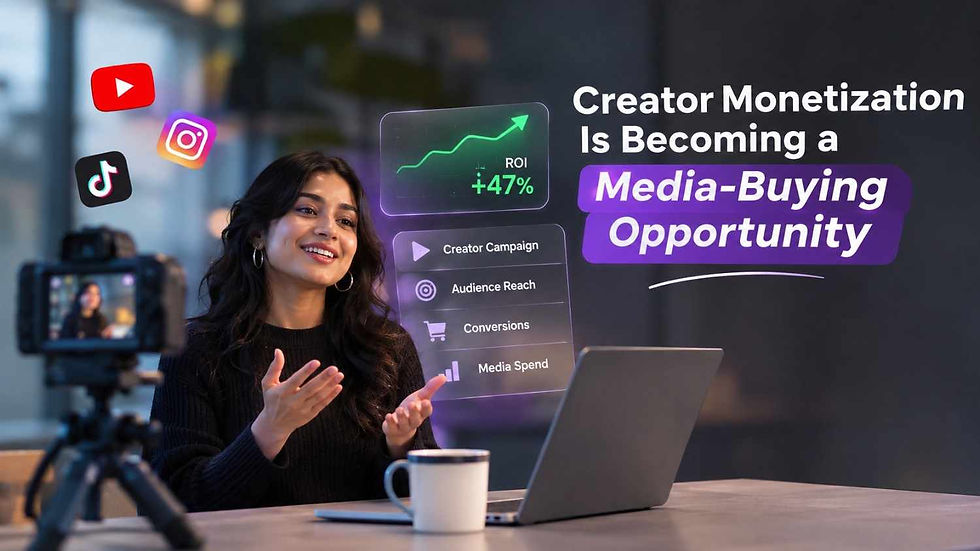
The shift matters because it changes creators from a marketing tactic into a media channel that can be planned, bought, measured, and optimized alongside social, streaming, retail media, and traditional video.
From sponsorships to media inventory
For years, creator monetization was dominated by direct brand deals: a creator produced a sponsored video, post, livestream, or product mention, and the brand paid a negotiated fee. That model remains important, but it does not fully capture how creator content is now used in advertising.
Creator content can operate as owned media when a brand republishes or licenses it, earned media when audiences share it organically, and paid media when brands amplify it through social advertising, connected TV, or retail-media placements. Digiday’s 2026 media agency report describes this convergence explicitly, noting that creator content can function as owned or earned media while also serving as fuel for paid social distribution. In other words, the same piece of creator content may generate awareness, engagement, conversion, and paid-reach value across multiple channels.
This is why creator monetization is becoming a media-buying opportunity. Advertisers are not only paying creators for influence; they are buying access to creator audiences, creator-made creative, creator-led commerce, and increasingly creator-owned distribution channels.
The scale of the opportunity
The market signals are substantial. The Interactive Advertising Bureau estimates that creator media budgets will reach $44 billion in 2026. That figure reflects spending on creator media as an advertising category, rather than merely the total revenue earned by individual creators.
The growth is not isolated to social feeds. KPMG’s 2026 media content spend analysis found that user-generated content spending among leading media and platform companies reached about $46 billion in 2025, up 75% from 2021. KPMG framed creator content as increasingly important because it can build frequent engagement, attract highly engaged audiences, and create new opportunities for advertising and monetization.
BNP Paribas, working with Coherent Market Insights and Influential, estimated the global creator economy at $217.3 billion in 2026, growing 26.2% year over year. The same report said nearly 80% of the market’s value now comes from brand and advertiser investments across advertising, sponsorship, partnerships, and affiliate marketing. It also estimated that roughly $35 of every $100 spent by advertisers goes directly to creators, while platforms capture about $40, with the remainder going to agencies, technology providers, and service providers.
Those figures underline an important distinction: creator monetization is not only about creators receiving larger payouts. It is also about the growing ecosystem of buyers, sellers, agencies, platforms, measurement firms, and ad-tech companies that turn creator activity into a commercial media market.
Why advertisers are buying in
Advertisers are drawn to creator media for practical reasons. Creators often have established audience relationships, distinctive creative formats, and the ability to produce content that feels native to a platform. That can make their work more engaging than conventional brand advertising, particularly when the objective is attention, trust, product discovery, or social-commerce conversion.
Digiday found that creator and influencer marketing was among the channels where agency clients increased spending in 2026, cited by 78% of survey respondents. The same report found that 96% of respondents identified social media as a channel for creator-brand partnerships, while 17% said they were partnering with influencers to create content for retail media. That indicates that creator partnerships are extending beyond social platforms into commerce environments where advertisers can more directly connect content exposure to sales.
TikTok Shop’s presence in formal agency RFPs alongside Amazon and Walmart by June 2026 further illustrates the commercialization of creator activity. Brands are no longer treating creator commerce as an experiment; they are committing budgets and integrating it into procurement and planning processes.
Programmatic creator media
One of the clearest signs that creator monetization is becoming a media-buying category is the emergence of programmatic infrastructure. PubMatic launched a Creator Marketplace in June 2026 to connect independent creator media companies’ premium connected-TV inventory with programmatic and emerging agentic demand. The company described it as the first programmatic CTV auction for such inventory, developed with Holmes Media.
This development is significant because it addresses a long-standing limitation of creator monetization. Traditionally, creators depended heavily on direct sponsorships and platform-controlled monetization tools. Programmatic CTV offers a different route: creator-owned channels can sell inventory to advertisers through automated auctions, potentially unlocking incremental revenue beyond brand deals.
The opportunity is especially relevant as creators build audiences across CTV and other non-social environments. MyStation, launched in November 2026, is another example of creators gaining tools to own and operate independent video and audio networks. Its model includes advertising-supported video on demand, subscription video on demand, free ad-supported streaming television, and a subscription-based premium audiovisual content model. This suggests that creator monetization may increasingly resemble traditional media ownership: audience-building, content scheduling, ad sales, subscriptions, and distribution.
Measurement remains the constraint
The biggest obstacle to creator media becoming a mature media-buying channel is measurement. Advertisers need comparable metrics, reliable attribution, transparent pricing, and clear definitions before they can allocate large budgets with confidence.
IAB’s Trusted Creator Brand Deal Initiative found that measurement was the top problem for 67% of industry respondents. A common definition of a “view” was the most requested standard, cited by 66%. The report also found that 80% agreed that media and creator buyers often work independently, limiting the full value of creator campaigns.
That separation is important. A media buyer may optimize reach, frequency, cost per thousand impressions, and audience delivery, while a creator-marketing specialist may focus on authenticity, creative fit, engagement, and community response. If these teams do not share data and objectives, creator campaigns can be underused or difficult to justify at scale.
Usage rights are another friction point. IAB found that 61% identified usage rights as the top friction clause in creator contracts. Brands may want to reuse creator content across paid social, retail media, television, or international markets, while creators may want to protect their likeness, editorial control, and future monetization opportunities. Standardized expectations around licensing, approval, exclusivity, and renewal could make creator media easier to buy.
Payment terms also affect the market. IAB reported that 60% agreed that longer payment terms cause cascading harm, while only 6% disagreed. For smaller creators, delayed payment can constrain production capacity and make creator partnerships less financially viable.
What media buyers need to do
For creator monetization to function as a true media-buying opportunity, buyers need to treat it with the same discipline applied to other channels.
First, advertisers should define the role of creator media in the plan. A creator partnership may be intended to generate awareness, produce creative assets, drive social engagement, support retail conversion, or supply CTV inventory. Each objective requires different creators, formats, pricing models, and measurement approaches.
Second, brands should integrate creator planning with paid-media planning. Creator content should not be treated as an isolated influencer campaign if it will be amplified through paid social, used in retail media, or distributed through CTV. Budgets, audience targets, creative approvals, and performance data should be connected across teams.
Third, buyers should demand clearer measurement standards. This does not mean every creator campaign must be judged only by immediate sales. Awareness, engagement, audience quality, brand lift, search interest, and long-term customer value can all matter. But advertisers need transparent definitions and consistent reporting to compare creator media with other channels.
Fourth, agencies and brands should invest in creator operations. Finding creators, negotiating rights, briefing talent, approving content, processing payments, managing usage rights, and consolidating performance data are operational challenges. The companies that solve these workflows will be better positioned to buy creator media at scale.
The outlook
Creator monetization is becoming a media-buying opportunity because the market is moving from informal brand deals toward structured commercial infrastructure. Advertisers are increasing spending, creator content is being used across paid social, retail media, and CTV, and new marketplaces are giving creators access to programmatic demand.
The opportunity is real, but it is not automatic. The sector still needs better measurement, clearer contracts, fairer payment practices, and stronger integration between creator marketing and media planning. If those gaps narrow, creator media could become a core part of the advertising mix rather than a supplementary influencer channel. If they persist, growth may continue, but advertisers will remain cautious about treating creator monetization as dependable, scalable media inventory.
Sources
IAB, “IAB Launches Trusted Creator Brand Deal Initiative to Build the Infrastructure Behind the Creator Economy’s Next Phase of Growth,” November 10, 2026: https://www.iab.com/news/iab-launches-trusted-creator-brand-deal-initiative/
IAB / Yahoo Finance, “Creator Buys Surge, Measurement Lags,” November 10, 2026: https://finance.yahoo.com/media-advertising/articles/creator-buys-surge-measurement-remains-150328851.html
Digiday, “Digiday Media Agency Report 2026: How agencies adapt to a media landscape shaped by AI and creators,” October 5, 2026: https://digiday.com/media-buying/digiday-media-agency-report-2026-how-agencies-adapt-to-a-media-landscape-shaped-by-ai-and-creators/
BNP Paribas, “M&A and industry consolidation: the Creator Economy enters a new era,” November 4, 2026: https://group.bnpparibas/en/news/m-a-and-industry-consolidation-the-creator-economy-enters-a-new-era
BNP Paribas / Coherent Market Insights / Influential, “Creator Economy Report 2026”: https://cdn-group.bnpparibas.com/uploads/file/creator_economy_report_2026_by_paris_creator_week_1.pdf
KPMG, “Creator Content and Sports Reach $75B, Winning Investment in the Race for Consumer Engagement,” November 11, 2026: https://kpmg.com/us/en/media/news/kpmg-media-content-spend-analysis-2026.html
PubMatic, “PubMatic Launches Creator Marketplace to Connect Content Creators with Emerging Agentic Demand,” June 18, 2026: https://www.businesswire.com/news/home/20260617510947/en/PubMatic-Launches-Creator-Marketplace-to-Connect-Content-Creators-with-Emerging-Agentic-Demand
MyStation launch announcement via PR Newswire / WFMZ, November 13, 2026: https://www.wfmz.com/news/pr_newswire/pr_newswire_technology/mystation-launches-giving-creators-the-power-to-own-and-operate-their-own-television-or-audio-networks/article_70d68952-95ec-545a-b512-de6ed8b53483.html
Digiday, “Creators see promise in Instagram’s long-form push,” November 6, 2026: https://digiday.com/media/creators-see-promise-in-instagrams-long-form-push-but-question-whether-exposure-is-enough/
eMarketer, “Creator monetization — Reports, Statistics & Marketing Trends,” November 13, 2026: https://www.emarketer.com/topics/category/creator%20monetization
Business Insider, “A private equity giant just snapped up a creator company,” November 13, 2026: https://www.businessinsider.com/hig-capital-backs-rollup-venture-jake-rosen-entertainment-creator-economy-2026-11


Comments