IKEA's India Market Entry and Localized Brand Strategy
- Jan 27
- 14 min read
Executive Summary
IKEA, the Swedish multinational furniture and home furnishings retailer, entered the Indian market in August 2018 after decades of planning and navigating complex regulatory requirements. The company's India market entry represents one of the most thoroughly documented cases of global retail localization, involving significant adaptation of product range, pricing strategy, store formats, supply chain development, and cultural positioning while attempting to preserve core brand identity. This case study examines the publicly documented journey of IKEA's India entry, from initial regulatory challenges through store openings and strategic adaptations, based exclusively on verified information from official company communications, credible news reporting, and industry analysis.

Company Background and Global Context
IKEA, founded in 1943 in Sweden by Ingvar Kamprad, operates as a global home furnishings retailer known for its flat-pack furniture, Scandinavian design aesthetic, affordable pricing, and distinctive store experience. According to Inter IKEA Group annual reports, IKEA operates through a complex franchise structure where Inter IKEA Systems B.V. owns the IKEA concept and intellectual property, while IKEA stores are operated by various franchisees globally, with Ingka Group being the largest.
According to Ingka Group annual reports and public corporate information, IKEA operates hundreds of stores across dozens of countries serving hundreds of millions of customers annually. The company's business model emphasizes high volume, low prices, customer self-service, flat-pack assembly, and a distinctive in-store experience including restaurants serving Swedish cuisine.
India represented a strategically important but complex market opportunity. According to analysis published in The Economic Times, Business Standard, Mint, and international business publications including The Wall Street Journal and Financial Times, India's large and growing middle class, urbanization trends, and underdeveloped organized furniture retail sector presented attractive growth potential, while regulatory constraints, price sensitivity, infrastructure challenges, and cultural differences posed significant entry barriers.
Early Interest and Regulatory Challenges
IKEA's interest in the Indian market dates back decades. According to reports in The Economic Times, Business Standard, and international publications including Reuters and Bloomberg, IKEA first explored Indian market entry in the 1980s but faced regulatory restrictions on foreign direct investment (FDI) in retail that prevented entry under acceptable terms.
India's FDI regulations in retail evolved gradually. According to government policy documentation reported in The Economic Times, The Hindu Business Line, and other Indian business publications, India historically maintained strict restrictions on foreign retail investment to protect domestic retailers. Single-brand retail FDI was liberalized in stages, with requirements including mandatory local sourcing that created challenges for foreign retailers.
In 2012, India modified FDI rules for single-brand retail in ways that made IKEA's entry more feasible. According to reports in The Economic Times, Reuters, Bloomberg, and other outlets, the government allowed 100% FDI in single-brand retail subject to conditions including mandatory sourcing of 30% of product value from India, though this requirement would be phased in over time.
IKEA applied for permission to enter the Indian market in 2012. According to extensive coverage in Indian and international business press including The Economic Times, Reuters, Bloomberg, and The Hindu Business Line, IKEA submitted investment proposals to Indian regulatory authorities outlining plans for stores, sourcing commitments, and investment amounts.
The approval process extended over several years. According to reports tracking the regulatory process published in Business Standard, The Economic Times, Mint, and other outlets, IKEA's application underwent review by multiple government agencies and faced questions about sourcing commitments, store locations, and compliance with various regulations. Final approval came in 2013, as reported by Reuters, The Economic Times, and other outlets.
Sourcing Strategy and Supply Chain Development
Meeting India's local sourcing requirements required significant supply chain development. According to IKEA's public statements reported in The Economic Times, Business Standard, The Hindu Business Line, and international outlets, the company had already been sourcing products from India for its global operations since the 1980s, providing an existing foundation of supplier relationships.
IKEA significantly expanded its Indian sourcing network. According to statements by IKEA executives reported in The Economic Times, Mint, Business Today, and other publications, the company worked to develop and certify additional Indian suppliers capable of meeting IKEA's quality, sustainability, and volume requirements. The company established purchasing offices and support functions in India to facilitate supplier development.
By the time of market entry, IKEA had established substantial sourcing relationships. According to company statements reported in The Economic Times and other outlets, IKEA was sourcing significant volumes of products from Indian suppliers for global distribution, though specific volume figures varied across reporting periods and sources.
The sourcing approach addressed both regulatory requirements and strategic positioning. According to analysis in Business Standard, The Economic Times, and Mint, Indian sourcing enabled compliance with FDI regulations while potentially supporting competitive pricing and providing narrative about contribution to Indian economy, though the extent to which Indian sourcing directly lowered consumer prices compared to imported products was not publicly quantified.
Market Research and Product Adaptation
IKEA conducted extensive market research before and during market entry. According to company statements reported in The Economic Times, Mint, Business Standard, and international publications, IKEA spent several years studying Indian consumer needs, home layouts, cultural practices, and purchasing behavior to inform product and strategy adaptations.
Home visits formed a key research methodology. According to reports in The Economic Times, The Hindu, Mint, and other outlets, IKEA representatives visited thousands of Indian homes across different cities, income levels, and family structures to understand how Indians live, store belongings, cook, sleep, and use home spaces. This ethnographic research informed product selection and development.
Product range adaptations emerged from this research. According to IKEA's statements reported in The Economic Times, Business Standard, and other publications, the company modified its global product range for India by adjusting furniture dimensions for smaller Indian homes, introducing more storage solutions reflecting storage needs, developing products accommodating Indian cooking practices, and considering cultural preferences regarding colors, materials, and designs.
Specific product examples documented in media reports include: smaller wardrobes suitable for typical Indian bedroom sizes, pressure cookers and cookware adapted to Indian cooking methods, more floor seating options reflecting cultural practices, and storage solutions for smaller kitchens, according to reports in The Economic Times, Mint, Business Today, and other publications.
However, no verified public information is available on comprehensive details of every product adaptation, systematic comparison of Indian versus global product ranges, specific sales data by adapted versus standard products, or quantified consumer response to localized products beyond general statements in company communications and news coverage.
Pricing Strategy and Affordability Challenge
Pricing represented a critical strategic challenge. According to analysis in The Economic Times, Business Standard, Mint, and The Wall Street Journal, IKEA's global positioning emphasizes affordable design, but Indian consumers' price sensitivity and lower purchasing power compared to developed markets required careful pricing calibration to balance affordability with margin requirements.
IKEA committed to price positioning below existing organized furniture retail while acknowledging price sensitivity constraints. According to statements by IKEA India executives reported in The Economic Times, Mint, and Business Standard, the company aimed to price products to be accessible to India's middle class while recognizing that even IKEA's "affordable" positioning might be considered premium by significant portions of Indian consumers.
Specific pricing strategies documented in news reports included: offering smaller-sized products at lower price points, developing India-specific lower-priced product lines, using local sourcing to manage costs, and maintaining global standards for quality and sustainability while working within price constraints. These approaches were mentioned in reports in The Economic Times, Business Standard, Mint, and other outlets.
Price comparisons to competitors and market reception were documented in various news reports. According to coverage in The Economic Times, Mint, Business Today, and other publications following store openings, consumer reactions to IKEA's pricing varied, with some finding it affordable relative to organized retail competitors while others found it expensive compared to unorganized local furniture markets.
No verified public information is available on specific pricing formulas, margin structures, comprehensive price positioning analysis across product categories, or systematic pricing evolution over time beyond what has been reported in general news coverage.
Store Format and Location Decisions
IKEA's first Indian store opened in Hyderabad on August 9, 2018. According to extensive media coverage including reports in The Economic Times, The Hindu, Reuters, Bloomberg, Mint, and international outlets, the Hyderabad store followed IKEA's large-format template, spanning approximately 400,000 square feet across retail, warehouse, and restaurant spaces, making it one of the largest IKEA stores globally.
The choice of Hyderabad as first location was explained in company statements. According to IKEA executives quoted in The Economic Times, Business Standard, and other publications, Hyderabad was selected due to factors including growing urban middle class, real estate availability, administrative efficiency in local government, and strategic positioning for southern India market access.
The store opening generated substantial public interest. According to reports in The Hindu, The Times of India, The Economic Times, and other outlets, tens of thousands of visitors came to the store in opening days, with reports of traffic congestion, long queues, and high initial foot traffic, though specific visitor numbers varied across different news reports.
Subsequent store openings followed in Mumbai and Bengaluru. According to reports in The Economic Times, Business Standard, Mint, and other outlets, IKEA opened a store in Navi Mumbai in December 2021 and in Bengaluru in June 2022, expanding presence to additional major urban markets. Each opening was covered in regional and national business press with reports of significant initial consumer interest.
IKEA announced plans for additional store locations. According to company statements reported in various business publications, IKEA indicated intentions to open stores in additional Indian cities including Delhi NCR and other urban centers, though specific timelines and locations have been updated periodically in company communications.
Restaurant and Food Service Localization
IKEA restaurants represent a distinctive element of the store experience globally. According to IKEA's communications and extensive media coverage, IKEA restaurants serve Swedish-inspired cuisine and are designed to provide affordable meals encouraging longer store visits and enhancing the overall IKEA experience.
Adapting the restaurant for India required significant localization. According to reports in The Economic Times, The Hindu, Business Standard, Mint, and other outlets, IKEA developed a substantially modified menu for India reflecting cultural and dietary preferences, religious considerations, and Indian taste profiles.
The Indian menu excluded beef and pork entirely, reflecting religious sensitivities. According to reports in multiple outlets including The Economic Times, The Hindu, and international publications, IKEA removed these meats from the Indian menu given Hindu and Muslim religious practices predominant in India. This represented a significant departure from IKEA restaurants globally.
Indian vegetarian options were developed. According to coverage in The Economic Times, The Hindu, Mint, and other publications, IKEA introduced biryani, samosas, curries, and other Indian dishes alongside adapted versions of global IKEA menu items. The company emphasized that a substantial portion of the menu would be vegetarian to accommodate India's large vegetarian population.
Swedish meatballs, IKEA's signature dish globally, were offered in chicken and vegetarian versions. According to reports in Business Standard, The Economic Times, and other outlets, IKEA developed these alternatives to maintain the iconic product while accommodating dietary preferences.
Pricing of restaurant items was set to be affordable. According to reports in various outlets, IKEA positioned restaurant meals at price points intended to be accessible, with specific prices mentioned in news coverage though these have varied over time and across locations.
Omnichannel Strategy and Digital Integration
IKEA entered India during a period of rapid e-commerce growth. According to analysis in The Economic Times, Mint, Business Standard, and industry reports from organizations like RedSeer and Bain & Company cited in various publications, India's e-commerce sector was expanding rapidly, with increasing consumer comfort purchasing furniture and home goods online.
IKEA launched e-commerce capabilities in India relatively early in its market entry. According to reports in The Economic Times, Business Standard, and other outlets, IKEA began online sales in select Indian cities before and alongside physical store openings, representing faster digital integration than IKEA's approach in some other markets globally.
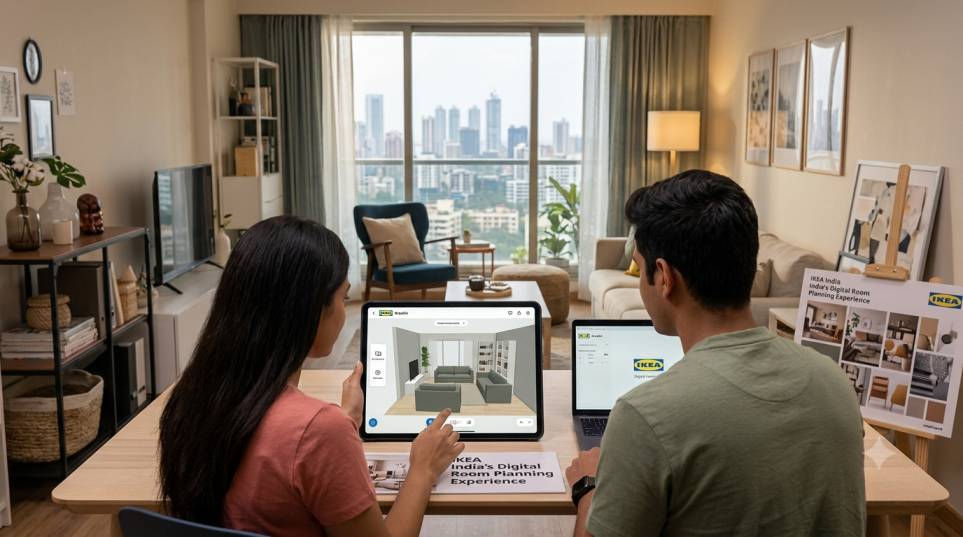
The company developed mobile app and website shopping platforms. According to reports in The Economic Times, Mint, and technology publications, IKEA's Indian digital platforms offered product browsing, online purchasing, delivery services, and augmented reality features allowing customers to visualize products in their spaces.
Partnerships with third-party platforms expanded digital reach. According to reports in The Economic Times, Business Standard, and other outlets, IKEA partnered with e-commerce platforms and delivery services to extend market reach beyond its own owned channels, though specific partnership details and performance metrics were not comprehensively disclosed in public sources.
Physical stores and digital channels were positioned as complementary. According to IKEA executives' statements reported in various business publications, the company viewed physical stores as experience centers and inspiration spaces while digital channels provided convenience and wider geographic reach, implementing an omnichannel strategy integrating both.
No verified public information is available on specific online sales volumes, channel mix evolution, comparative performance of physical versus digital channels, or comprehensive digital strategy details beyond what has been discussed in general terms in media coverage.
Cultural Positioning and Brand Communication
IKEA's brand communication in India balanced global brand identity with local cultural adaptation. According to advertising and marketing coverage in publications including Campaign India, Brand Equity (The Economic Times), and mainstream business press, IKEA's Indian marketing emphasized themes of affordability, better everyday life, and design relevance while incorporating local cultural references.
Advertising campaigns featured Indian families and home contexts. According to coverage in Campaign India, The Economic Times, and other outlets, IKEA's Indian advertising showed Indian homes, families, and cultural practices rather than directly translating global campaigns, though maintaining IKEA's visual aesthetic and brand tone.
The company positioned itself as contributor to Indian economy and society. According to IKEA's communications reported in The Economic Times, Business Standard, and other outlets, the company emphasized its sourcing from Indian suppliers, job creation, sustainability commitments, and social initiatives as part of its market positioning, building legitimacy and addressing potential concerns about foreign retail entry.
Specific marketing initiatives documented in news coverage included partnerships with Indian designers, sustainability programs addressing local environmental concerns, and community engagement activities, according to reports in The Economic Times, The Hindu, and other publications.
No verified public information is available on advertising spending levels, comprehensive brand perception research results, systematic analysis of communication effectiveness, or detailed marketing strategy documents beyond what company executives have discussed in published interviews and what has been covered in advertising industry and business press.
Sustainability and Social Initiatives
Sustainability represents a core element of IKEA's global brand identity. According to IKEA Group sustainability reports and communications, the company has established global commitments regarding renewable energy, sustainable materials, circular economy practices, and social responsibility.
IKEA adapted sustainability initiatives for Indian context. According to company statements reported in The Economic Times, The Hindu Business Line, and other outlets, IKEA implemented sustainability programs in India addressing local environmental and social priorities while maintaining alignment with global commitments.
Specific initiatives documented in news coverage included: solar power installation at Indian stores, sustainable sourcing commitments for Indian-sourced materials, water conservation programs, waste management and recycling practices, and support for social enterprises and NGOs working on environmental and social issues in India, according to reports in The Economic Times, The Hindu, Business Standard, and other outlets.
The company engaged with Indian sustainability challenges. According to reports in various outlets, IKEA addressed issues including plastic use, air quality concerns through employee transportation programs, and support for sustainable livelihoods among supplier communities, though comprehensive details about program scale, implementation, and outcomes were not fully disclosed in public sources.
Competitive Landscape and Market Response
IKEA entered an Indian furniture market characterized by fragmentation between organized and unorganized sectors. According to industry analysis published in The Economic Times, Business Standard, Mint, and reports from consulting firms cited in various publications, India's furniture market was dominated by unorganized local manufacturers and retailers, with organized retail representing a relatively small share.
Organized retail competitors included both domestic and international brands. According to market analysis in business publications, competitors included Indian chains like Hometown, FabIndia, and @home, as well as other international entrants and department stores offering furniture sections, though no single player dominated the organized furniture retail segment.
Online furniture retailers represented growing competition. According to analysis in The Economic Times, Mint, and other outlets, e-commerce platforms including Pepperfry, Urban Ladder, and marketplace platforms like Amazon India and Flipkart were expanding furniture and home goods offerings, competing particularly for urban, digitally-engaged consumers.
Competitive responses to IKEA's entry were documented. According to reports in The Economic Times, Business Standard, and other business publications, existing retailers adjusted strategies, improved store experiences, expanded product ranges, and emphasized their own strengths in response to IKEA's market entry, though specific competitive moves and their effectiveness were not comprehensively documented in public sources.
No verified public information is available on IKEA's market share, detailed competitive positioning analysis, or systematic assessment of impact on competitors beyond general observations published in business press coverage.
Challenges and Adaptations
IKEA's India operations faced various challenges documented in news reporting. According to coverage in The Economic Times, Business Standard, Mint, and other outlets, the company encountered obstacles including real estate acquisition delays, regulatory compliance complexities, supply chain infrastructure limitations, and adaptation of global processes to local operating environment.
The COVID-19 pandemic created significant disruption. According to reports in The Economic Times, The Hindu, Business Standard, and other outlets, pandemic-related lockdowns forced temporary store closures, accelerated digital adoption, and required operational adjustments to health and safety protocols, affecting business operations during critical early years of market presence.
Price positioning challenges emerged in practice. According to consumer responses documented in news coverage and market analysis published in The Economic Times, Mint, and other outlets, IKEA's pricing, while competitive with organized retail, remained higher than unorganized local alternatives, creating tension between brand positioning as "affordable" and actual affordability for broad Indian middle-class segments.
Delivery and logistics presented operational challenges. According to reports in various outlets, last-mile delivery in Indian cities, furniture assembly services, and reverse logistics for returns required operational adaptations beyond IKEA's global standard approaches, though specific details about solutions and ongoing challenges were not fully disclosed publicly.
Store Expansion and Future Plans
IKEA's expansion plans evolved based on early market experience. According to company statements reported in The Economic Times, Business Standard, and other outlets over multiple time periods, IKEA has periodically communicated plans for additional store openings, smaller format experimentation, and geographic expansion, though specific timelines and commitments have been adjusted.
Smaller store formats were explored. According to reports in The Economic Times, Business Standard, and Mint, IKEA indicated interest in developing smaller format stores for India, potentially including city center locations distinct from the large-format suburban stores initially deployed, recognizing real estate constraints and consumer preferences, though comprehensive implementation details were not publicly disclosed.
The company expressed long-term commitment despite challenges. According to IKEA executives' statements reported in various business publications, company representatives emphasized patience and long-term perspective on India market development, acknowledging challenges while maintaining strategic commitment to building presence over extended time horizons.
No verified public information is available on specific future store opening timelines, comprehensive expansion strategy details, investment amounts for future development, or systematic evaluation of market performance informing strategic decisions beyond general statements in company communications and news coverage.
Conclusion
IKEA's India market entry represents a extensively documented case of global retail localization, involving substantial adaptation across product, pricing, store format, supply chain, and cultural positioning while attempting to maintain core brand identity. Based on publicly available information, the entry required navigating complex regulatory requirements, developing local supply chains, conducting extensive consumer research, adapting products and services to cultural context, and adjusting operational approaches to local conditions.
The case demonstrates both the complexity of entering large emerging markets with distinct consumer preferences and infrastructure constraints, and the challenges of balancing global brand consistency with necessary local adaptation. Public information indicates significant consumer interest in IKEA's offering and successful store openings, while also revealing ongoing challenges regarding price positioning, operational adaptation, and competition from both organized and unorganized retail sectors.
However, substantial gaps exist in publicly disclosed information regarding detailed business performance, systematic assessment of localization effectiveness, comprehensive competitive analysis, and strategic decision-making processes beyond what company executives have shared in published interviews and what journalists have observed. The case illustrates both the opportunities in large emerging markets and the difficulty of fully evaluating market entry success when companies disclose limited performance data publicly.
MBA-Level Discussion Questions
Question 1: Localization Versus Brand Consistency Trade-offs Evaluate IKEA's approach to balancing localization (product adaptations, menu changes, cultural positioning) with maintaining global brand identity and operational consistency. At what point does excessive localization risk diluting brand differentiation that drove initial consumer interest? Conversely, what are the risks of insufficient localization in culturally distinct markets? Develop a framework for determining appropriate degrees of adaptation across different business elements (product, service, communication, operations).
Question 2: Pricing Strategy in Emerging Market with Income Diversity Analyze IKEA's challenge of positioning as "affordable" in a market where purchasing power varies dramatically and unorganized retail offers substantially lower prices than organized retail. How should retailers evaluate trade-offs between maintaining margin-supporting pricing versus achieving volume through deeper affordability? What role should consideration of informal sector competition play in pricing strategy? Under what conditions should global retailers compete directly on price versus differentiating on other dimensions?
Question 3: Regulatory Compliance and Strategic Constraint Discuss how India's FDI regulations requiring local sourcing influenced IKEA's market entry timing, supply chain development, and operational approach. How should multinational companies evaluate market entry when regulatory requirements impose significant constraints? What frameworks should guide decisions about whether to enter under constrained conditions versus waiting for regulatory liberalization? How do compliance requirements influence competitive dynamics and subsequent entrant advantages or disadvantages?
Question 4: Omnichannel Strategy in Emerging Digital Markets Evaluate IKEA's decision to integrate digital commerce early in its India entry despite the brand's traditional emphasis on physical store experience. How should retailers balance investment in physical infrastructure versus digital capabilities when entering markets with rapidly growing e-commerce adoption? What are the strategic implications of digital-first versus store-first sequencing? How might optimal channel strategy differ across emerging markets with varying infrastructure, consumer behavior, and competitive landscapes?
Question 5: Long-Term Market Development Versus Near-Term Performance Analyze the tension between IKEA's stated long-term commitment to India market development and the business imperative to demonstrate market entry success. How should multinational companies structure evaluation and decision-making for long-term emerging market investments when near-term challenges emerge? What governance mechanisms and performance frameworks balance patience for market development against accountability for strategic resource allocation? At what point should companies reassess fundamental market entry decisions versus persisting through adaptation challenges?

Comments